
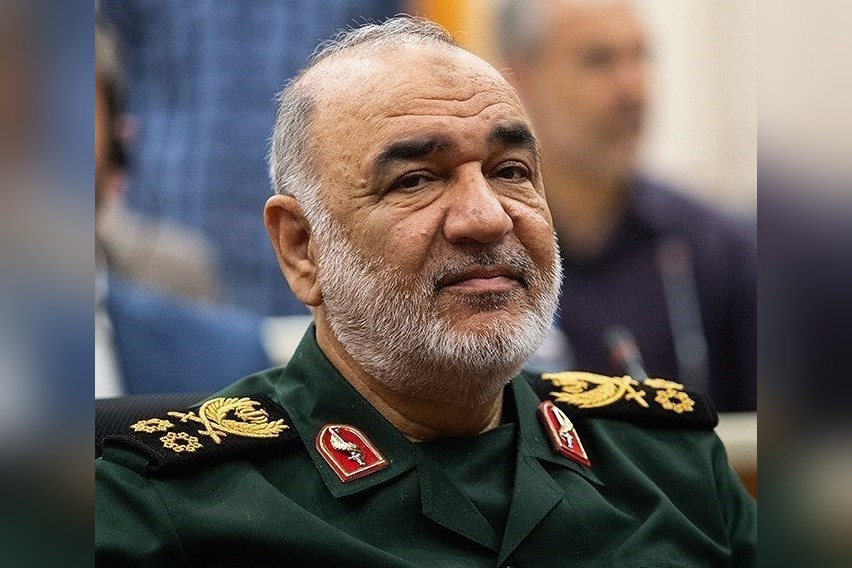
TEHRAN, July 7 — Major General Hossein Salami, the commander of Iran’s Islamic Revolutionary Guard Corps (IRGC), remains a central figure in the ongoing confrontation with the United States and its allies in the Persian Gulf. Appointed to his post in April 2019, Salami oversees the IRGC Navy (IRGCN), the branch responsible for a series of attacks and seizures in the strategic Strait of Hormuz.
According to the record, Salami has consistently advocated for a hardline stance against the U.S. and its partners. Under his command, the IRGC has seized several commercial tankers and conducted missile tests, escalating tensions in the region. The commander has publicly threatened to close the Strait of Hormuz if Iran’s oil exports are blocked, a move that would disrupt a significant portion of the world’s petroleum shipments.
Salami is a key figure in both Iran’s military and political establishment. His leadership of the IRGC, a powerful entity separate from Iran’s regular armed forces, gives him direct control over the paramilitary forces that have been implicated in numerous incidents targeting commercial shipping. Sources familiar with the IRGC’s operations note that the IRGCN has used small fast-attack craft and naval mines to harass vessels.
The timeline of Salami’s tenure shows a steady escalation. Since his appointment, the number of reported incidents in the Strait of Hormuz has increased. The U.S. administration has responded by increasing its naval presence in the region, including deployments of destroyers and aircraft carriers. The Trump administration has designated the IRGC as a foreign terrorist organization, a step that further complicates any diplomatic resolution.
Looking ahead, the risk of a direct confrontation between U.S. and Iranian forces remains high. Salami’s willingness to use the Strait of Hormuz as a bargaining chip, combined with his hardline posture, suggests that the situation will remain volatile. The international community is watching closely for any further provocations that could trigger a broader conflict.




