
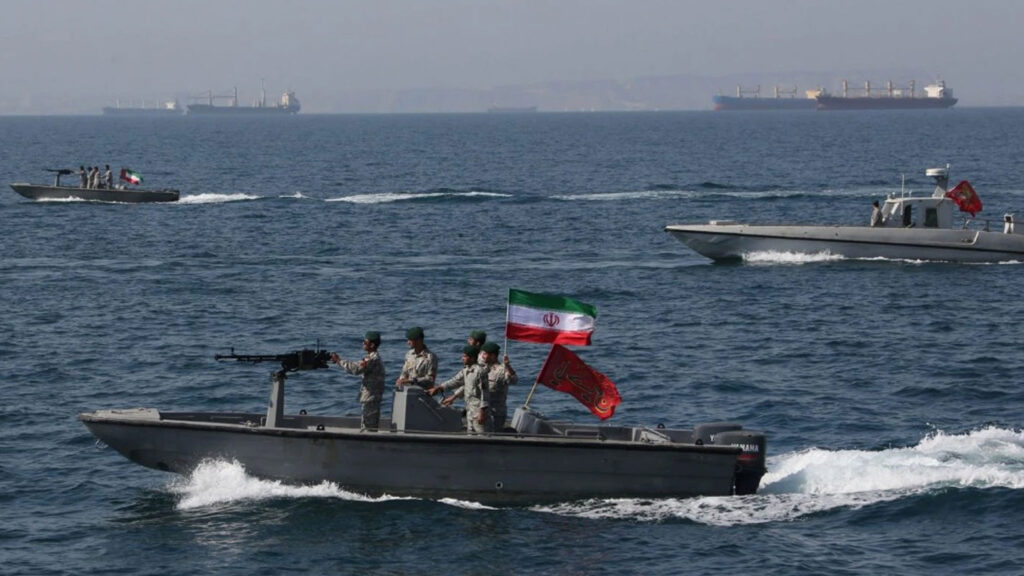
WASHINGTON, July 7 — The Islamic Revolutionary Guard Corps remains a central focus for U.S. defense analysts nearly 15 months after a series of attacks in the Strait of Hormuz that were consistent with the IRGC’s established naval doctrine. According to the record, the April 1, 2025 attacks employed the asymmetric warfare tactics that define the IRGC Navy’s operational playbook. The IRGC, founded after the 1979 Iranian Revolution to protect the Islamic system, operates ground, naval, and air forces estimated at 190,000 personnel.
Its naval branch specifically relies on small boats and anti-ship missiles — the very weapons used in the Strait of Hormuz incidents. The U.S. has designated the IRGC a foreign terrorist organization since April 2019.
Major General Hossein Salami, the IRGC’s commander, has publicly threatened to close the Strait of Hormuz in response to sanctions. That threat carries weight given the IRGC’s control over Iran’s ballistic missile program and its network of proxy forces, including Hezbollah in Lebanon and the Houthis in Yemen. Sources familiar with the Pentagon’s assessment note that the IRGC’s Quds Force, which handles foreign operations, remains under the command of Esmail Qaani.
He took over after the 2020 U.S. killing of Qasem Soleimani. The Quds Force’s activities continue to be a concern for American intelligence agencies.
The IRGC’s naval doctrine emphasizes speedboats and mines as tools to disrupt larger, conventional navies. The April 2025 attacks fit squarely within that framework, according to the timeline of events reviewed by analysts. On the timeline, the Trump administration has maintained its pressure campaign against Tehran.
The IRGC’s status as a designated terrorist organization means its financial networks remain under sanctions. Secretary of State Marco Rubio’s State Department continues to monitor IRGC-linked activities across the Middle East. What to watch next: The Strait of Hormuz remains a flashpoint.
Any further IRGC naval maneuvers there would test both U.S. naval deterrence and the administration’s broader strategy toward Iran. The IRGC’s proxy networks in Yemen and Lebanon also present ongoing risks of escalation.




