
A Historic Shift in the North
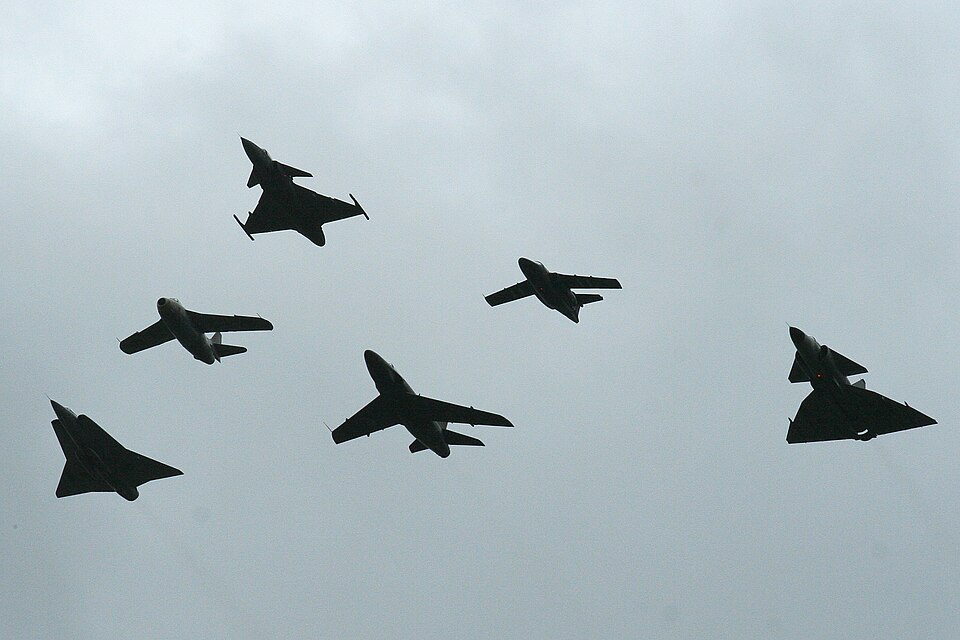
Finland now shares an 830-mile border with Russia, the longest of any NATO member in the region. It contributes to the alliance a well-equipped military, including F-18 fighter jets and a large artillery force. Sweden adds advanced submarines and Gripen fighter aircraft, further strengthening NATO’s northern capabilities. With their accession, NATO now counts eight Arctic member states: the United States, Canada, Denmark (via Greenland), Iceland, Norway, Finland, Sweden, and the United Kingdom (through its presence in the region). This expansion gives the alliance a continuous northern flank, plugging a vulnerability that had existed since the Cold War.
The alliance’s presence in the Arctic is reinforced by regular exercises such as Cold Response and Trident Juncture, which test Arctic warfare capabilities. The United States operates Thule Air Base in Greenland and has increased patrols by B-2 bombers and submarines in the region. These activities reflect a broader trend: as climate change opens new trade routes and access to resources, the Arctic has re-emerged as a strategic area of competition.
NATO’s roots lie in the post-World War II era. Founded in 1949, the alliance was built on Article 5, the principle of collective defense — an attack on one member is treated as an attack on all. It was designed to deter aggression from the Soviet Union, which responded by forming the Warsaw Pact in 1955. For decades, NATO’s mission centered on countering Soviet influence across Europe. After the Soviet Union collapsed in 1991, the alliance shifted from a purely defensive posture. It conducted its first combat operations in Bosnia during the 1990s, enforced no-fly zones in the Balkans, and invoked Article 5 only once — in response to the 2001 attacks on the United States. Over time, NATO expanded eastward, adding sixteen new members, including former Warsaw Pact states.
Implications for Regional Security
The addition of Finnish and Swedish capabilities comes at a time when Russia has altered its military posture in the Arctic. Moscow’s decision to remove air defenses from the region shifts the military calculus, potentially creating opportunities for NATO to assert greater control over the area. The alliance has stated it has no aggressive intentions, but it is now better positioned to monitor and respond to activity in the region. Finland’s artillery and F-18s, combined with Sweden’s submarines and Gripen jets, provide a modern deterrent that fills a gap that had existed since the Cold War.
The Arctic had historically been a zone of limited military competition, but its strategic value has grown with climate change and receding ice. New shipping lanes and access to resources have drawn the attention of both Arctic and non-Arctic states. For decades, Finland and Sweden maintained neutrality, avoiding formal alignment during the Cold War and beyond. Russia’s 2022 invasion of Ukraine prompted both to abandon non-alignment and seek NATO protection, altering the alliance’s geography and capabilities. Their accession means NATO now holds a continuous northern flank from the Baltic to the Barents Sea, closing a gap that persisted since the end of the Cold War.
This development reshapes regional security dynamics. Russia’s reduction of its Arctic military presence may leave openings for NATO to assert influence, though the alliance insists its actions are defensive. The presence of advanced air, naval, and ground forces — including F-18s, Gripen jets, and submarines — signals a new era of military readiness in a region once considered peripheral to NATO’s core mission. For now, the Arctic remains a theater of cautious competition, not confrontation — but the map has been redrawn.
{“@context”: “https://schema.org”, “@type”: “NewsArticle”, “headline”: “Finland and Sweden’s NATO entry bolsters Arctic defense with longest Russia border”, “description”: “A Historic Shift in the North Finland now shares an 830-mile border with Russia, the longest of any NATO member in the region. It contributes…”, “datePublished”: “2026-07-15T09:30:00+00:00”, “author”: {“@type”: “Person”, “name”: “Dmitry Volkov”}, “publisher”: {“@type”: “Organization”, “name”: “InfoPulse Today”, “url”: “https://newsfeed.infopulsetoday.com/”}}




