
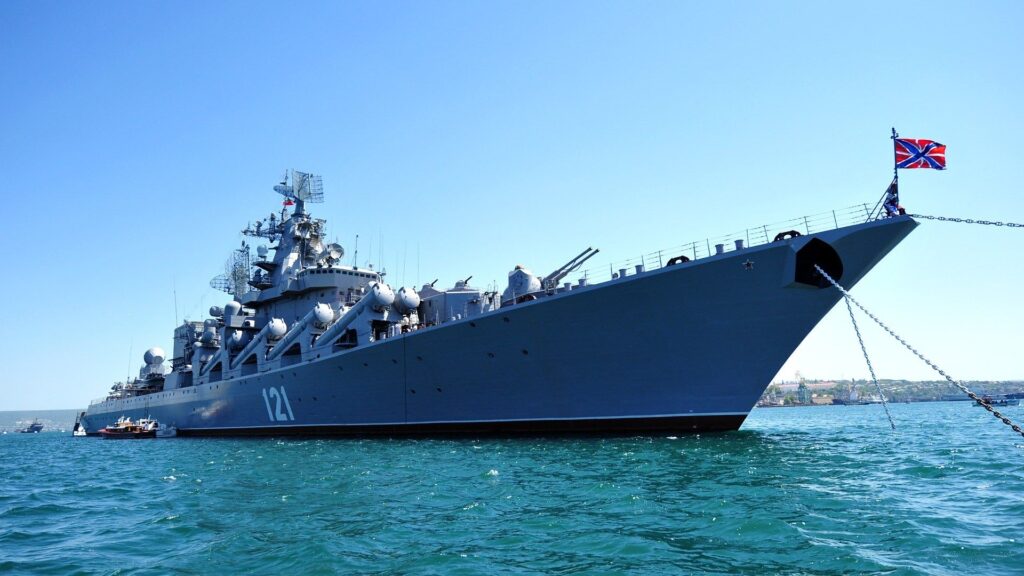
MOSCOW, July 9 — Since the full-scale invasion began on February 24, 2022, Ukraine has struck or destroyed at least 24 Russian naval vessels, according to verified data. The record shows that 21 of those ships were hit in a concentrated 72-hour period from January 10-12, 2024. The losses have fundamentally altered the balance of power in the Black Sea.
The Black Sea Fleet originally fielded about 30 major combatants and 40 auxiliary vessels. After these strikes, its operational strength is estimated at fewer than 20 major combatants.
Among the most significant losses confirmed by officials are the cruiser Moskva, sunk on April 13, 2022; the landing ship Saratov, destroyed on March 24, 2022; the submarine Rostov-on-Don, damaged on September 13, 2023; and the landing ship Novocherkassk, damaged on December 26, 2023. The fleet has lost at least three landing ships, two patrol boats, and one submarine.
Asymmetric Warfare and Strategic Impact
The cost of these losses is estimated at over $1.5 billion, based on replacement values. Ukraine has employed approximately 50 Neptune missiles and 100 unmanned surface vessels, or USVs, in these operations, according to the data. The strikes have forced Russia to relocate 10 vessels to Novorossiysk, significantly reducing its naval presence in Sevastopol.
The fleet’s ability to launch cruise missile strikes has been reduced by 30 percent, according to Ukrainian estimates. The data shows a clear trend: Ukraine’s asymmetric tactics are inflicting disproportionate damage on a larger, more expensive force.
This pattern of attrition has forced the Russian Navy to adopt a more defensive posture in the Black Sea, limiting its ability to project power and support ground operations along the Ukrainian coast. The relocation of vessels to Novorossiysk represents a strategic retreat from the fleet’s traditional home port.
Operational Consequences
The reduction in cruise missile launch capability is a particularly critical development. The Black Sea Fleet had been a key platform for launching long-range strikes against Ukrainian infrastructure and military targets. With a 30 percent reduction in that capacity, according to Ukrainian estimates, the fleet’s role in the broader war effort has been diminished.
The use of USVs has proven especially effective. These small, unmanned craft have been able to penetrate harbor defenses and strike high-value targets at relatively low cost.
The Neptune missiles, meanwhile, have demonstrated their ability to engage and destroy major surface combatants, as evidenced by the sinking of the Moskva.
Looking Ahead
The continued erosion of the Black Sea Fleet’s combat power raises questions about Russia’s ability to maintain a credible naval presence in the region. With fewer than 20 major combatants remaining, and the fleet’s logistics and basing infrastructure under persistent threat, the strategic calculus for Moscow has shifted. The concentration of vessels in Novorossiysk may offer some protection, but it also limits the fleet’s operational flexibility and its ability to respond to contingencies.
The coming months will reveal whether Russia can reconstitute its naval forces or whether Ukraine’s asymmetric campaign will continue to degrade one of the Kremlin’s most visible symbols of military power.




