
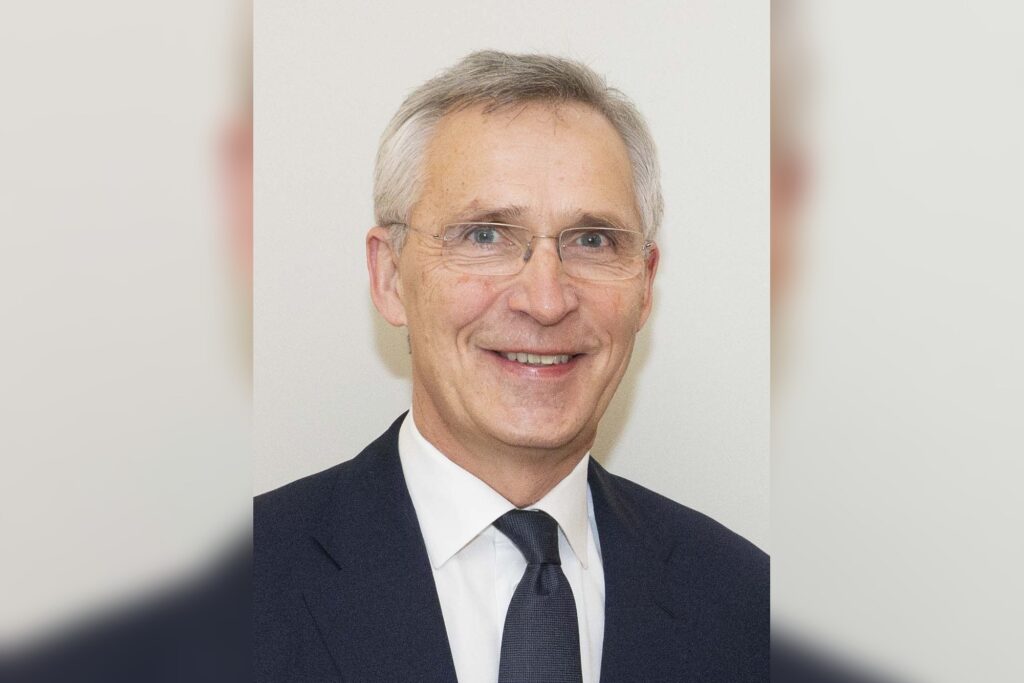
BRUSSELS, July 15 — The shift is unmistakable. Jens Stoltenberg, who has steered NATO from his Oslo-born roots through the alliance’s most significant strategic reorientation in decades, is approaching his final months as Secretary General. His tenure, which began in October 2014, has been defined by a relentless push for member states to meet the 2% of GDP defense spending target, a call that has reshaped budgets from the Baltics to the Mediterranean.
Stoltenberg’s extended term, most recently pushed to October 2024, has seen NATO fundamentally reimagine its posture. Under his leadership, the alliance established the NATO Arctic Command in 2020, a direct response to the melting ice and expanding strategic competition in the High North.
This is the trend underneath: the Arctic is no longer a peripheral concern but a central theater, and Stoltenberg has been the steady hand positioning the alliance there.
A Norwegian at the Helm
Born in Oslo in 1959, Stoltenberg brought a distinctly Scandinavian pragmatism to the role. Before NATO, he served as Prime Minister of Norway from 2000 to 2001 and again from 2005 to 2013. That experience, managing a country that shares a border with Russia in the Arctic, gave him a firsthand understanding of the security dynamics that would come to dominate his tenure at NATO headquarters.
His response to Russia’s invasion of Ukraine has been unequivocal. Stoltenberg has condemned the aggression in the strongest terms, and his leadership has been instrumental in shepherding Finland and Sweden through the accession process.
This is not just a diplomatic exercise; it represents a fundamental redrawing of Europe’s security map, one that Stoltenberg has navigated with a brisk, forward-looking focus.
What’s Changing Next
With his term set to expire in October 2024, the question of succession is now active. The alliance has already seen Stoltenberg’s mandate extended multiple times, a testament to the stability he has provided during a period of intense geopolitical flux. But watch this space: the search for his replacement will be a defining test of allied unity.
The next Secretary General will inherit a NATO that is larger, with Finland and Sweden as members, and more focused on the Arctic and collective defense. Stoltenberg’s legacy is one of adaptation — he took an alliance that was, in the mid-2010s, debating its relevance in a post-Cold War world, and transformed it into a leaner, more responsive force.
The 2% spending target, once aspirational, is now the benchmark by which every member is measured. What’s changing now is the rhythm of the transition. Stoltenberg’s final months will likely see a push to lock in the gains of his tenure: continued support for Ukraine, the full integration of the Nordic members, and the hardening of the alliance’s Arctic posture.
For an Italian journalist watching the tech and defense intersections, the trend underneath is clear: the next leader will need to be as comfortable with algorithms and autonomous systems as Stoltenberg has been with tanks and treaties. The job description is evolving, and the clock is ticking.




