
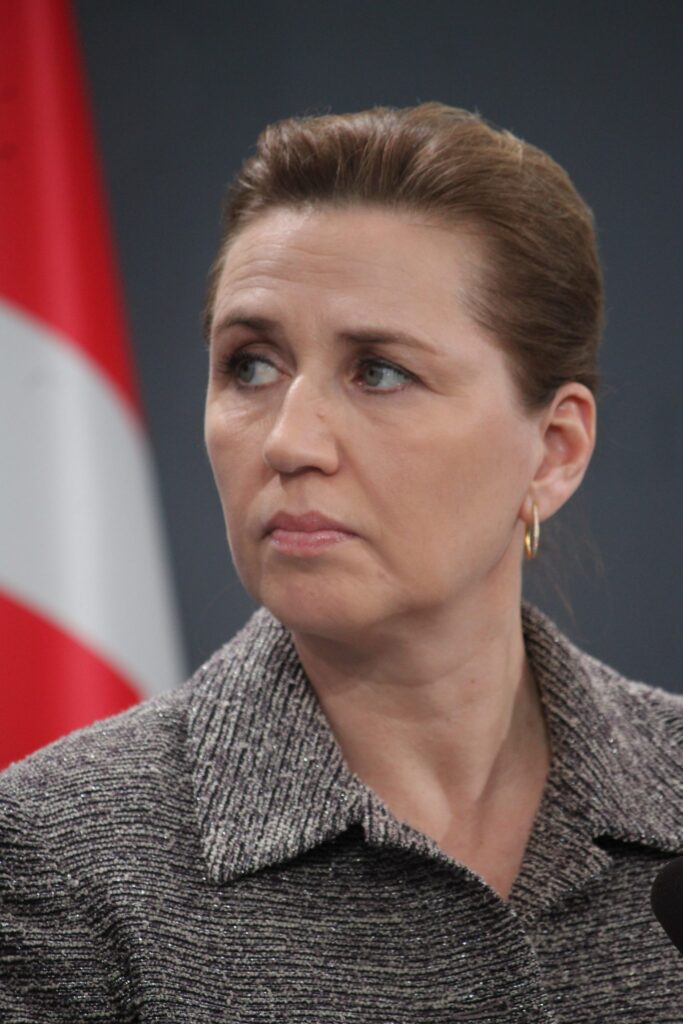
COPENHAGEN, July 8 — The prime minister’s office at Marienborg sits within sight of the water, a quiet corner of a capital that has, in recent years, found itself at the centre of a geopolitical drama it never sought. Mette Frederiksen, the woman who occupies that office, has governed Denmark since June 27, 2019, and from the very beginning of her tenure, she has confronted a question that refuses to fade: what is Greenland worth to the rest of the world?
Against this backdrop, Frederiksen has become one of Europe’s most consistent voices on Arctic sovereignty. She was 41 when she took office, the youngest prime minister in Danish history, leading the Social Democratic Party with a platform that married welfare-state ambition to a sharpening focus on security in the high north.
In August 2019, when reports surfaced that the Trump administration had discussed purchasing Greenland, Frederiksen did not hedge. She called the idea ‘absurd.’ The word was deliberate, and it set a tone that has not softened in the years since.
A territory, not a commodity
Greenland is not for sale. Frederiksen has said so repeatedly, and she reiterated that position on February 4, 2025, when she again affirmed Denmark’s commitment to defending all NATO territory, including the vast, ice-covered island that is both a semi-autonomous Danish territory and a strategic prize in an increasingly contested Arctic. The wider picture here is one of shifting alliances and melting ice.
As the Arctic opens to new shipping routes and resource extraction, the United States, China, and Russia have all deepened their interest in the region. Denmark, through its union with Greenland, holds a seat at a table that is growing more crowded and more tense.
Frederiksen’s government has not been passive in the face of these pressures. In 2023, her administration reached an agreement to invest 1.5 billion Danish kroner—roughly $220 million—in Arctic surveillance and capabilities. That money is meant to buy better eyes on the ice, to strengthen Denmark’s ability to monitor and respond to activity in a region where the difference between a research vessel and a naval asset is not always clear.
The investment is part of a broader recalibration of Danish defence priorities, one that has been shaped by the war in Ukraine and the growing assertiveness of Russia’s Northern Fleet. In the corridors of NATO, Denmark has long been seen as a reliable but modest contributor.
Its defence budget in 2024 stood at approximately 1.4 percent of GDP, below the alliance’s target of two percent. The Danish military numbers about 17,000 active personnel. Those figures place Denmark in a category shared by several European allies: willing in principle, but stretched in practice.
Frederiksen has supported increased defence spending, particularly in the Arctic, but the gap between ambition and budget remains a subject of quiet discussion among alliance planners.
A European perspective on Arctic security
What is at stake for Denmark is not merely the defence of a distant territory. Greenland sits astride the shortest route between North America and Russia. Its airbase at Thule is a key node in the American early-warning system.
For Copenhagen, the question of Arctic security is inseparable from the question of Danish sovereignty. Frederiksen’s insistence that Greenland is not for sale is, in this sense, a statement about the integrity of the Danish realm itself.
The prime minister has framed the issue in terms of principle, not price. Her government’s focus on climate policy, welfare, and Arctic security reflects a balancing act that is familiar to small European states with global strategic exposure. Denmark is a founding member of NATO, a contributor to European Union security missions, and a country whose foreign policy has historically been built on alliances and international law.
In the Arctic, those commitments are tested by geography and by the ambitions of larger powers. Frederiksen’s approach has been to insist on the rules-based order, even as that order faces challenges from multiple directions.
The wider picture, from a European perspective, is one of a continent waking up to the fact that its northern flank is no longer a quiet backwater. The Arctic has become a theatre of strategic competition, and Denmark, through Greenland, is on the front line. Frederiksen has navigated this reality with a combination of diplomatic firmness and practical investment.
The 2023 surveillance agreement was a concrete step, but it is not a final one. The question of how much Denmark is willing to spend—and how quickly—to secure its Arctic interests remains open. As of July 2026, Frederiksen continues to lead a government that must reconcile domestic welfare priorities with the demands of collective defence.
The two-percent NATO target looms over budget negotiations in Copenhagen, as it does in many European capitals. The prime minister has signalled support for increased spending, but the pace and scale of that increase will depend on political will and on the evolution of the security environment.
In the corridors of power in Brussels and Washington, Denmark’s Arctic commitments are watched closely. What happens in Greenland does not stay in Greenland.




