
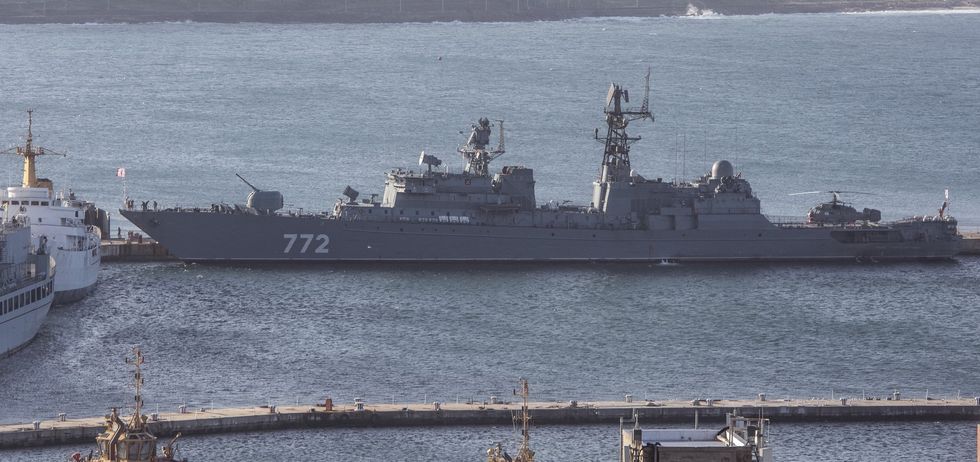
KYIV, July 9 — Russia has relocated at least 10 major warships from its Black Sea Fleet base in Sevastopol to the port of Novorossiysk, satellite imagery from June 2024 confirms. The move, driven by sustained Ukrainian drone and missile strikes, shifts the fleet’s most valuable assets—including frigates and submarines—farther east along the Russian coast, out of the most immediate danger zone.
The catch is that this is a tactical retreat, not a surrender of the sea. Russia’s remaining vessels in Sevastopol are now protected by anti-drone nets and barrage balloons, a defensive measure that speaks to the effectiveness of Ukraine’s campaign. The mechanics here are straightforward: Ukraine has turned a traditional naval power imbalance into a war of attrition against high-value targets, using cheap unmanned systems to force Russia to either risk its ships or pull them back.
The Drone Campaign and Its Targets
Ukraine has publicly stated its goal: destroy or disable 30% of the Black Sea Fleet by the end of 2024. To that end, Kyiv is developing a new naval drone called the Stalker, with a range of 1,000 kilometers and a larger warhead. This is a clear escalation in capability—the extended range means the threat zone around Russian ports expands, putting more of the fleet within reach.
Western allies have played a supporting role. Intelligence support from the United Kingdom and the United States has been used for targeting Russian ships, according to Ukrainian officials. The flow of satellite imagery and signals intelligence is the invisible backbone of this campaign, allowing Ukraine to pinpoint vessels that would otherwise be hard to find in the vast Black Sea.
The results are measurable. Russia’s ability to launch cruise missile attacks from the sea has dropped sharply: May 2024 saw a 40% decrease in such launches compared to the same month the previous year. That is a direct operational consequence of the fleet’s displacement and damage. Fewer ships on station means fewer platforms for launching long-range strikes against Ukrainian infrastructure and cities.
The Strategic Endgame
Follow the money and the grain. The long-term Ukrainian objective is not simply to sink ships—it is to force Russia to negotiate an end to the naval blockade and allow the full resumption of grain exports. Black Sea shipping routes are the economic lifeline for Ukraine’s agricultural sector, and the blockade has been a central lever of Russian economic warfare.
On closer reading, the 30% attrition target is not arbitrary. It represents a threshold where fleet operations become significantly impaired—where Russia can no longer maintain both a credible blockade and a defensive posture without unacceptable risk to its remaining vessels. The relocation to Novorossiysk buys Russia time and distance, but it also cedes the western Black Sea to Ukrainian naval drone patrols.
The Stalker drone, if deployed in numbers, could extend that pressure all the way to the eastern coast. A 1,000-kilometer range puts Novorossiysk itself within reach, meaning the fleet may have to pull back even farther or accept that its new safe harbor is not safe at all.
What to watch next: whether Ukraine can scale up production of the Stalker quickly enough to meet its year-end target, and whether Russia will respond by dispersing its fleet even more widely—perhaps to smaller ports that lack the infrastructure for major repair and resupply. The battle for the Black Sea is now a long-range duel of drones versus defenses, with grain exports as the ultimate prize.




