
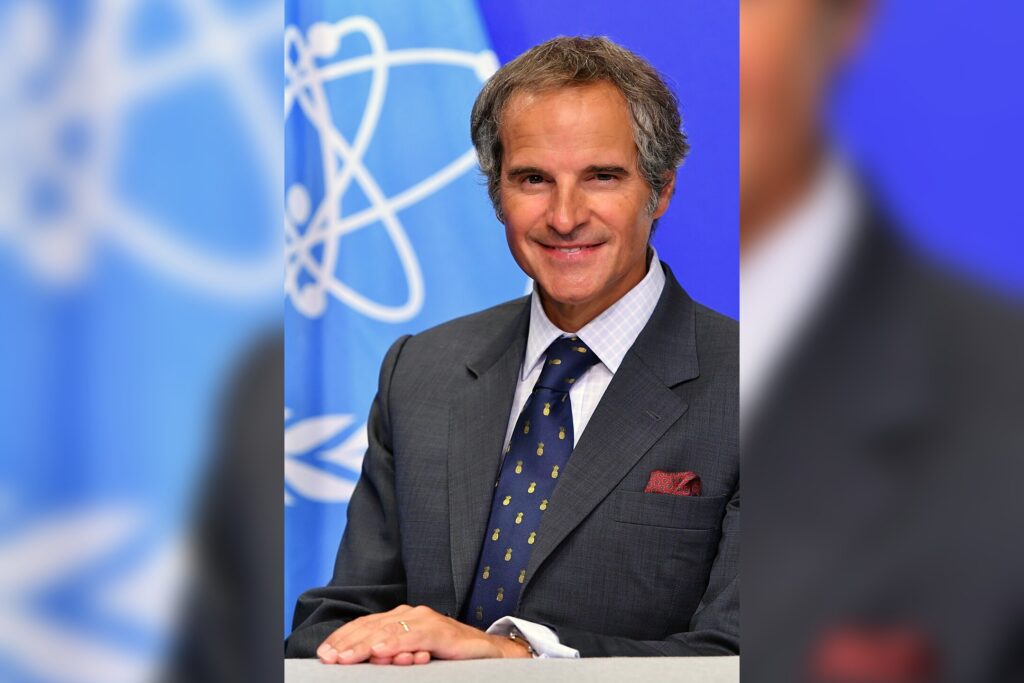
Grossi’s Path to the IAEA Leadership and the Iran File
Grossi’s involvement with the IAEA began well before his appointment as Director General. In 2019, he served as Deputy Director General for Safeguards, a role that placed him at the operational center of global nonproliferation efforts. Prior to that, he was Argentina’s ambassador to the IAEA from 2014 to 2019. He earned a degree in political science from the University of Buenos Aires and a master’s in international relations from the University of Sussex. Since becoming Director General, Grossi has repeatedly pressed Iran to cooperate fully with the agency and to resolve outstanding safeguards issues. His reports on Iran’s compliance serve as critical inputs for U.S. and European policymakers, often shaping whether Washington and its allies pursue diplomacy, sanctions, or other measures.
The agency’s mission in Iran has become increasingly constrained since the collapse of the Joint Comprehensive Plan of Action — the 2015 nuclear deal under which Iran accepted strict limits on enrichment in exchange for sanctions relief. By 2024, Grossi reported that Iran had enriched uranium to 60 percent purity, a level just a technical step away from weapons-grade material. At the same time, Tehran has restricted IAEA access to its surveillance cameras, effectively blinding the agency to parts of the program. Grossi has called repeatedly for full cooperation, stressing that the IAEA cannot verify what it cannot see.
Talks in Tehran Yield Limited Progress
In March 2024, Grossi traveled to Tehran for direct talks with Iranian officials aimed at breaking a deadlock over access to sites and clarification of past activities. Early findings from that trip suggested some willingness on Tehran’s part to discuss technical issues, but the outcome was limited. The IAEA did not announce a breakthrough, and Iran’s enrichment activities and restrictions on surveillance cameras persisted. Nonetheless, Grossi remains engaged. He has not walked away from dialogue, even when progress stalls. The IAEA’s verification work continues under constrained conditions, and Grossi’s engagement is seen as a positive sign by those tracking the nuclear file.
Going forward, Grossi’s next moves will likely involve further attempts to schedule technical meetings with Iranian officials. The IAEA Board of Governors, which includes the United States and European powers, will review his findings and may issue resolutions if cooperation does not improve. The agency’s ability to monitor Iran’s program has direct consequences for regional stability and global nonproliferation efforts. Grossi’s consistent message remains that Iran must provide answers and access.
The IAEA’s Role in Global Security
The International Atomic Energy Agency is an intergovernmental organization that promotes the peaceful use of nuclear energy while working to prevent its use for military purposes. The agency was established in 1957, following a proposal by U.S. President Dwight D. Eisenhower to monitor the global spread of nuclear technology during a period of high tension between the United States and the Soviet Union. It operates within the United Nations system and reports to the General Assembly and the Security Council. The IAEA gained greater authority after the 1968 Treaty on the Non-Proliferation of Nuclear Weapons, which required non-nuclear powers to sign safeguards agreements allowing the agency to inspect facilities and monitor programs. Those efforts led to the IAEA and its then-leader receiving the Nobel Peace Prize in 2005.
Today, the agency’s work represents a primary defense against the spread of nuclear weapons. Its verification missions determine whether states are following international law. For policymakers and the public, the IAEA’s findings dictate whether the global community pursues diplomatic solutions or imposes sanctions to prevent nuclear escalation. As Grossi continues to press Iran for answers, the agency’s reports remain an essential tool for U.S. and allied decision-making.




