
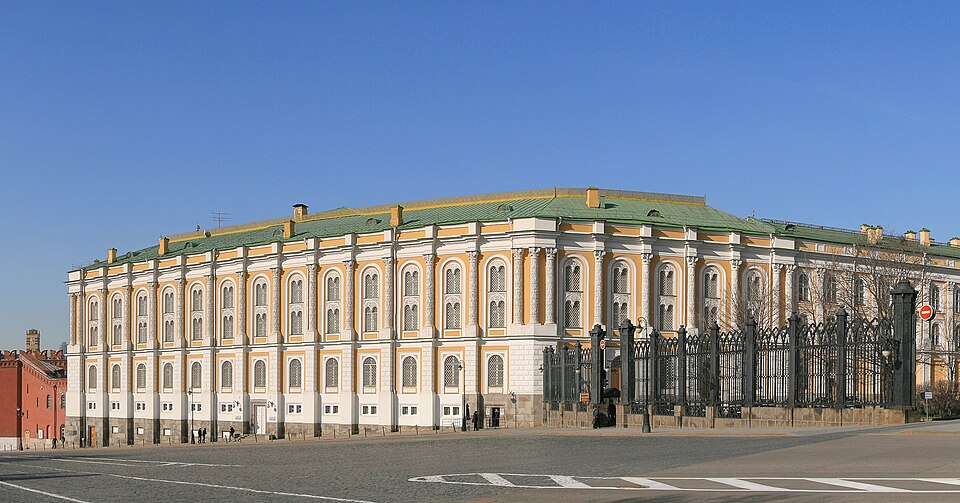
Behind the Kremlin’s public displays of unity, a quiet debate is intensifying among Vladimir Putin’s most trusted advisers over the mounting costs of the war in Ukraine. Western intelligence assessments obtained over the past year point to internal fractures that, if they widen, could eventually reshape Russian strategy. Though the public face of the Russian government remains defiant, the economic data and confidential reports paint a picture of deepening strain underneath a hardened surface.
A Stable Core Under Strain
The men at the center of Russian power have held their positions with remarkable consistency. Defense Minister Sergei Shoigu has run the military since 2012.
Foreign Minister Sergei Lavrov has been the country’s top diplomat since 2004. Security Council Secretary Nikolai Patrushev has overseen national security policy since 2008. Presidential Administration Chief Anton Vaino has managed the Kremlin’s domestic machinery since 2016.
These are not new faces; they are the same officials who gave the green light for the February 2022 invasion. Their longevity reflects the structure that Putin has built across his successive terms.
He first became acting president at the end of 1999 after a career in the KGB and regional politics in Saint Petersburg, later running the security service and the Security Council before serving as prime minister in 1999. Constitutional limits forced him to step aside after 2008, when he served as prime minister under Dmitry Medvedev, then returned to the presidency in 2012. That long continuity matters now because the same officials who shaped earlier conflicts, including the 2014 annexation of Crimea that triggered foreign sanctions and a financial downturn, remain positioned to influence decisions on the war in Ukraine.
Dmitry Medvedev, once considered a relative moderate during his own presidential term from 2008 to 2012, now serves as Deputy Chairman of the Security Council, a role he took in 2020. He has publicly adopted a hardline stance, threatening nuclear escalation.
That bellicose rhetoric plays well on state television, but it masks deeper tensions. A December 2024 CIA assessment reported that internal debates inside the Kremlin over the war’s mounting cost are real, not just propaganda.
Mounting Economic Pressure
The cost of the war is measurable in hard numbers. Since February 2022, the United States, European Union, United Kingdom, and allies have imposed over 16,000 sanctions on Russia.
By January 2025, the cumulative weight of those restrictions had become undeniable. The Russian economy contracted by 2.1% in 2022, then bounced back with 3.6% growth in 2023. But inflation hit 7.4% in December 2024, a clear signal that sanctions are biting even though the economy has not collapsed.
The Russian public is feeling the pinch at the checkout counter, and business interests are noticing as well. Businessman Yuri Kovalchuk, a longtime Putin associate and part of the inner circle, represents the oligarchic interests that are feeling the pressure from the sanctions regime, now in its fourth year.
Earlier in Putin’s rule, Russia experienced economic growth tied to energy exports and reformed state institutions. But later actions, such as the annexation of Crimea, brought foreign sanctions and a financial downturn. Today’s sanctions are far broader and more sustained, and the economic signals suggest that the strain is cumulative.
Signals of Division Beneath the Surface
Ukrainian President Volodymyr Zelenskyy has claimed that some figures inside Putin’s circle support his peace plan, though he has not named names. That claim, if true, points to divisions that could widen as the war drags on. The CIA assessment from December 2024 suggests the internal debate is real, not just a propaganda exercise.
What is changing is the pressure. The Kremlin’s inner circle may still project unity, but the economic data and intelligence reports tell a different story: mounting strain beneath a hardened surface.
The debate over the cost of the war is quietly underway, and the outcome could have far-reaching consequences for Russian strategy.
{“@context”: “https://schema.org”, “@type”: “NewsArticle”, “headline”: “Kremlin Advisers Quietly Debate Rising Costs of Ukraine War, Sources Say”, “description”: “MOSCOW, July 11 — Behind the Kremlin’s public displays of unity, a quiet debate is intensifying among Vladimir Putin’s most trusted advisers over the mounting…”, “datePublished”: “2026-07-11T09:30:00+00:00”, “author”: {“@type”: “Person”, “name”: “Dmitry Volkov”}, “publisher”: {“@type”: “Organization”, “name”: “InfoPulse Today”, “url”: “https://newsfeed.2bme.xyz/”}}




