
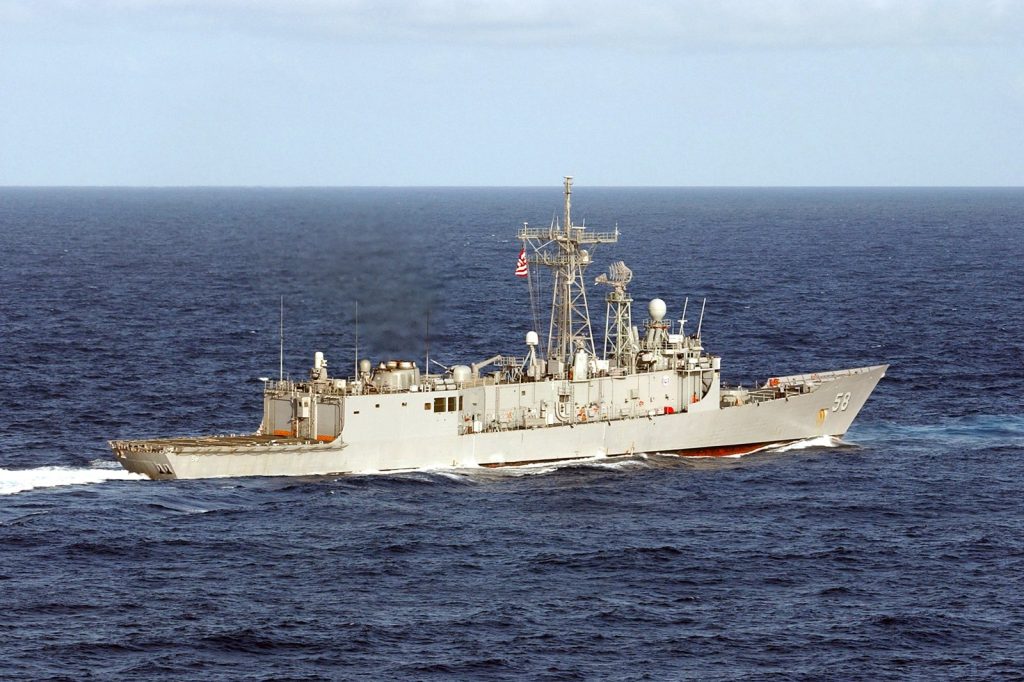
TEHRAN, July 30, 2026 — The United States launched airstrikes on Iranian territory today, a direct military response to recent provocations that carries echoes of a pivotal naval engagement nearly four decades ago. For families of U.S. service members in the region, the news revives memories of 1988, when a single mining incident set off the largest surface naval battle since World War II.
That operation, code-named Praying Mantis, was a one-day retaliatory attack ordered by President Ronald Reagan on April 18, 1988. It came after the USS Samuel B. Roberts struck a mine in the Persian Gulf, injuring 10 sailors. In response, U.S. Navy forces destroyed two Iranian oil platforms, Sirri and Sassan, and sank or damaged three naval vessels — the frigate Sahand, the fast-attack craft Joshan, and the logistics ship Rahkesh.
Two aircraft carriers, the USS Enterprise and USS Coral Sea, along with the cruiser USS Wainwright and other ships, took part in the 1988 operation. At least 56 Iranian personnel were killed. The U.S. lost one AH-1 Cobra helicopter. The assault successfully pressured Tehran to enter ceasefire talks that ended the Iran-Iraq War.
A Historical Precedent: Operation Praying Mantis
The tactical logic behind Praying Mantis was to cripple Iran’s ability to threaten commercial shipping in the Persian Gulf during the tanker phase of the Iran-Iraq War. Today’s strikes share that core purpose: degrade Iran’s offensive capability against U.S. and allied forces.
But the scale and method differ sharply. In 1988, the U.S. limited its retaliation to naval assets and oil platforms. Today’s operation involves land-based airstrikes on Iranian territory, a significant escalation. Both actions occurred amid heightened regional tensions — the 1988 strikes during the Iran-Iraq War, and current ones during the Israel-Hamas war and a wave of Iran-backed militia attacks on U.S. forces.
Today’s Strikes: A Broader Scope
The 2026 strikes, ordered by President Donald Trump, come after diplomatic pathways have repeatedly failed to deter Iranian proxy forces from targeting American troops. The administration’s stated goal mirrors the 1988 objective: to remove Tehran’s capacity to threaten U.S. personnel and allies. For the families of U.S. service members stationed across the Middle East, the human side of this story is not abstract — it is the looming possibility of escalation.
No casualty figures have been released for today’s operation, and U.S. officials have not specified which targets were hit. But the historical precedent of Operation Praying Mantis underscores a persistent pattern: when diplomatic options are exhausted, Washington has repeatedly turned to direct military action against Iran.
What to watch next — whether Tehran will respond with further attacks on U.S. forces or, as in 1988, choose to enter negotiations. The strategic calculus remains the same, but the stakes have grown with today’s strikes reaching deep into Iranian soil.
Sources
{“@context”: “https://schema.org”, “@type”: “NewsArticle”, “headline”: “US Naval Strikes on Iran in Operation Praying Mantis Set Precedent”, “description”: “TEHRAN, July 30, 2026 — The United States launched airstrikes on Iranian territory today, a direct military response to recent provocations that carries echoes of…”, “datePublished”: “2026-07-30T09:30:00+00:00”, “author”: {“@type”: “Person”, “name”: “James Roberto”}, “publisher”: {“@type”: “Organization”, “name”: “InfoPulse Today”, “url”: “https://newsfeed.infopulsetoday.com/”}, “citation”: [{“@type”: “CreativeWork”, “url”: “https://en.wikipedia.org/wiki/Operation_Praying_Mantis”}]}




