
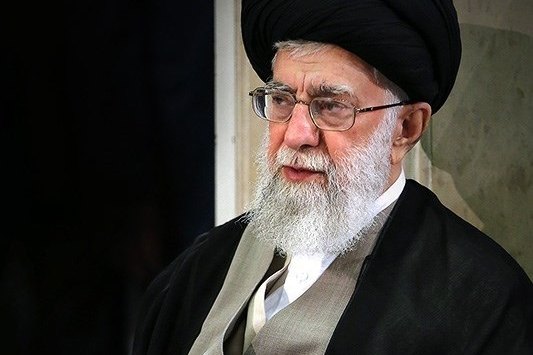
TEHRAN, July 30 — Iran’s Supreme Leader, Ayatollah Ali Khamenei, sits at the center of a military standoff with the United States after American strikes hit Iranian soil. As the country’s de facto head of state and highest religious-political authority, Khamenei holds powers that in plain terms make him the single most decisive voice in whether this crisis escalates or cools.
Think of it like a corporate CEO who also serves as the company’s chief religious officer — except this CEO has the final say on launching missiles, vetting election candidates, and declaring war. That’s the practical upshot of the role known as Vali-ye Faghih, established after Iran’s 1979 Islamic Revolution.
The first Supreme Leader was Ayatollah Ruhollah Khomeini, who served from 1979 until 1989. Khamenei has held the office since June 4, 1989 — more than 37 years at the helm.
The Supreme Leader’s Powers
The Iranian Constitution, in Articles 107 through 112, spells out the position. Khamenei is commander-in-chief of the Islamic Republic of Iran Armed Forces, which includes both the regular military (Artesh) and the Islamic Revolutionary Guard Corps (IRGC). He also oversees intelligence, the judiciary, and the Quds Force — the IRGC unit responsible for overseas operations, now led by Brigadier General Esmail Qaani.
Half of the Guardian Council, the body that vets election candidates, is appointed by him. Khamenei can declare war and peace, mobilize forces, and appoint or dismiss military chiefs.
He has final authority over Iran’s nuclear program, foreign policy, and decisions to go to war. That’s a lot of power concentrated in one office, and it has real-world consequences. In 2020, after a U.S. strike killed Quds Force commander Qassem Soleimani, Khamenei authorized a retaliatory missile attack on U.S. forces in Iraq.
That strike caused brain injuries to more than 100 American troops. His fatwas have banned weapons of mass destruction, but he supports missile development for deterrence.
So while he rules out nuclear arms on religious grounds, he has no qualms about building conventional missiles that can strike regional adversaries.
The Current Crisis
With U.S. strikes now hitting Iranian territory, Khamenei has convened the Supreme National Security Council — the top body for managing national security emergencies. He has stated publicly that Iran will not tolerate aggression and will respond with equal force. The moment tests his leadership on multiple fronts.
Domestically, he faces pressure from hardliners who want a harsh response, even as the economy strains under international sanctions. His speeches in recent months have mixed anti-American rhetoric with calls for resistance, a familiar pattern that now carries immediate stakes.
The source material notes that Khamenei previously authorized the 2020 retaliatory strike on U.S. forces in Iraq — that precedent suggests he is willing to order direct military action against American troops. The current question is whether he will do so again, and at what scale. The IRGC’s Quds Force, the unit the U.S. targeted in the Soleimani strike, remains active under new leadership.
All of these levers of power — military, intelligence, diplomatic — run through the Supreme Leader’s office.
What to Watch Next
For ordinary readers, the practical upshot is straightforward: Khamenei’s decisions in the coming days will determine whether this standoff remains contained or spirals into a wider conflict. The United States, under President Donald Trump with Vice President JD Vance and Secretary of State Marco Rubio, has not detailed further steps. But the Supreme Leader’s constitutional authority to mobilize forces and declare war means any escalation will be his call.
The regime is under internal strain from hardliners who see the strikes as proof of American aggression, and from economic pressure that sanctions have tightened. Khamenei’s response will signal whether he prioritizes deterrence through confrontation or seeks a path that avoids a full-scale war.
In the meantime, the Supreme National Security Council is meeting, the IRGC is on alert, and the world watches the office that the Iranian Constitution put at the top of the state.




