
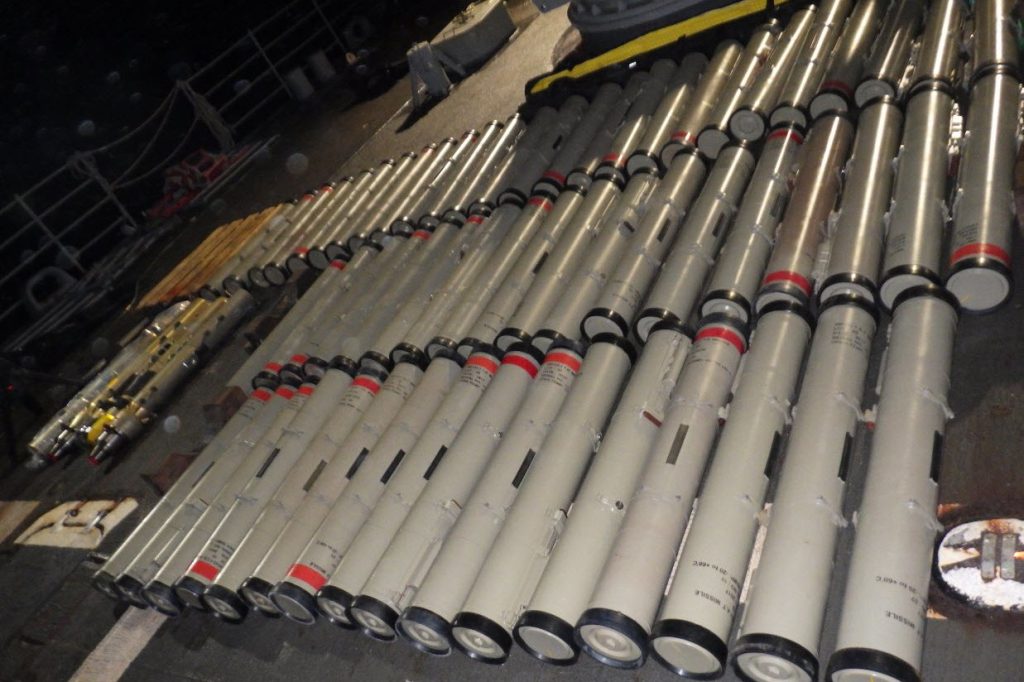
SANAA, July 16 — The Houthi movement, officially known as Ansar Allah, has established itself as one of the most persistent threats to maritime security in the Middle East, wielding an arsenal of advanced Iranian-supplied weaponry that has reshaped the strategic calculus of the Red Sea and Gulf of Aden. The group emerged in the 1990s in northern Yemen, rooted in the Zaydi Shia tradition, and over three decades evolved from a localized revivalist movement into a military and political force capable of challenging a coalition of Arab states.
By 2014, the Houthis had seized control of the capital, Sanaa, plunging Yemen into a civil war against the internationally recognized government that continues to this day.
Iranian weapons pipeline
According to United Nations reports and U.S. intelligence assessments, Iran has provided the Houthis with advanced weaponry including anti-ship cruise missiles, ballistic missiles, and one-way attack drones. This arms pipeline, which Tehran has consistently denied, has given the group a reach far beyond Yemen’s borders. The record shows that the Houthis began deploying these weapons against commercial vessels in November 2023.
On November 19 of that year, Houthi fighters seized the cargo ship Galaxy Leader, a vessel linked to an Israeli businessman. The crew was taken hostage, and the ship remains in Houthi hands.
On February 18, 2024, the group struck the cargo ship Rubymar. The vessel drifted for days before sinking on March 2, 2024, becoming the first commercial ship lost to Houthi attacks during the current campaign. The sinking sent a clear signal that the group’s anti-ship missiles posed a lethal threat to merchant shipping.
Regional escalation
The Houthis have also fired ballistic missiles at Israel, though the record indicates that most of these projectiles were intercepted by Israeli air defenses. The group has stated publicly that it will continue attacks until Israel ends its military operations in Gaza, linking its maritime campaign directly to the broader Israeli-Palestinian conflict. The U.S. Navy has responded by deploying destroyers and aircraft carriers to the region to defend shipping lanes.
Since January 2024, the United States and the United Kingdom have conducted airstrikes on Houthi missile launch sites, radar installations, and drone storage facilities. These strikes have targeted the infrastructure that enables the group’s attacks, but have not stopped them entirely.
Sources familiar with the Pentagon’s assessment describe the Houthi threat as persistent and adaptive. The group has dispersed its missile launchers, used decoys, and continued to launch attacks despite repeated strikes.
What to watch next
The trajectory of the Houthi campaign remains tied to the war in Gaza. As long as that conflict continues, the group has signaled it will keep targeting commercial vessels linked to Israel or transiting the Red Sea. The U.S. and UK face a difficult choice: escalate the bombing campaign against a well-dispersed adversary, or accept a prolonged disruption to one of the world’s busiest shipping corridors.
For now, the destroyers remain on station, the airstrikes continue, and the Houthis show no sign of backing down.




