
WASHINGTON, July 11 — The United States and Iran remain locked in a strategic standoff across the Persian Gulf, a confrontation whose roots stretch back nearly five decades. The record shows that the current tensions are not a single crisis but the latest chapter in a long, documented history of hostility, military engagement, and failed diplomacy. The timeline of the dispute begins with the 1979 Iranian Revolution and the subsequent Iran hostage crisis, which ran from November 4, 1979, to January 20, 1981.
During those 444 days, 52 American diplomats and citizens were held in captivity. The United States formally broke diplomatic relations with Iran on April 7, 1980.
According to the historical record, no formal ties have been restored since that date.
The Strait of Hormuz and the Tanker War
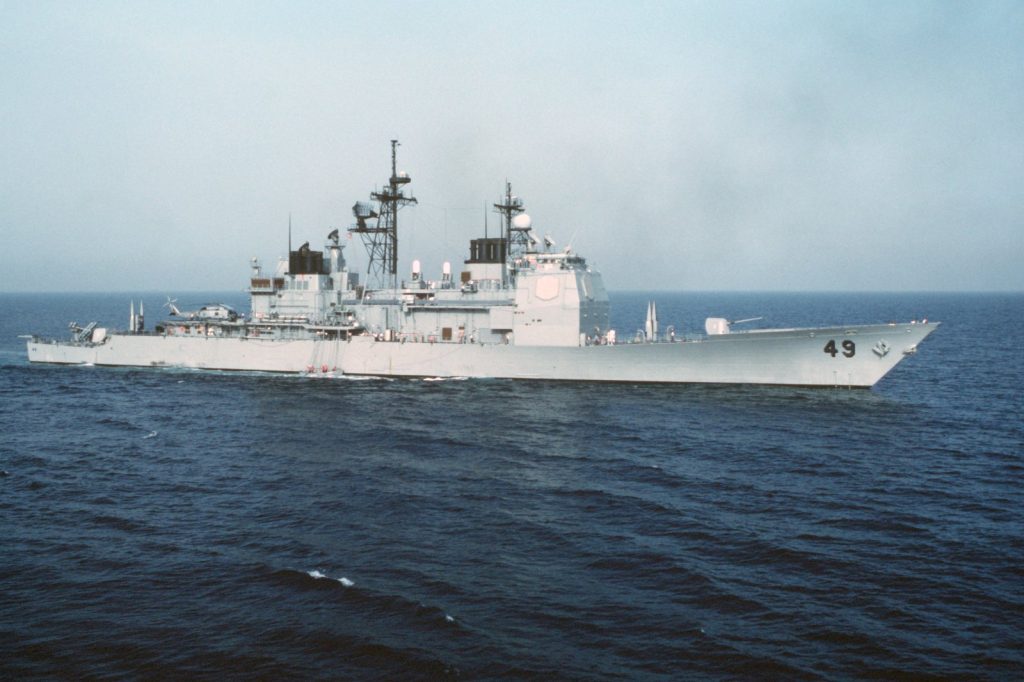
The strategic flashpoint has consistently been the Strait of Hormuz, the narrow waterway through which a substantial portion of the world’s oil supply transits. During the Iran–Iraq War, which lasted from 1980 to 1988, Iran attacked oil tankers in the Strait in a campaign that became known as the Tanker War, spanning 1984 to 1988. The United States responded by launching Operation Earnest Will, a naval escort operation that ran from July 1987 to September 1988, designed to protect reflagged Kuwaiti tankers.
On July 3, 1988, the USS Vincennes shot down Iran Air Flight 655, killing all 290 civilians aboard. Sources familiar with the incident note it remains one of the most significant and contentious flashpoints in the bilateral relationship.
The United States has maintained a continuous naval presence in the region, including the Fifth Fleet based in Bahrain, since 1949. Economic sanctions have been a consistent tool of U.S. policy toward Iran. The United States imposed sanctions starting in 1987, with major expansions occurring in 1995 and again in 2010.
These measures have targeted Iran’s energy sector, financial system, and its nuclear program.
The JCPOA and its Collapse
The most significant diplomatic effort to address the nuclear issue was the Joint Comprehensive Plan of Action, or JCPOA, signed on July 14, 2015, between Iran and the P5+1 — the United States, United Kingdom, France, Russia, China, and Germany. The deal placed limits on Iran’s nuclear enrichment activities in exchange for sanctions relief. Under President Donald Trump, the United States withdrew from the JCPOA on May 8, 2018.
The administration cited concerns over the deal’s structure, its sunset provisions, and Iran’s ballistic missile program. Following the withdrawal, the U.S. reimposed stringent sanctions.
The May 2019 attacks marked a sharp escalation in the post-JCPOA period. According to the record, those attacks were followed by Iran’s seizure of the British-flagged tanker Stena Impero on July 19, 2019. The incident underscored the vulnerability of commercial shipping in the Strait and the willingness of Tehran to use naval assets as instruments of state policy.
Looking ahead, the core elements of the conflict remain unchanged. Iran continues to operate in the Strait of Hormuz, the U.S. Fifth Fleet maintains its posture in Bahrain, and the sanctions regime remains in place.
The absence of a diplomatic framework since the U.S. withdrawal from the JCPOA leaves the region in a state of managed confrontation, with the potential for miscalculation or escalation always present.




