
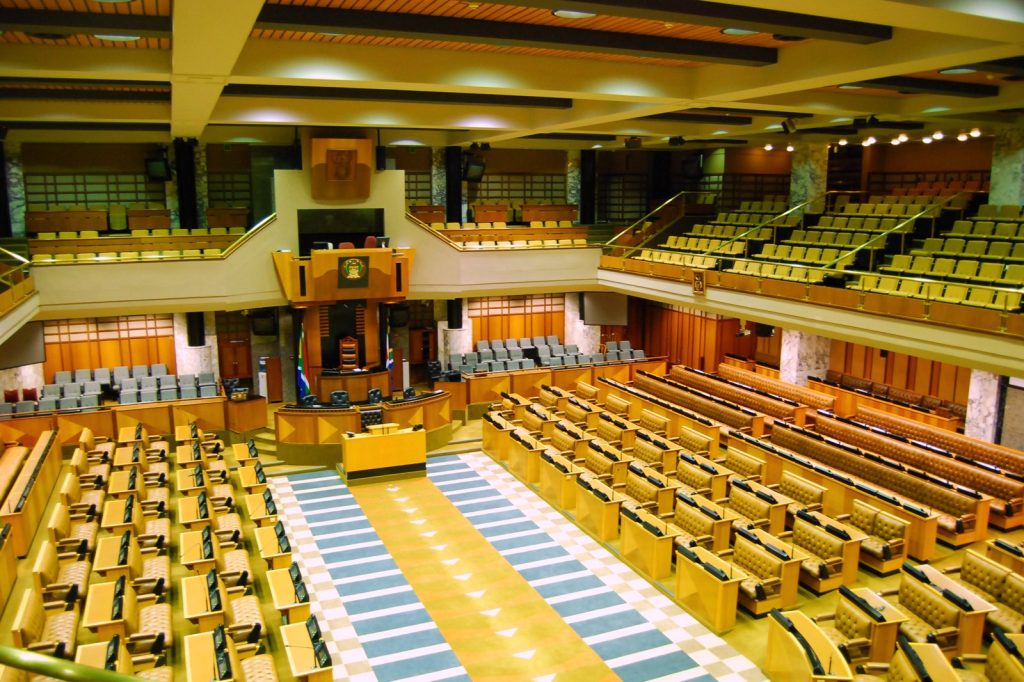
The 2024 general election in South Africa has produced a National Assembly that differs significantly from the country’s nine provincial legislatures. This divergence is not accidental. It stems directly from a compensatory seat mechanism embedded in the nation’s voting system.
On election day, voters received two ballots. One was national, the other regional.
The national ballot determined each party’s allocation of the 400 seats in the National Assembly. The regional ballot decided representation in each of the nine provincial legislatures. For many smaller parties, the regional vote proved fruitless.
They failed to secure enough support within individual provinces to win any seats there. However, the national count painted a different picture.
Several of those same small parties accumulated sufficient votes nationwide to qualify for a seat in the National Assembly. The compensatory seats made this possible. These seats are designed to correct an imbalance.
A party that is too weak to win a single constituency in any province can still gain a seat in the national legislature if its total national vote share crosses the required threshold. The effect is tangible.
The new National Assembly will include voices that would otherwise be absent. In contrast, the provincial legislatures will be narrower, featuring fewer parties and less diversity. This split is a direct consequence of how the two ballots are weighted and reconciled. For the parties that benefited, compensatory seats are a lifeline.
They provide a platform, a budget, and a microphone in committee rooms. Without them, those parties would have zero representation anywhere.
Their supporters would have cast ballots that produced no one to speak for them. This is a real risk in a system where regional constituencies can be dominated by two or three large parties. The 2024 results confirm that the compensatory mechanism works as intended.
It does not give small parties power—they remain small. But it gives them presence.
That presence reshapes the National Assembly floor. It forces larger parties to negotiate, form coalitions, and listen to factions they might otherwise ignore. What comes next is the hard part.
The parties that secured compensatory seats now must prove they can use them. They have to turn a seat into influence by showing up, drafting legislation, and building alliances.
It is not automatic. A compensatory seat guarantees a desk in the chamber, but it does not guarantee a win on any vote. The provincial legislatures, meanwhile, will operate without those same small-party voices.
This creates a gap. Voters who supported a small party nationally may find their province run by a coalition that does not include their chosen party.
That disconnection is a feature of the system, not a bug. It is the trade-off for keeping the National Assembly broad. For South Africa’s democracy, the 2024 election was a stress test of that trade-off.
The compensatory seats passed it. They absorbed votes that would otherwise have been wasted and translated diffuse support into actual representation.
The question now is whether that representation leads to real outcomes or just more speeches. The answer will come in the next five years.




