
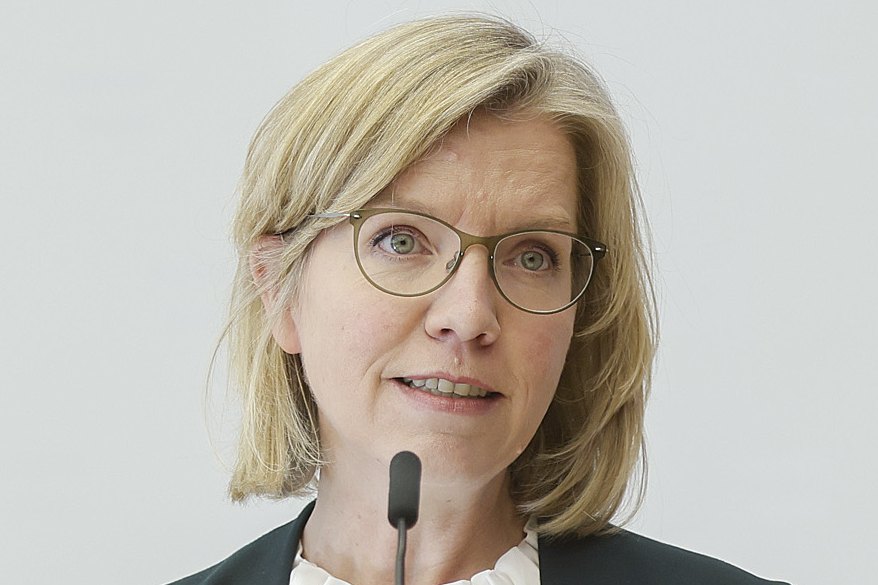
The Green Party of Austria has placed its future in the hands of a minister who already holds one of the most powerful portfolios in government. On June 29, 2025, delegates at a party convention in Vienna elected Leonore Gewessler as the new leader. The vote was decisive.
She won 96.76% of the delegate votes. That number leaves little room for doubt about the party’s direction.
Gewessler is not a newcomer stepping into the role. She has served as Minister for Climate Action, Environment, Energy, Mobility, Innovation and Technology in the Nehammer government. That title is a mouthful, but it reflects a reality: her job has already merged the Green Party’s core issues into a single, sprawling bureaucratic domain.
She has been the public face of Austria’s push to reconcile economic growth with environmental targets. Now she will lead the party itself.
Born on September 15, 1977, Gewessler has spent years inside Austrian politics, focused almost entirely on environmental and energy policy. The convention in Vienna was a gathering of party members and delegates from across the country. The result suggests a party that is unified.
It is rare for any political faction to hand a new leader nearly 97 percent support. It signals that the internal debates, if there were any, have been settled. The timing matters.
Austria’s political landscape is fractured. The coalition government she serves in is fragile.
The Green Party is the junior partner, and its influence depends on holding together alliances with larger, more traditional parties. Gewessler’s experience in the Nehammer cabinet gives her a direct understanding of how to work inside that system. She knows the trade-offs required to pass legislation.
She has seen the limits of ministerial power firsthand. Her leadership will be tested on several fronts.
The party needs policies that balance competing demands — industry versus climate, mobility versus emissions, innovation versus regulation. Gewessler has already been doing that balancing act as a minister. Now she must do it as the party’s public voice.
The convention vote indicates she has the trust of the base. Maintaining that trust while making compromises in coalition talks will be the real challenge. The Green Party has struggled in the past with internal splits between pragmatists and purists.
Gewessler’s overwhelming mandate suggests the pragmatists have won. She is a seasoned politician, not an activist.
Her focus will likely be on what is achievable within the current government structure, not what is ideal on paper. There is no grand strategy document yet. No sweeping reform package announced.
What exists is a clear numerical fact: 96.76 percent of delegates chose her. That is the starting point.
Everything else will be built from there, inside the parliament, inside the coalition meetings, inside the ministries she already oversees. For now, the party has a leader. The direction is set.
The work begins in Vienna, where the convention ended and where the government sits.




