
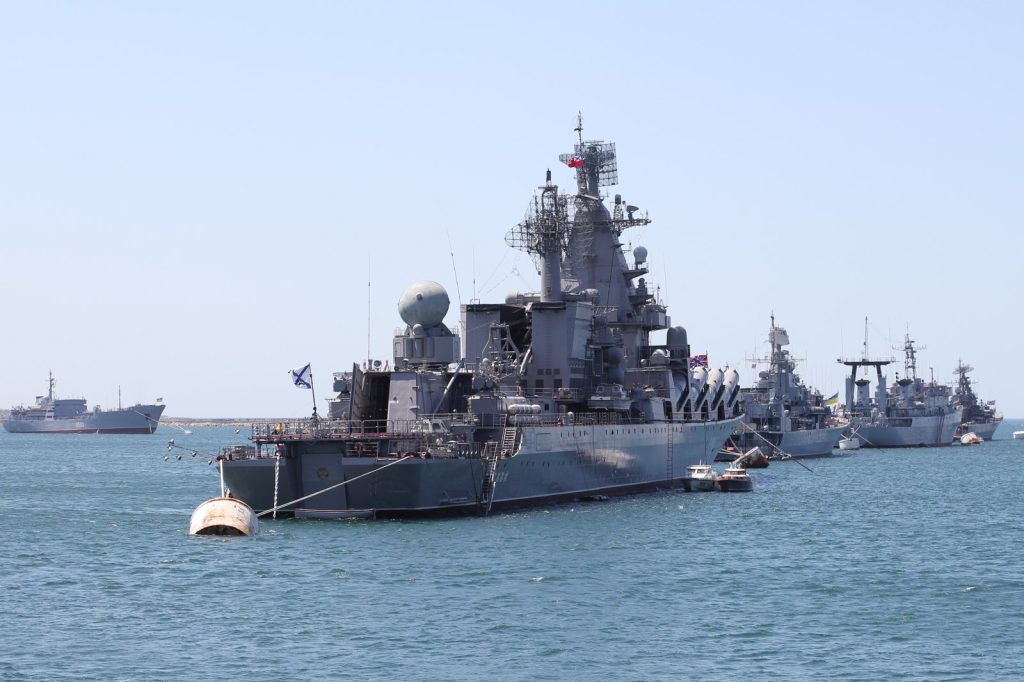
KYIV, July 11 — The shift is unmistakable. Ukraine’s campaign against Russian naval power in the Black Sea has evolved from sinking a flagship with missiles to systematically hunting logistics vessels with drone boats, fundamentally changing the maritime balance of the war. Since the full-scale invasion began on February 24, 2022, Kyiv has waged a sustained and increasingly sophisticated campaign against Moscow’s fleet.
The first major blow came on April 14, 2022, when Ukrainian forces used Neptune anti-ship missiles to sink the Russian cruiser Moskva, the flagship of the Black Sea Fleet. That single strike, a massive symbolic and operational victory, announced that no Russian vessel was safe near the Ukrainian coast.
From Missiles to Uncrewed Surface Vessels
The opening months of the campaign also saw a strike on the Russian landing ship Saratov at the port of Berdyansk in March 2022. But the real technological shift arrived in 2023 and accelerated into 2024. Ukraine began deploying uncrewed surface vessels (USVs) — fast, low-profile drone boats packed with explosives — to hunt Russian warships directly.
On February 1, 2024, a USV attack struck the Russian corvette Ivanovets. Just two weeks later, on February 14, 2024, another drone boat operation hit the landing ship Caesar Kunikov.
These attacks demonstrated a new, cost-effective way to challenge a larger navy: small, expendable drones that could slip past defenses and deliver crippling blows.
Targeting the Logistics Chain
The trend underneath these headline-grabbing strikes is a strategic evolution. The August 18, 2024, attack on 21 tankers marks a clear pivot. Ukraine is no longer just sinking combat ships; it is now targeting the logistics vessels that supply fuel to the Russian fleet.
Disrupting the flow of fuel directly hampers Russia’s ability to sustain prolonged naval operations, blockade Ukrainian ports, or project power across the Black Sea. This logistical pressure has already forced Russia to react.
Moscow has relocated some naval assets eastward to the port of Novorossiysk, pulling them back from forward positions. The result is a measurable reduction in Russia’s ability to maintain an effective blockade of Ukrainian ports, a development with direct consequences for Ukraine’s grain exports and maritime trade.
The Kerch Bridge and the Strategic Picture
Ukraine has also targeted the Kerch Strait Bridge, the critical link between Russia and the occupied Crimean Peninsula. Strikes in October 2022 and July 2023 damaged the bridge, further complicating Russian supply lines and demonstrating that Crimea itself is not a safe rear area. Watch this space.
The pattern is clear: Ukraine is systematically eroding Russia’s Black Sea Fleet, not through a single decisive battle, but through a relentless campaign of attrition using innovative technology and asymmetric tactics. The shift from sinking a cruiser to hunting fuel tankers with drone boats tells you everything about how this war at sea is being fought — and who is adapting faster.




