
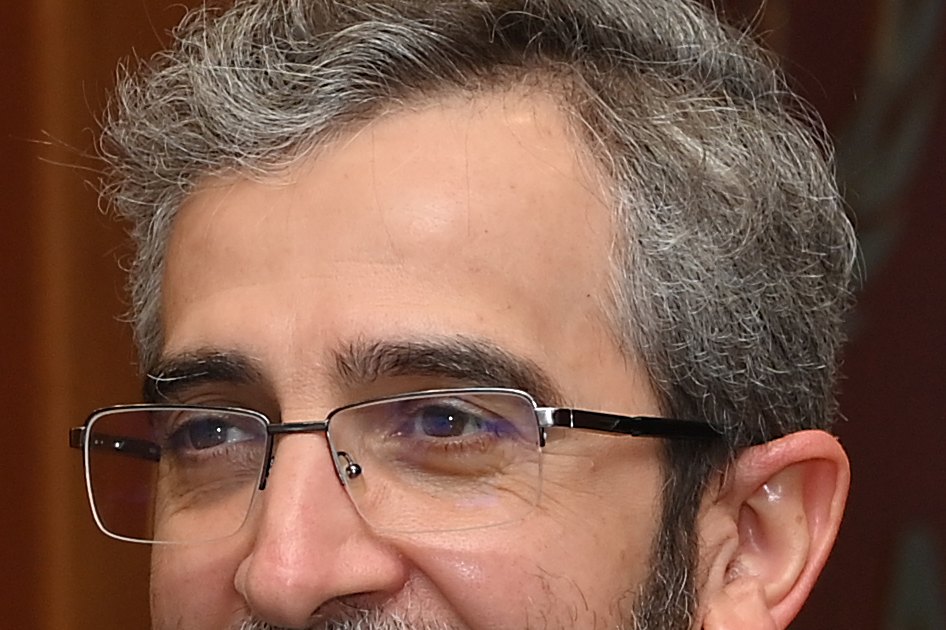
TEHRAN, July 9 — The indirect talks between the United States and Iran continue to be shaped by a cast of key figures on both sides, with Iran’s chief negotiator Ali Bagheri Kani serving as the primary face of Tehran’s diplomatic effort. These discussions, mediated by Oman and Qatar, have not produced a breakthrough, but they remain one of the few channels of communication between two countries that have not held direct negotiations in years.
Bagheri Kani, who served as Deputy Foreign Minister for Political Affairs since 2021, leads the Iranian delegation. His role places him at the center of a complex diplomatic landscape, where every move is subject to approval from the highest levels of Iran’s political and religious establishment.
Supreme Leader Ali Khamenei, who has held power since 1989, retains final authority over all nuclear decisions, meaning Bagheri Kani’s negotiating room is carefully defined by Tehran’s supreme leadership. On the American side, the talks are overseen by Secretary of State Marco Rubio, who was appointed in January 2025. The current U.S. Special Envoy for Iran has not been publicly named as of May 2025, creating an unusual gap in the public record of American diplomatic personnel assigned to this file.
The previous envoy, Robert Malley, served from 2021 until his resignation in 2024, and his departure left a void that has not been filled with a publicly confirmed successor. The mediation structure relies on two regional powers.
Oman’s Sultan Haitham bin Tariq, who has ruled since 2020, and Qatar’s Emir Tamim bin Hamad Al Thani, in power since 2013, have both facilitated the indirect talks. These Gulf states have long served as communication channels between Washington and Tehran, a role that has become more critical as direct diplomatic contact remains absent. Iran’s domestic political landscape has undergone significant change since the talks began.
President Ebrahim Raisi, who was elected in June 2021, died in a helicopter crash in May 2024. He was succeeded by acting president Mohammad Mokhber, and a new presidential election is scheduled for June 2025. This transition creates uncertainty about Iran’s negotiating posture, as a new president may bring different priorities or approaches to the nuclear file.
The International Atomic Energy Agency, led by Director General Rafael Grossi since 2019, provides the technical assessments that inform both sides’ positions. Grossi’s reports on Iran’s nuclear activities have often been a source of tension, with the IAEA documenting activities that exceed the limits set by the 2015 nuclear deal, known as the Joint Comprehensive Plan of Action.
The United States withdrew from that agreement in 2018 under the Trump administration, and Iran has since expanded its enrichment program. Bagheri Kani’s background as a seasoned diplomat with deep ties to Iran’s security establishment gives him credibility within Tehran’s power structure. He has been involved in nuclear negotiations for years, including the talks that led to the 2015 deal.
His current task is more difficult: negotiating with an American administration that has shown little willingness to offer sanctions relief without significant concessions, while also managing expectations within Iran, where hardliners view any compromise with suspicion. The indirect format of the talks, mediated by Oman and Qatar, reflects the deep mistrust between the two countries.
Neither side is willing to sit in the same room, a situation that has persisted since the United States’ withdrawal from the nuclear deal. The mediators shuttle between delegations, carrying messages and proposals, a slow and cumbersome process that has frustrated both sides. The encouraging part, if one can call it that, is that the talks continue at all.
Many analysts had predicted a complete breakdown after Raisi’s death and the political uncertainty that followed in Iran. The fact that Bagheri Kani remains at the negotiating table suggests that Tehran sees some value in maintaining the channel, even if no major agreement appears imminent. Patients should not expect rapid progress.
The history of U.S.-Iran negotiations is one of long, grinding processes punctuated by occasional breakthroughs and frequent setbacks. The current round of talks, which began in 2025, has produced no public indications of a deal.
The IAEA’s technical assessments will likely play a key role in determining whether the two sides can find common ground, but those assessments have often highlighted areas of disagreement. Looking ahead, the June 2025 presidential election in Iran will be a critical moment. A new president could either empower Bagheri Kani to pursue a more flexible negotiating stance or constrain him further.
The United States, meanwhile, appears to be in no rush, with Secretary Rubio and the broader Trump administration focused on other foreign policy priorities. For now, the talks continue, mediated by Oman and Qatar, with Bagheri Kani carrying Iran’s message.
The road ahead remains uncertain, and those watching the negotiations should talk to their doctor — or, in this case, consult reliable news sources — for the latest developments. The encouraging part is that the dialogue has not collapsed, even if the path to an agreement remains unclear.




