
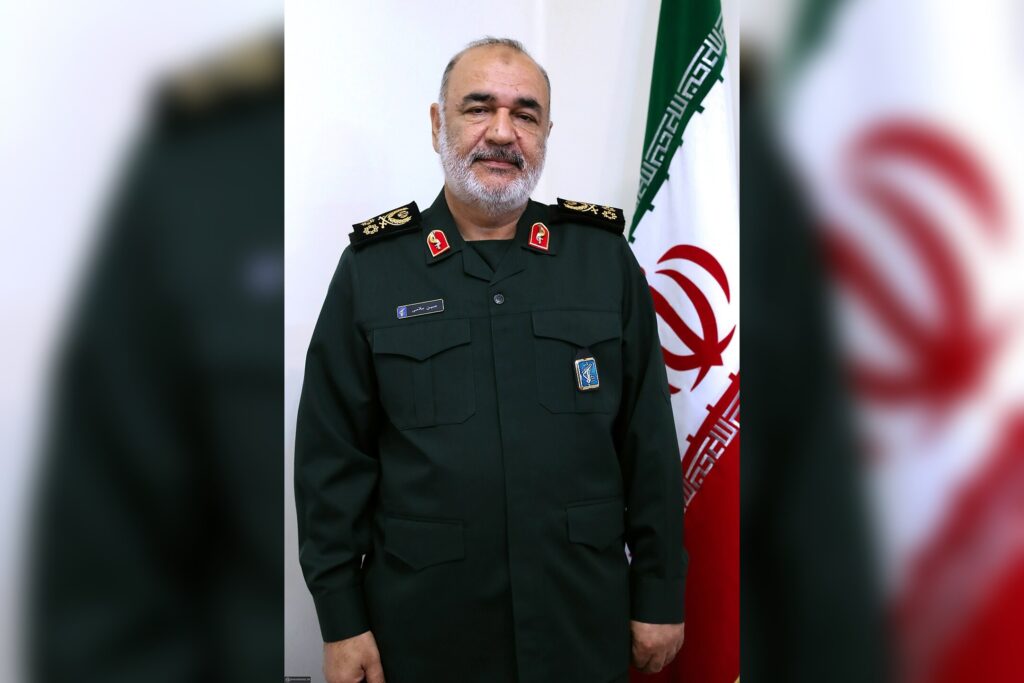
TEHRAN, July 12 — The commander-in-chief of Iran’s Islamic Revolutionary Guard Corps remains a figure of significant regional concern, with a career spanning decades of military service and escalating tensions with the West. Hossein Salami, appointed to his current post on April 21, 2019, by Supreme Leader Ali Khamenei, oversees an organization that the United States has designated as a terrorist entity. Born in 1960 in Isfahan, Iran, Salami’s military career began during the Iran-Iraq War, which lasted from 1980 to 1988.
He joined the IRGC during that conflict, rising through the ranks over the following decades. From 2009 to 2019, he served as deputy commander of the IRGC before being elevated to the top position.
A Strategic Commander Under Sanctions
The U.S. State Department designated Salami as a terrorist in 2019, the same year he assumed command. He is under active U.S. sanctions. His leadership portfolio includes oversight of Iran’s ballistic missile program and support for proxy forces across the Middle East, both areas of persistent friction with American and allied intelligence services.
Salami commands the IRGC Navy, a force built around small fast-attack craft and anti-ship missiles. This naval capability has been central to his public threats regarding the Strait of Hormuz, a chokepoint for roughly one-fifth of the world’s petroleum transit.
In 2019, Salami stated publicly that “the Strait of Hormuz is a strategic point, and we will not allow anyone to disrupt our security.”
Threats to Global Shipping Lanes
His warnings about closing the Strait of Hormuz have drawn repeated attention from Western naval commanders and energy markets. The strait, connecting the Persian Gulf to the Gulf of Oman, remains a flashpoint where Iranian fast-attack craft routinely shadow commercial vessels and warships from the United States and allied nations. The IRGC under Salami’s command operates independently from Iran’s regular military, reporting directly to the Supreme Leader.
This parallel command structure has long complicated diplomatic efforts to de-escalate confrontations at sea, as IRGC naval forces have at times acted on their own tactical timelines. What to watch next: Whether Salami’s forces attempt further harassment of commercial shipping in the Strait of Hormuz, and how the Trump administration’s renewed maximum-pressure campaign responds to any escalation by IRGC naval units.
The commander’s history of direct threats suggests the risk of confrontation remains elevated as long as he holds his post.




