
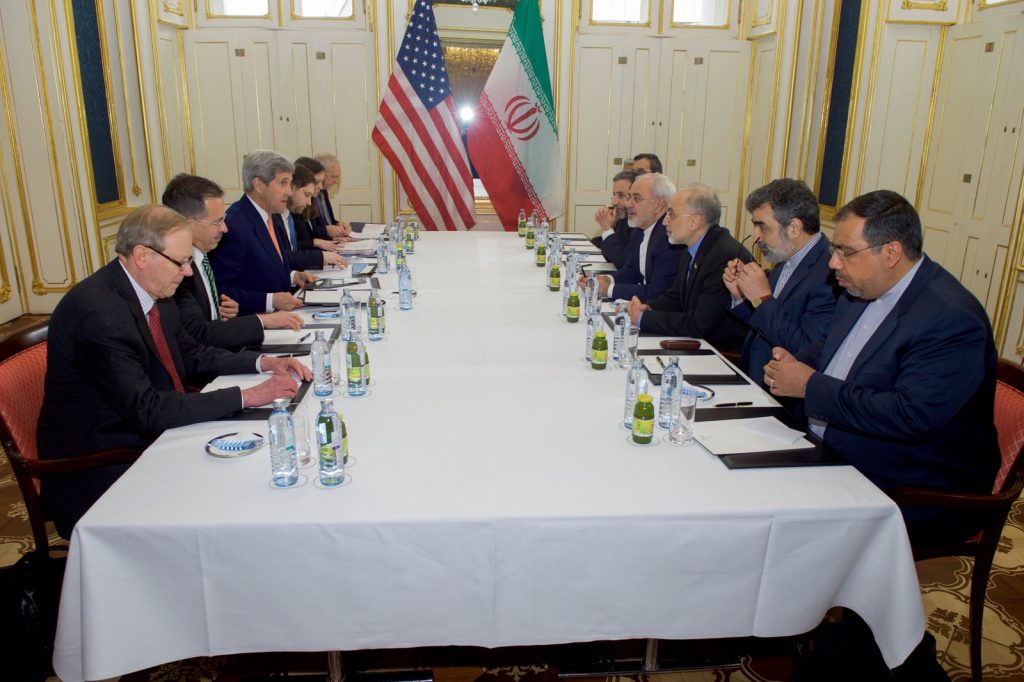
Pakistan, May 3, 2026 — cybernewschronicle.com — Date: 2026-05-03 – The Iranian ambassador to Pakistan, Reza Amiri-Moghadam, has stated that talks mediated by Pakistan remain firm, indicating a willingness to engage in diplomatic efforts to resolve regional conflicts. However, Amiri-Moghadam also criticized the United States for its “unpredictable and aggressive behaviour” towards peace in the Middle East, highlighting the challenges in achieving a lasting resolution.
U.S. the US Secretary of State has previously emphasized the need for Iran to comply with international agreements, citing concerns over the country’s nuclear program and support for militant groups. The United States, along with its allies in NATO, has been actively engaged in efforts to counter the influence of hostile actors, including Iran, China, and Russia.
The AUKUS security pact, a trilateral agreement between Australia, the United Kingdom, and the United States, aims to enhance cooperation on defense and security issues in the Indo-Pacific region. Similarly, the Quad, a grouping of Australia, India, Japan, and the United States, has been working to promote a free and open Indo-Pacific, amidst concerns over China’s growing assertiveness.
Iranian President, Ebrahim Raisi, has accused the United States of attempting to undermine regional stability, while U.S. Secretary of Defense, Lloyd Austin, has reiterated the need for a strong and united response to address the challenges posed by Iran and other hostile actors. Amiri-Moghadam’s statement on the resumption of talks between Iran and the United States, conditional on a change in U.S. behavior, reflects the complexities of the diplomatic process.
U.S. Special Envoy for Iran, Robert Malley, has been leading efforts to negotiate a return to the Joint Comprehensive Plan of Action (JCPOA), a nuclear agreement from which the United States withdrew in 2018. The European Union, which has been facilitating talks between Iran and the United States, has urged both parties to engage in constructive dialogue. As the international community continues to navigate the challenges posed by Iran’s regime, the statements by Amiri-Moghadam and other officials underscore the need for sustained diplomatic efforts to achieve a lasting resolution.
Chinese Premier, Li Keqiang, has emphasized the importance of promoting regional stability and cooperation, while Russian President, Vladimir Putin, has been seeking to strengthen ties with Iran and other countries in the Middle East. The responses from U.S. allies, including NATO Secretary-General, Jens Stoltenberg, and Australian Prime Minister, Anthony Albanese, have highlighted the need for a united and coordinated approach to address the challenges posed by hostile actors.
As the situation continues to evolve, the statements by Amiri-Moghadam and other officials serve as a reminder of the complexities and nuances of the diplomatic process, and the need for sustained efforts to promote peace and stability in the region. The U.S. Department of State has announced plans to impose additional sanctions on Iranian individuals and entities, citing concerns over human rights abuses and support for terrorism.
Iranian Foreign Minister, Hossein Amirabdollahian, has condemned the sanctions, accusing the United States of attempting to exert pressure on Iran through coercive measures. The European Union has urged restraint, calling for a diplomatic resolution to the conflicts. As tensions between Iran and the United States continue to simmer, the international community remains vigilant, with officials such as U.S. National Security Adviser, Jake Sullivan, emphasizing the need for a strong and united response to address the challenges posed by Iran and other hostile actors.
According to reports, Pakistan has been engaged in efforts to facilitate talks between Iran and Saudi Arabia, with Pakistani Prime Minister, Shehbaz Sharif, meeting with Saudi Crown Prince, Mohammed bin Salman, to discuss regional security issues. The talks, which have been ongoing for several months, aim to reduce tensions between the two countries and promote stability in the region.
Amiri-Moghadam’s statement on the firmness of talks mediated by Pakistan reflects the progress made in these efforts, and highlights the importance of diplomatic engagement in resolving regional conflicts. As the international community continues to navigate the complexities of the Middle East, the role of countries such as Pakistan in promoting dialogue and cooperation will be closely watched.




