
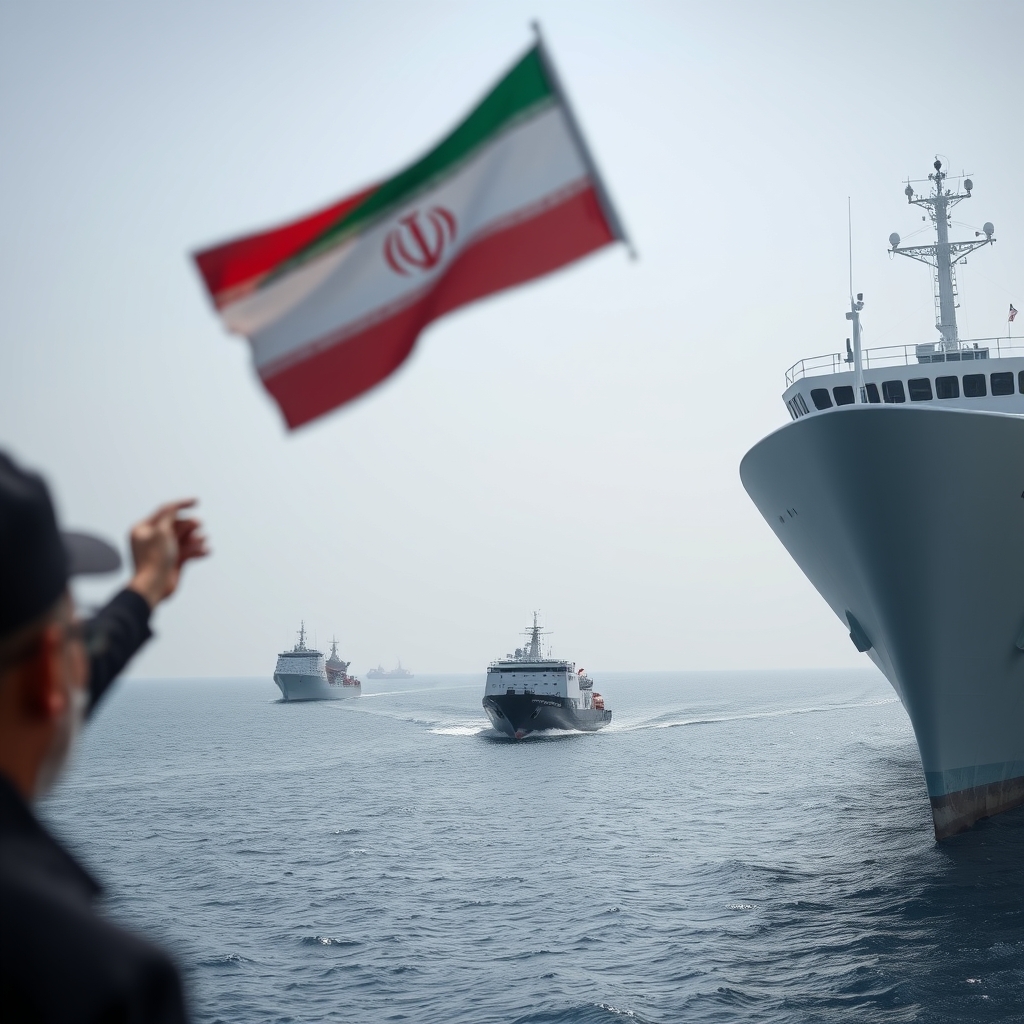
Iran, May 22, 2026 — cybernewschronicle.com — As of May 22, 2026, the Islamic Revolutionary Guard Corps Navy (IRGCN) reported that 35 ships had successfully passed through the Strait of Hormuz with permission over the previous 24 hours. This key waterway, which connects the Persian Gulf to the Gulf of Oman, is a vital shipping lane for international trade, with a significant portion of the world’s oil exports traversing the strait.
The IRGCN, founded in 1985, is one of the two maritime forces of Iran, operating in parallel to the conventional Iranian Navy. U.S. the US Secretary of State has previously expressed concerns about the IRGCN’s activities in the region, citing the potential for disruption to global trade and stability.
Background and Context
The IRGCN’s doctrine and structure differ significantly from those of traditional navies, prioritizing asymmetric maritime warfare through the use of small fast-attack craft, anti-ship missiles, naval mines, and hit-and-run and swarm tactics. This approach has led to the IRGCN being described as a “guerrilla navy.” The force also acts as Iran’s de facto coast guard and maintains several Marine infantry units.
According to Admiral John Aquilino, Commander of the U.S. Indo-Pacific Command, the IRGCN’s unconventional tactics pose a unique challenge to regional security, requiring a coordinated response from the international community. NATO Secretary General Jens Stoltenberg has emphasized the importance of maintaining freedom of navigation in the Strait of Hormuz, citing the potential consequences of disruption to global trade and economic stability.
The AUKUS security pact, comprising Australia, the United Kingdom, and the United States, has also expressed concerns about the IRGCN’s activities, with Australian Prime Minister Anthony Albanese stating that the pact is committed to upholding the rules-based order in the region. The Quad, a grouping of Australia, India, Japan, and the United States, has similarly emphasized the need for cooperation in maintaining regional security and stability. On May 20, 2026, U.S. Central Command (CENTCOM) announced that the USS Dwight D.
Eisenhower (CVN-69) aircraft carrier strike group had begun operations in the North Arabian Sea, demonstrating the U.S. commitment to regional security and stability. CENTCOM Commander General Michael Kurilla stated that the deployment was a routine operation, aimed at maintaining freedom of navigation and reassuring regional partners.
The move was seen as a response to the IRGCN’s increasing activities in the region, with the U.S. seeking to reassure its allies and maintain a strong presence in the area. Iran’s regime has been accused by Western officials of using the IRGCN to exert pressure on regional trade and stability, with the force’s activities often seen as a key component of Iran’s foreign policy.
According to U.S. Secretary of Defense Lloyd Austin, the IRGCN’s actions are a reminder of the need for continued vigilance and cooperation among regional partners to maintain stability and security. As the situation in the region continues to evolve, the international community will be closely watching the IRGCN’s activities, with a focus on ensuring the continued free flow of trade and commerce through the Strait of Hormuz.
The IRGCN’s reported permission for 35 ships to pass through the Strait of Hormuz over the previous 24 hours may be seen as a positive development, indicating a willingness to facilitate international trade and cooperation. However, the force’s overall activities and intentions remain a subject of concern for Western officials, who will continue to monitor the situation closely.
As the U.S. and its allies seek to maintain regional stability and security, the IRGCN’s actions will remain a key factor in shaping the international response to the challenges posed by Iran’s regime.




