
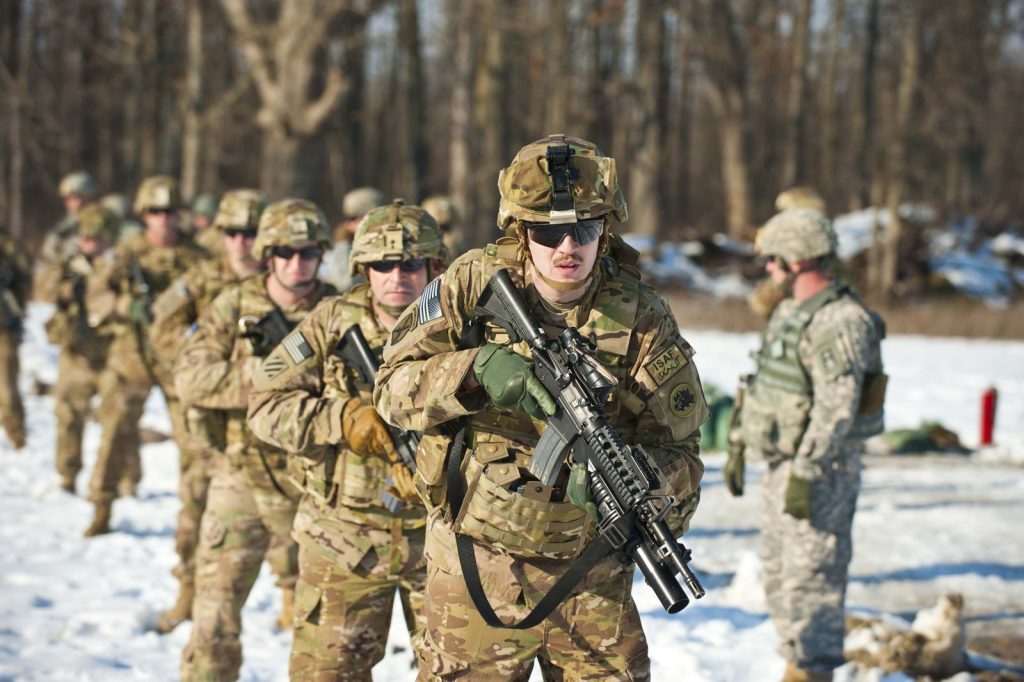
TALLINN, July 6 — The United States has decided to withdraw its approximately 1,000 troops from Estonia, according to officials familiar with the decision. The move marks a significant shift in NATO’s enhanced forward presence posture in the Baltic region, and no other allied nation has yet committed to replacing the American contingent. The enhanced forward presence, or eFP, was established in 2016 as a direct response to Russia’s annexation of Crimea in 2014.
The deployment places multinational battlegroups across Estonia, Latvia, Lithuania, and Poland, with the United Kingdom leading the force in Estonia. The United States has led the battlegroup in Poland since 2017.
The eFP involves approximately 4,000 troops total across the four countries, with contributions from 11 NATO allies. The American troops in Estonia have been part of a rotational presence since 2014, not a permanent stationing, officials confirmed. The record shows that the eFP was designed as a deterrent against Russian aggression.
According to the statement from NATO officials, the future of the deterrent posture in Estonia is now uncertain. No other NATO member state has stepped forward to fill the gap left by the departing U.S. forces.
The decision to withdraw was not taken lightly, officials said, but reflects a reassessment of force allocation within the alliance. The strategic context is clear. The eFP was built as a tripwire deterrent, meant to signal that an attack on any one ally would draw in forces from across the alliance.
The loss of the American battalion in Estonia weakens that signal at a time when tensions along NATO’s eastern flank remain elevated. The United States has not indicated whether the withdrawn troops will be redeployed elsewhere in Europe or returned to American bases. NATO headquarters in Brussels has declined to comment on whether a replacement force is under discussion.
What happens next in Estonia will be watched closely in Warsaw, Riga, and Vilnius. The alliance’s ability to maintain a credible deterrent across its eastern border now faces a practical test.




