
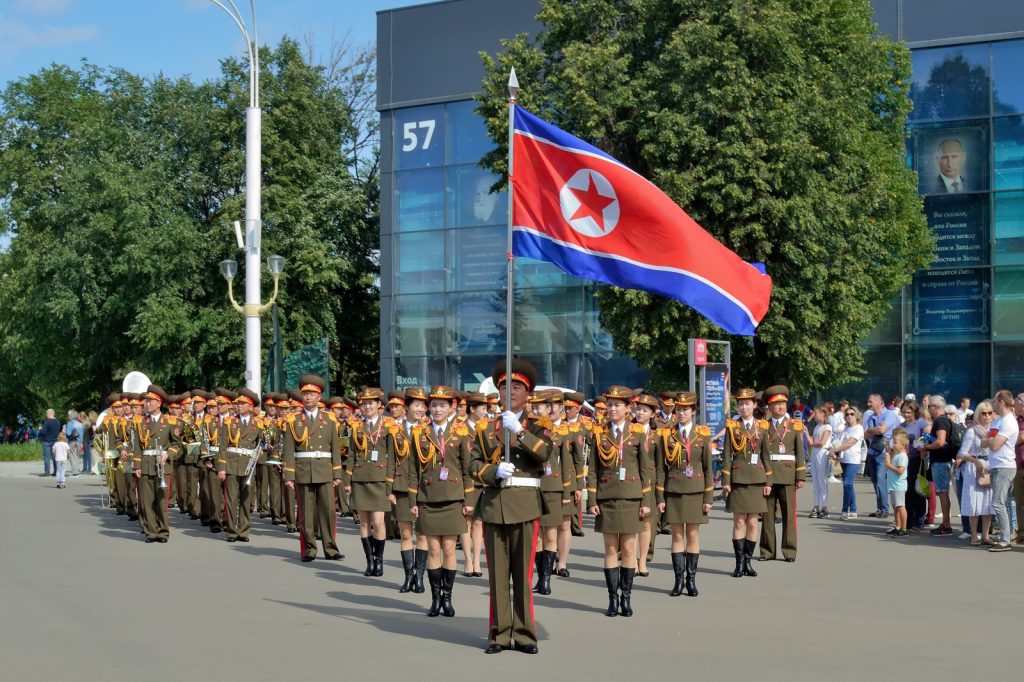
Kyiv, August 21 — Reports from Ukraine’s military intelligence and corroborated by international outlets paint a stark picture of North Korea’s deepening entanglement in the Russia-Ukraine conflict. The deployment of approximately 8,500 troops — including around 400 specialists in drone operations — to Russian-held territory marks a tangible shift in Pyongyang’s war strategy. Moscow, facing sustained pressure from Ukrainian forces in the Kursk region, has reportedly sought as many as 50,000 additional North Korean soldiers, signaling an ambition to scale this alliance far beyond current numbers.
The presence of these operators, trained in unmanned aerial vehicle systems, introduces a novel tactical element to the battlefield, one that Ukrainian commanders are keen to understand and counter. The scale of North Korea’s involvement is not confined to military logistics.
Simultaneously, the regime has launched a coordinated cyber campaign, exploiting the digital age to undermine Western interests. Thousands of North Korean operatives, masquerading as IT professionals, have secured remote positions at U.S. companies through fraudulent applications. These individuals, often using stolen identities, have established “laptop farms” — networks of compromised devices — to infiltrate corporate systems.
Ukrainian and cybersecurity analysts describe this as a calculated effort to gather intelligence and disrupt critical infrastructure, blending physical troop deployments with virtual sabotage. The duality of this approach — human and technological — complicates Western responses, which must now address both conventional and cyber threats.
Historical Context and Strategic Calculus
Ukrainian officials have issued warnings about the implications of this deployment. The integration of drone technology into frontline operations could alter the dynamics of ground warfare, enabling Russia to conduct surveillance, target strikes, or gather intelligence with greater precision. Moreover, the presence of North Korean cyber operatives within U.S. corporations raises concerns about the security of sensitive data and defense systems.
Analysts note that while the exact numbers and roles of the 400 drone specialists remain unclear — they may be part of the 8,500 troops already in Russia or an additional force — their expertise alone represents a significant escalation. This is not merely a question of manpower but of technological leverage, a factor that could reshape battlefield outcomes if left unchecked.
The Broader Security Landscape
The U.S. administration, under President Donald Trump, has historically approached North Korea with a mix of skepticism and pragmatism. While public rhetoric has often emphasized denuclearization, the current administration’s response to this specific deployment remains unpublicized. Meanwhile, Secretary of State Marco Rubio has prioritized countering hybrid warfare, a stance that aligns with the urgency of addressing both the troop and cyber components of this threat.
The challenge for Washington is twofold: deterring further North Korean entanglement in conflicts abroad while safeguarding domestic infrastructure from the same actors exploiting its digital networks. As the conflict in Ukraine enters its fourth year, the introduction of North Korean drone operators marks another chapter in its evolution.
What begins as a military support agreement has now expanded into a multifaceted operation, blending combat, technology, and espionage. For Ukraine, the immediate concern is adapting to these new threats on the battlefield. For the international community, it is a reminder of how interconnected modern conflicts have become — where the lines between nation-state warfare and cyber operations blur, and where the actions of a single state can reverberate across continents.
The question remains: how will Moscow balance its immediate military needs with the long-term risks of deepening its reliance on a pariah state? And how will the West respond to a threat that operates as fluidly in the digital realm as it does on the front lines?




