
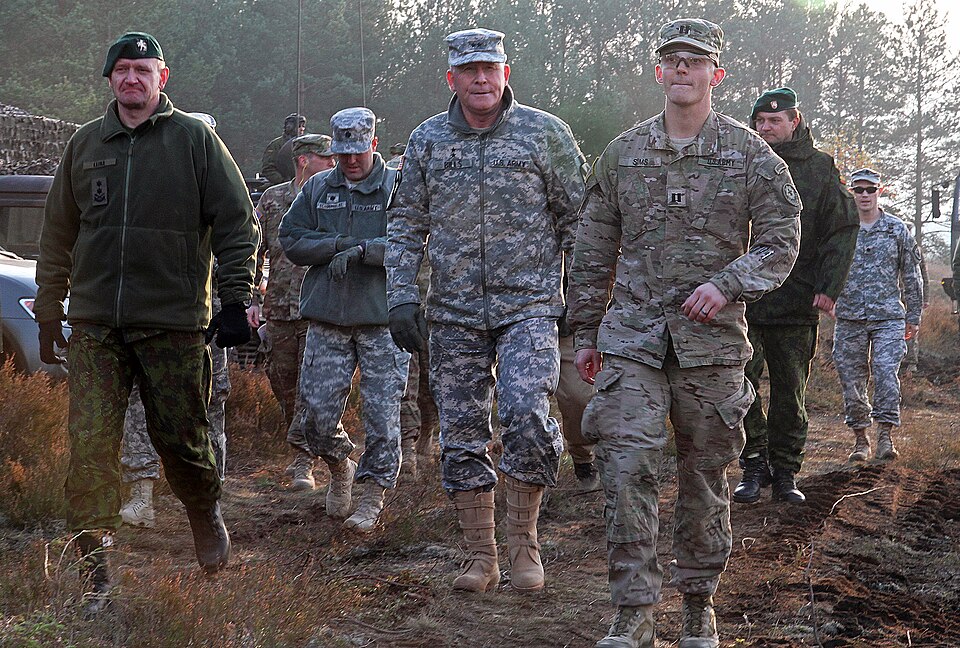
TALLINN, July 6 — The mechanics here are straightforward, but the implications are anything but. Operation Atlantic Resolve, the U.S. military’s rotational presence across NATO’s eastern flank, is being wound down in Estonia. The withdrawal marks a significant shift in posture under an operation that began in April 2014, launched in direct response to Russia’s annexation of Crimea and its ongoing aggression in Ukraine.
The operation has involved deployments of U.S. Army, Air Force, and Navy units to Estonia, Latvia, Lithuania, and Poland. The stated aim was to enhance deterrence along NATO’s eastern flank.
In Estonia specifically, the U.S. has deployed armored brigade combat teams, aviation units, and support personnel. The catch is that this was always a rotational model, not a permanent garrison. But a withdrawal at this juncture, with the war in Ukraine still grinding on, raises questions about the durability of that commitment.
Follow the money and the force structure. The U.S. has maintained a continuous presence in the region, with troop numbers fluctuating between 4,000 and 7,000 across all participating countries.
That is not a small footprint, but it is also not a static one. The operation is separate from NATO’s Enhanced Forward Presence, which includes multinational battlegroups in the Baltics and Poland. On closer reading, that distinction matters: the U.S. rotational deployments under Atlantic Resolve were a national initiative, layered on top of the NATO framework, giving Washington more direct control over its own forces.
The withdrawal from Estonia does not, by itself, end the operation across the region. But it signals a recalibration. The U.S. has not announced a complete pullout from the Baltics or Poland, and the source material does not specify which units are departing or what their ultimate destination might be.
The timing is the thing. The security landscape has shifted repeatedly, and the calculus in Washington has changed with it.
What to watch next is whether the remaining deployments in Latvia, Lithuania, and Poland hold steady or follow the same trajectory. The Baltic states have long worried that American attention is cyclical, surging during crises and ebbing once the headlines fade. This withdrawal will not ease those concerns.




