
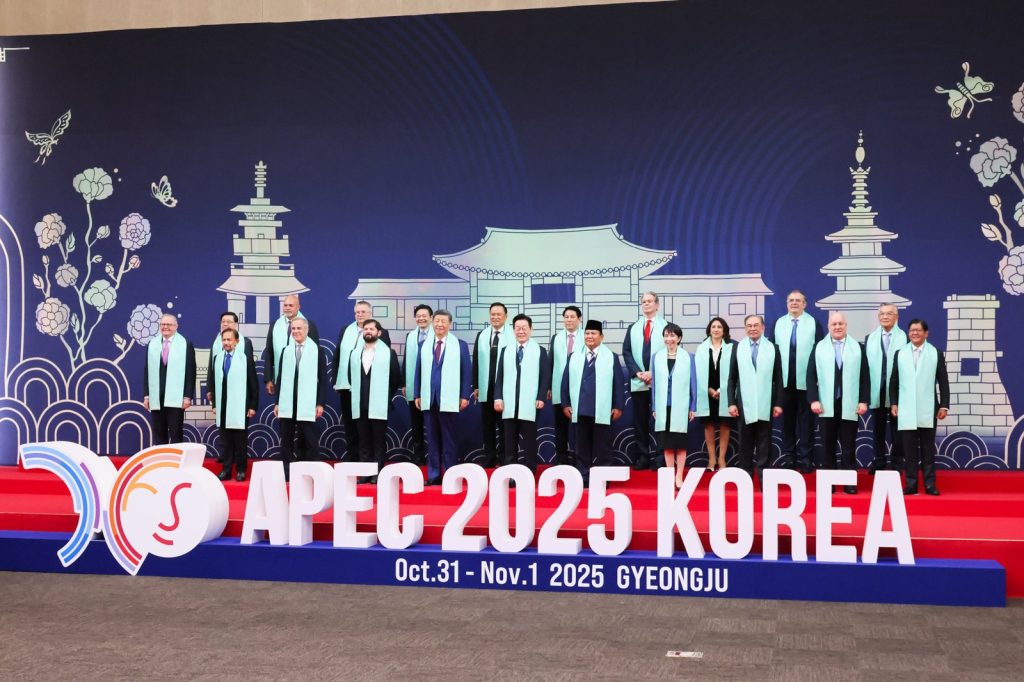
The Asia-Pacific Economic Cooperation forum concluded its annual cycle of meetings in South Korea on November 1, 2025, with the Leaders’ Meeting in Seoul. This marked only the second time the country has hosted the premier summit, following its initial turn in 2005. The two-decade gap between hosting duties underscores significant transformations in the region’s economic environment.
South Korea has been an APEC member for decades, consistently advocating for economic expansion and investment throughout the Asia-Pacific. However, managing the full sequence of sessions—from initial working groups through ministerial discussions to the culminating leader-level gathering—requires considerable organizational capacity, diplomatic engagement, and openness to external scrutiny of domestic trade practices.
Seoul has now undertaken this responsibility twice. The 2005 summit took place in a markedly different context. China’s economy was expanding rapidly but had not yet surpassed Japan as the region’s second-largest.
The Trans-Pacific Partnership remained a distant concept, and digital commerce received minimal attention. By 2025, the landscape had shifted dramatically.
Supply chain vulnerabilities, ongoing tariff disputes, and the challenge of maintaining trade flows amid national security considerations have become central concerns. APEC operates on a consensus-based, voluntary framework rather than binding treaty obligations. Nevertheless, the meetings establish the prevailing tone. Leaders engage in dialogue, and their trade officials subsequently adjust policies in response.
South Korea’s prior experience in 2005 likely facilitated smoother proceedings this time. The institutional knowledge accumulated from running a year of meetings reduced procedural complications and allowed greater focus on substantive matters.
The November 1 Leaders’ Meeting represented the culmination of this process. Leaders convened to address key topics and outline a path forward for collaborative efforts. The report does not specify the exact issues discussed or the direction agreed upon.
This is characteristic of APEC, whose communiqués typically feature broad, aspirational language regarding free trade and sustainable development. The most consequential work often occurs in informal settings—bilateral meetings, side conversations, and unofficial arrangements that remain outside the formal record.
Attention now turns to implementation, historically a challenging phase for APEC. The organization has a pattern of ambitious declarations followed by limited follow-through. The 2025 meeting produced decisions and agreements, according to the report.
Whether these translate into concrete policy changes across member economies depends on domestic political will. Regional and global observers will monitor developments closely.
Trade flows respond to tangible actions, not press releases, and investors seek substantive steps rather than statements of intent. South Korea’s second hosting of the APEC summit reinforces its reputation as a reliable participant in Asia-Pacific economic diplomacy. While not the most prominent voice—typically occupied by the United States or China—the country offers consistency.
Its export-dependent economy and deep integration into regional supply chains give it a direct stake in stable trade rules, making it both a dependable host and a credible negotiating partner. The meetings have concluded, and the official documentation is complete.
The region now awaits whether the commitments made on November 1 translate into meaningful outcomes.




