
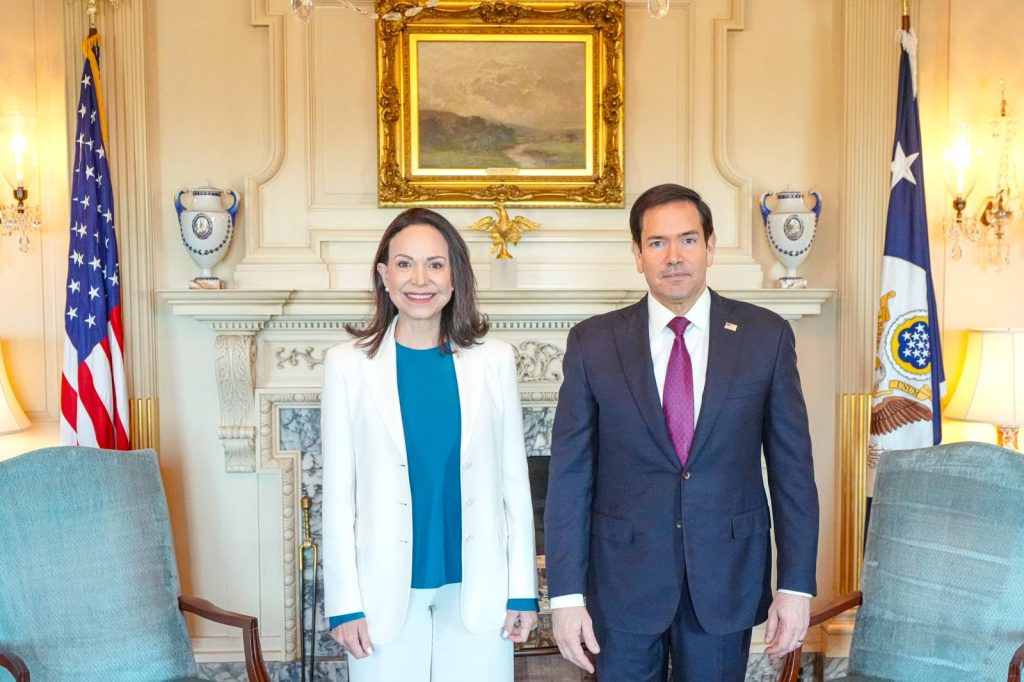
WASHINGTON, July 13 — Marco Rubio, the US Secretary of State appointed on January 20, 2025, has spent his first 18 months in office applying the same hardline approach to Venezuela that defined his years in the Senate. The technical reality of US foreign policy toward Caracas remains, as ever, a mix of sanctions, diplomatic isolation, and a standing $15 million reward for the arrest of President Nicolas Maduro on drug trafficking charges.
Rubio, a former Florida Senator who served from 2011 to 2025, co-sponsored the 2014 Venezuela Defense of Human Rights and Civil Society Act. That piece of legislation was among the first major congressional efforts to target the Maduro government with targeted sanctions.
Under the hood of current policy, the same legal architecture remains in place, though the State Department under Rubio has been notably more aggressive in enforcement than some predecessors.
The Opposition and the Election
The Venezuelan opposition is currently led by Maria Corina Machado, who won the opposition primary in October 2023, and Edmundo Gonzalez, who ran as the unified candidate in the July 28, 2024 election. Gonzalez has claimed victory in that contest and received support from the US, the EU, and many Latin American nations. The Maduro government, in power since April 2013 following the death of Hugo Chavez, has been accused of human rights abuses, electoral fraud, and economic mismanagement.
The detail that matters here is the timeline: Gonzalez’s claim of victory remains unresolved nearly two years later, with the National Electoral Council controlled by Maduro loyalists having never released the full vote tallies. Rubio has made clear that the US does not recognise the Maduro government’s authority to certify the result.
Key figures in the Maduro administration include Vice President Delcy Rodriguez and National Assembly President Jorge Rodriguez. Both are under US sanctions. The $15 million reward for Maduro’s arrest, offered by the US Department of State, remains the highest bounty for any sitting head of state currently in office.
Policy Continuity and Tension
Rubio’s appointment marked a return to maximum pressure tactics after a brief period of engagement during the Biden years. The former senator from Florida brought with him a deep institutional memory of the Venezuela file, having held hearings, sponsored legislation, and maintained direct contact with opposition figures since the early 2010s. The wry observation among State Department career staff is that Rubio knows the names of mid-level Maduro officials better than some of his own ambassadors.
The technical reality of sanctions enforcement, however, remains complex. Venezuela’s oil exports have found alternative buyers in China and Russia, though at significant discounts.
The US Treasury’s Office of Foreign Assets Control continues to issue waivers to certain energy companies, a detail that Rubio has publicly criticised.
What to Watch Next
The next major inflection point for US-Venezuela policy will be the expiration of certain sanctions waivers later this year. Rubio has signalled he will push for tighter enforcement, while European allies continue to press for a negotiated settlement. The opposition’s ability to maintain unity between Machado’s street-level organising and Gonzalez’s diplomatic outreach will also determine whether the US can sustain its current posture.
For now, the $15 million reward remains unclaimed, and Maduro remains in Miraflores Palace.




