
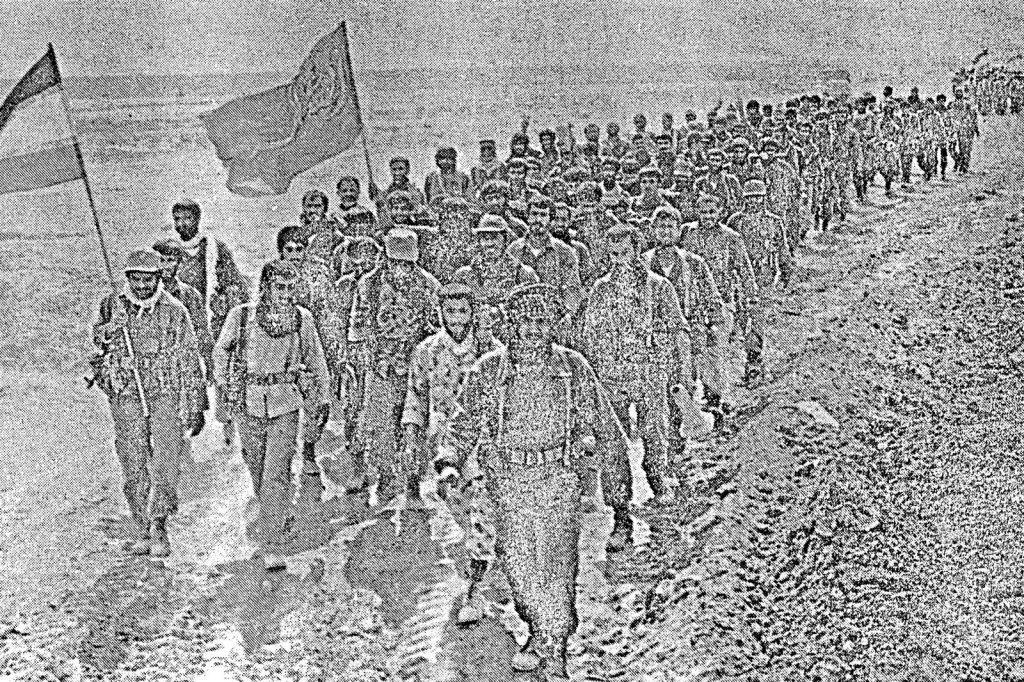
In the immediate aftermath of the Iranian Revolution, a new security institution emerged with a singular mandate: to safeguard the political system of the newly established Islamic republic. Founded on April 22, 1979, the Islamic Revolutionary Guard Corps was designed as a ideological shield, tasked not only with national defense but with preserving the revolution’s foundational principles from both internal dissent and external threats. This mission set the IRGC apart from Iran’s conventional military, known as Artesh, which focuses primarily on defending the country’s borders.
Over the decades, the Guard has evolved into a multi-service force operating its own ground, air, and naval branches, and has extended its reach far beyond purely military functions into Iran’s political, economic, and social spheres. The IRGC occupies a unique position within Iran’s power structure, reporting directly to the country’s Supreme Leader, Ali Khamenei, who has held that office since 1989.
This direct chain of command grants the Guard significant autonomy and influence. In addition to its conventional branches, the IRGC includes specialized units such as the Quds Force, which handles foreign operations and clandestine activities, and the Basij, a paramilitary militia that serves as a volunteer-based instrument for internal security and social mobilization. This organizational complexity has allowed the Guard to become a powerful actor in shaping Iranian policy, both at home and across the Middle East.
Naval Asymmetric Warfare and the Strait of Hormuz
The IRGC Navy, estimated at 20,000 personnel, represents a distinct component of Iran’s maritime capability. Its arsenal includes fast-attack craft, anti-ship missiles, and naval mines, equipment that directly supports its core operational doctrine of asymmetric warfare. Rather than seeking to match larger conventional navies ship-for-ship, the Guard’s naval strategy emphasizes swarming tactics, using squadrons of small, fast boats to threaten and potentially overwhelm larger vessels.
This approach has been demonstrated repeatedly in the Strait of Hormuz, a narrow waterway through which a significant portion of the world’s oil supply transits. In 2023, the IRGC conducted the ‘Great Prophet 17’ exercise in the strait, a drill that simulated mine-laying operations and anti-ship missile strikes.
The exercise underscored the Guard’s preparedness to disrupt shipping in this critical chokepoint. The Strait of Hormuz remains a flashpoint where these asymmetric tactics could be employed in any future confrontation, making it a persistent concern for naval planners and regional security officials. The IRGC’s continued development of its naval capabilities, particularly in this arena, signals an ongoing commitment to a doctrine that prizes deterrence through the ability to impose asymmetric costs on adversaries.
Regional Operations and International Designation
Beyond Iran’s borders, the IRGC has projected its influence through direct involvement in conflicts across the Middle East. Since 2011, the Guard has been engaged in Syria’s civil war, providing military support to the government of President Bashar al-Assad. Since 2014, the IRGC has also supported Houthi rebels in Yemen, extending its operational footprint further across the Arabian Peninsula.
These deployments have given the Guard a networked presence that spans the region, enabling it to challenge U.S. interests and those of regional partners through a combination of military advisory roles, logistical support, and the arming of allied groups. The Quds Force has been the primary vehicle for these foreign operations, facilitating the IRGC’s reach into conflict zones and its ability to sustain proxy forces.
The United States designated the IRGC as a terrorist organization on April 8, 2019, a step that several other countries have also taken. This designation continues to shape diplomatic and military planning in the region, imposing legal and financial consequences on entities that engage with the Guard and reinforcing the U.S. stance that the IRGC is not a conventional military counterpart but a threat designation with far-reaching implications.
What to watch in the coming period includes the IRGC’s ongoing naval development, its sustained operations in Syria and Yemen, and the potential for increased friction with the United States and its regional partners. The Strait of Hormuz, in particular, remains a likely venue where the Guard’s asymmetric tactics could be deployed in any future confrontation.
The IRGC’s expanding regional presence and military capabilities make it a key factor in Middle Eastern security dynamics, affecting stability and diplomatic relations across the region.
{“@context”: “https://schema.org”, “@type”: “NewsArticle”, “headline”: “IRGC’s evolution from revolution’s guardian to Iran’s influential force”, “description”: “TEHRAN, July 12 — In the immediate aftermath of the Iranian Revolution, a new security institution emerged with a singular mandate: to safeguard the political…”, “datePublished”: “2026-07-12T09:30:00+00:00”, “author”: {“@type”: “Person”, “name”: “Reza Karimi”}, “publisher”: {“@type”: “Organization”, “name”: “InfoPulse Today”, “url”: “https://newsfeed.infopulsetoday.com/”}}




