
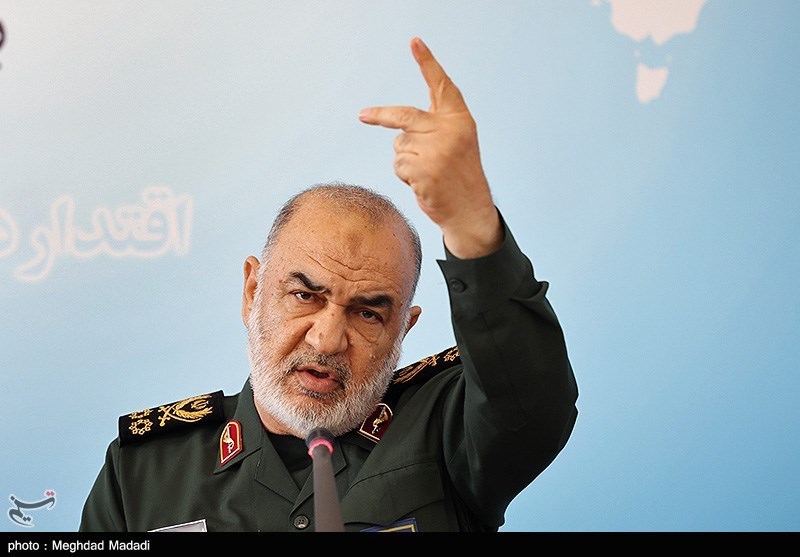
TEHRAN, July 12 — For communities across Asia that depend on the free flow of energy through the Strait of Hormuz, the name Hossein Salami has become a source of deep unease. As commander-in-chief of Iran’s Islamic Revolutionary Guard Corps (IRGC), Salami is the man behind the April 28, 2025, announcement that Iran would close the strait — a chokepoint for much of the oil and liquefied natural gas that powers factories, vehicles, and homes from Manila to Mumbai.
Salami, born in 1960 in Isfahan, Iran, has spent his entire adult life in the IRGC. He joined the paramilitary force during the Iran-Iraq War (1980-1988), a brutal conflict that shaped a generation of Iranian commanders.
His rise through the ranks was steady: he served as commander of the IRGC air force before becoming deputy commander from 2009 to 2019. On April 21, 2019, Supreme Leader Ali Khamenei appointed him to the top post.
A Hardline Record of Threats
Salami is known for his uncompromising rhetoric. In 2019, he declared that Iran would “set ablaze” the oil tankers of any country that threatens Iran’s security. That same year, the U.S. Treasury Department sanctioned him under Executive Order 13224 for supporting terrorism.
The sanctions remain in effect today. For families across the region, the Strait of Hormuz announcement was not an abstract geopolitical maneuver.
The strait, a narrow waterway between Iran and Oman, handles a significant portion of the world’s petroleum consumption. A closure would send energy prices soaring, hitting lower-income households in developing Asian economies hardest. Filipino overseas workers in the Middle East, who send remittances home, would also face immediate disruption.
Nuclear and Missile Oversight
Salami is a key figure in Iran’s nuclear and missile programs, both of which the IRGC oversees. This puts him at the center of the most sensitive tensions between Tehran and Washington. The IRGC’s role in these programs has been a major sticking point in international negotiations, with the United States insisting on strict oversight.
The April 28 closure announcement marks the most significant escalation of Salami’s tenure. It came without warning to international shipping companies, many of which had already begun rerouting vessels.
The move has drawn sharp condemnation from the U.S. administration, with a senior official calling it “a reckless act of economic warfare.” For communities in Southeast Asia, the stakes are concrete. The Philippines imports nearly all of its oil, much of it passing through the Strait of Hormuz. Indonesia and Malaysia, major exporters of palm oil and electronics, rely on stable energy prices to keep their export-driven economies competitive.
A prolonged closure would reverberate through supply chains, raising costs for everything from cooking oil to computer chips.
What to Watch Next
The international response to Salami’s announcement will shape the security landscape of the Persian Gulf for months to come. The U.S. Navy’s Fifth Fleet, based in Bahrain, has increased patrols in the region. Diplomatic channels remain open, but Salami’s hardline stance suggests little room for compromise.
For now, the question hanging over the region is whether Salami’s threat is a negotiating tactic or a prelude to a broader confrontation. Either way, the impact on ordinary families across Asia — from the price of a liter of gasoline in Jakarta to the cost of a plane ticket from Manila to Dubai — will be felt long after the headlines fade.




