
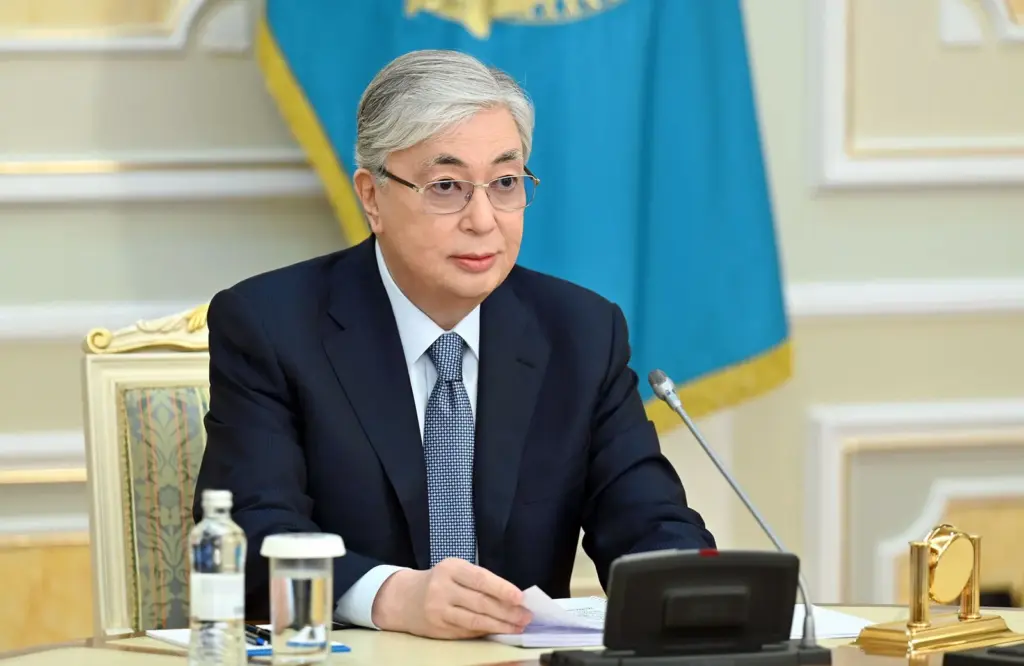
ASTANA, July 25 — Against the backdrop of a grinding war in Ukraine, a proposal from Kazakh President Kassym-Jomart Tokayev has refocused attention on the concept of a “frozen conflict” — a term born in the post-Soviet space that describes a situation where active hostilities have ceased but no political settlement or peace treaty has been reached, leaving the status quo unresolved. Tokayev’s initiative implies a tacit acceptance of Russia’s territorial gains in Ukraine, a stance that would require agreement from Kyiv.
The Ukrainian government has insisted on the full restoration of its borders, including Crimea, making any such proposal deeply contentious in the corridors of European diplomacy.
What is a frozen conflict?
The term originated in the aftermath of the Soviet collapse, where a series of secessionist wars ended not with treaties but with ceasefires that froze unresolved disputes. The Transnistrian conflict, for example, saw a ceasefire in 1992, but Transnistria remains de facto independent from Moldova. In the Caucasus, the Nagorno-Karabakh conflict saw a ceasefire in 1994, only to erupt again in 2020, followed by another ceasefire in 2023 after Azerbaijan’s offensive.
Similarly, the Abkhazia and South Ossetia conflicts in Georgia produced ceasefires in 1992 and 2008, after which Russia recognised both entities. These conflicts share common features: a ceasefire line, often monitored by international observers, and demilitarised zones.
In Ukraine, the OSCE Special Monitoring Mission deployed from 2014 until it ended in 2022, tasked with observing the line of contact. Yet frozen conflicts are rarely stable. Recurrent violence is a hallmark, as the 2020 and 2023 escalations in Nagorno-Karabakh demonstrated.
The wider picture for Ukraine
The war in Ukraine now risks following the same pattern. If a temporary halt to fighting were agreed, the country could become a new frozen conflict — an outcome many European policymakers dread. What is at stake is not just Ukraine’s territorial integrity but the credibility of the post-1945 order of sovereign borders.
The United Nations has consistently maintained positions on territorial integrity; Resolution 68/262, passed in March 2014, affirmed Ukraine’s sovereignty over its entire territory, including Crimea. Kazakhstan itself faces internal pressures from its own Russian-majority regions, though it has not experienced a frozen conflict on its soil.
That domestic reality makes Tokayev’s proposal all the more delicate, as it walks a line between practicality and principle. In the corridors of European foreign ministries, the proposal is being analysed not only for its impact on Ukraine but for its implications for the wider pattern of post-Soviet conflicts. A frozen Ukraine would set a precedent that other unresolved disputes — from Transnistria to Nagorno-Karabakh — have not yet fully settled.
The question now is whether Kyiv, which has insisted on full restoration of its borders, will entertain any proposal that leaves Russia in control of occupied territory.
Sources
{“@context”: “https://schema.org”, “@type”: “NewsArticle”, “headline”: “Understanding Frozen Conflicts: Historical Precedents and Mechanisms”, “description”: “ASTANA, July 25 — Against the backdrop of a grinding war in Ukraine, a proposal from Kazakh President Kassym-Jomart Tokayev has refocused attention on the…”, “datePublished”: “2026-07-25T09:30:00+00:00”, “author”: {“@type”: “Person”, “name”: “Beatrice Bianchi”}, “publisher”: {“@type”: “Organization”, “name”: “InfoPulse Today”, “url”: “https://newsfeed.infopulsetoday.com/”}, “citation”: [{“@type”: “CreativeWork”, “url”: “https://en.wikipedia.org/wiki/Frozen_conflict”}]}




