
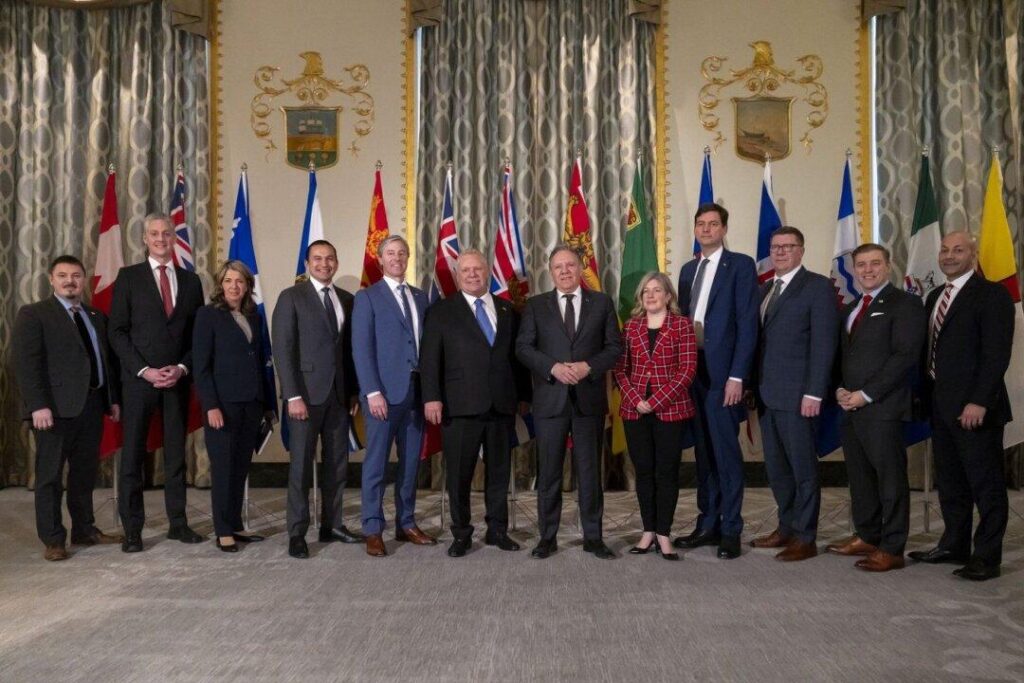
CHARLOTTETOWN, July 21 — The Council of the Federation, now more than two decades old, remains the primary vehicle for Canada’s premiers to coordinate policy and present a common front to Ottawa. Its technical reality is straightforward: a multilateral congress of all 13 provincial and territorial premiers, meeting at least biannually, with a rotating chair and summer conferences hosted in the chair’s jurisdiction.
But the detail that matters is the origin story — announced on December 5, 2003, in Charlottetown, Prince Edward Island, the very city where the 1864 Charlottetown Conference launched the process that became Canadian Confederation. The political architecture was deliberately symbolic: a body to promote ‘constructive Confederation’ while accommodating the internal differences of a federal system.
Under the hood, the Council gives the premiers a mechanism for interprovincial-territorial collaboration on shared priorities and, as ever, a united front when dealing with the federal government. Quebec Premier Jean Charest revived the idea during preparation for negotiations with Ottawa, and the premiers embraced it. The foundation announcement carried deliberate historical weight.
First Test: Healthcare Funding, 2004
The Council’s first major test came less than a year later. Between September 13 and 16, 2004, the premiers met with then-Prime Minister Paul Martin to discuss reforms to Canada’s universal healthcare program. The premiers remained united and secured $41 billion in federal funding for healthcare over the next ten years.
That figure, a specific outcome of closed-door bargaining, demonstrated the Council’s ability to wield collective leverage. The 2008 meetings in Quebec City — celebrating its 400th anniversary — produced tangible results.
All premiers agreed to amendments to the Agreement on Internal Trade to create greater labour mobility between provinces and territories, effective January 1, 2009. It was a technical fix to a longstanding friction: a worker certified in one province could move to another without requalifying.
Economic Strategy and Cross-Border Dialogue
By 2009, the agenda had shifted to matters of trade and recovery. The Regina, Saskatchewan, meetings focused on economic issues, including trade frictions with the United States and the formulation of a post-recession interprovincial economic strategy. The Council was already looking south.
On February 20, 2010, the Council met with its American counterpart. The session covered environment and trade — two pillars of the bilateral relationship.
As ever, the Council’s work extends beyond headline summits. Key issues on its agenda include healthcare funding and innovation, economic development, strengthening Confederation by seeking provincial input into the selection of senators and Supreme Court justices, outreach to young Canadians, support for those affected by emergencies, interprovincial/territorial trade, and water policy. The scope is broad, but the mechanism remains one of premiers talking to premiers — a form of executive federalism that the Council has formalised.
What to watch next: The Council’s rotating chair will soon change hands, and its summer meeting — the one held in the chair’s jurisdiction — may bring forward new joint positions on federal transfers, internal trade barriers, or bilateral relations with the United States under the current administration in Washington. The technical reality of Canadian federalism ensures this body will have plenty to coordinate.




