
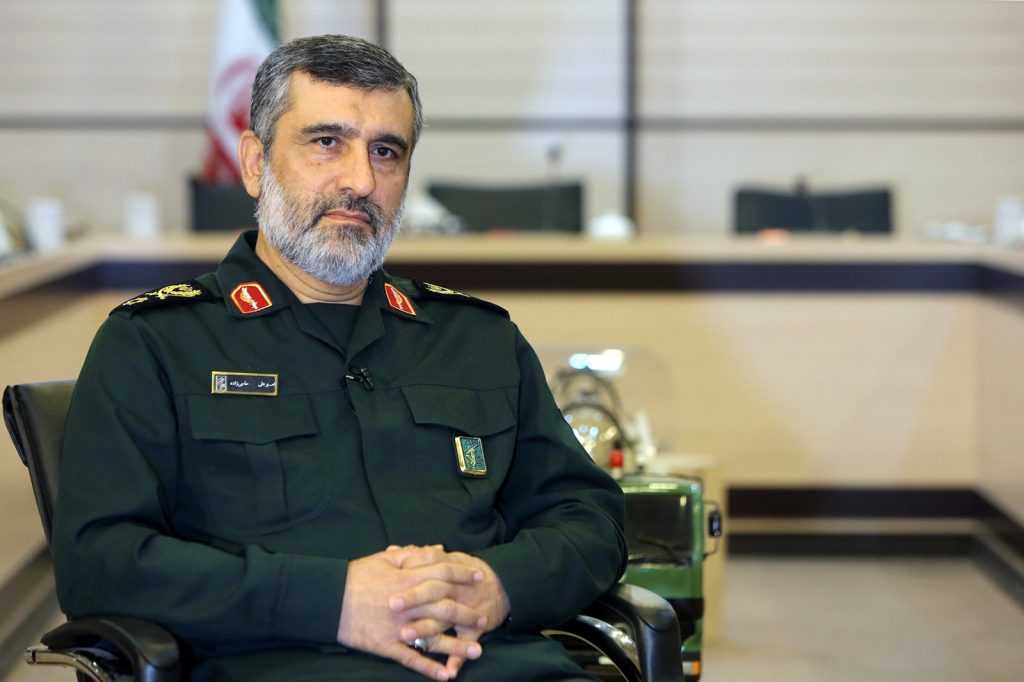
TEHRAN, July 21 — More than four decades after its founding, the Islamic Revolutionary Guard Corps has evolved from an ideological militia into an organisation that analysts now describe as a “state-within-a-state,” wielding influence over nearly every facet of Iranian life. Established in May 1979 by the revolution’s founder, Ruhollah Khomeini, the IRGC—known domestically as Sepah or Pasdaran—was given a constitutional mandate to protect the integrity of the Islamic Republic.
That mandate includes preventing foreign interference, thwarting coups, and crushing what the regime calls “deviant movements” that threaten the ideological legacy of the 1979 revolution. The IRGC is not a single service but a multi-branch force that answers directly to Iran’s Supreme Leader.
It operates five branches: Ground Forces, Aerospace Force, Navy, Quds Force, and the Basij paramilitary militia. As of 2024, the IRGC itself has approximately 125,000 personnel. The Basij, a volunteer-based auxiliary force primarily used for internal security and moral policing, adds about 90,000 active members to the total.
Internal security and political suppression
The IRGC Ground Forces and the Basij have become the regime’s primary instruments for maintaining internal order. Their most visible deployment came during the 2009 presidential election and the widespread protests that followed. Under President Mahmoud Ahmadinejad, the IRGC led a brutal crackdown on demonstrators who accused the government of electoral fraud, cementing its reputation as the ultimate guarantor of the regime’s survival.
For millions of Iranians, the IRGC’s presence is not a distant geopolitical abstraction. The Basij patrol neighbourhoods, monitor social behaviour, and serve as an ideological police force.
The IRGC’s media arm, Sepah News, broadcasts its narrative inside the country, reinforcing the organisation’s reach into daily life.
Economic and political expansion
Over time, the IRGC has expanded into nearly every sector of Iran’s economy and political system. In 2010, BBC News called it a “business empire.” By 2019, Reuters described it as “an industrial empire with political clout.” Now, in 2026, Reuters has updated that characterisation, calling the IRGC a “state-within-a-state” — a label that captures its control over vast construction projects, telecommunications, banking, and energy, as well as its deep entrenchment in the halls of power.
The IRGC’s Aerospace Force manages Iran’s ballistic missile program and space operations, giving Tehran a strategic deterrent that worries its neighbours and Western powers alike. The Quds Force, the IRGC’s arm for unconventional warfare, runs operations abroad.
It supports pro-Iranian groups such as Hezbollah in Lebanon and the Houthi movement in Yemen, extending Tehran’s influence across the Middle East.
International designation as a terrorist organisation
The IRGC is designated as a terrorist organisation by a long list of countries. That list includes the United States, Canada, Australia, the European Union, Israel, Saudi Arabia, and others. The designation reflects not just the IRGC’s external activities—such as support for militias and proxy forces—but also its role in suppressing dissent and its hands in the ballistic missile program.
The human cost of the IRGC’s internal mission was seared into global memory during the 2009 protests, when the force fired on demonstrators and arrested thousands. For families inside Iran, the IRGC’s role as both a military power and an economic overlord means that virtually every aspect of life—from employment to political expression—is shaped by its influence.
Looking ahead, the IRGC’s dual role as a domestic enforcer and a regional power-broker shows no sign of diminishing. With its expanding industrial holdings and its grip on the missile program, the Revolutionary Guards remain the single most powerful institution inside Iran. As the international community continues to debate how to deal with Tehran, the IRGC’s “state-within-a-state” status presents a moving target, one that shapes the lives of Iranians from the streets of the capital to the battlefields of the Middle East.
Sources
{“@context”: “https://schema.org”, “@type”: “NewsArticle”, “headline”: “Iran’s Revolutionary Guards lead crackdown on dissent”, “description”: “TEHRAN, July 21 — More than four decades after its founding, the Islamic Revolutionary Guard Corps has evolved from an ideological militia into an organisation…”, “datePublished”: “2026-07-21T09:30:00+00:00”, “author”: {“@type”: “Person”, “name”: “James Roberto”}, “publisher”: {“@type”: “Organization”, “name”: “InfoPulse Today”, “url”: “https://newsfeed.infopulsetoday.com/”}, “citation”: [{“@type”: “CreativeWork”, “url”: “https://en.wikipedia.org/wiki/Islamic_Revolutionary_Guard_Corps”}]}




