
MOSCOW, July 18 — China has declined a Russian request to supply specialized equipment for the fleet operating along the Northern Sea Route, according to reports from multiple news agencies in late March 2025. The decision, attributed to Chinese concerns over potential secondary sanctions from the United States and its allies, marks a significant recalibration in bilateral cooperation on Arctic development.
Russia had sought Chinese components for new icebreaking vessels as part of a plan to expand year-round navigation along the Northern Sea Route, the shipping lane along Russia’s Arctic coast that shortens travel between Europe and Asia. Beijing had previously been a key supplier of ship components and technology for Russia’s Arctic ambitions, including through state-owned enterprises such as China State Shipbuilding Corporation and the China National Nuclear Corporation.
No official confirmation from either government has been issued as of this report. Chinese officials have not publicly commented on the reports, but analysts note that Beijing is carefully calibrating its relationship with Moscow to avoid economic penalties from the West.
Strategic Setback
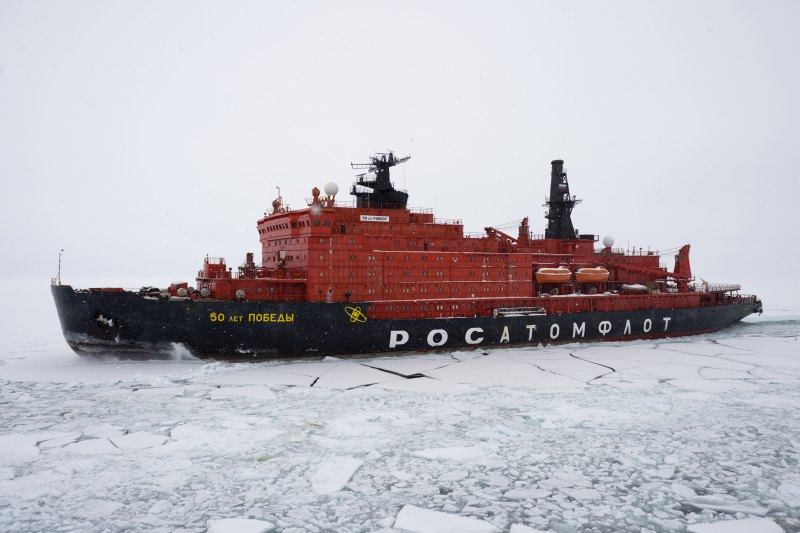
The Northern Sea Route has been a strategic priority for Russian President Vladimir Putin, with a target of 80 million tons of cargo by 2024. Actual volume in 2023 was 34 million tons. Russia operates a fleet of nuclear-powered icebreakers overseen by state nuclear corporation Rosatom, and had counted on Chinese equipment to support the construction of new vessels.
The refusal threatens to delay construction and increase costs, potentially undermining Russia’s Arctic development timeline. The development is widely seen as a victory for U.S. sanctions strategy, which has aimed to isolate Russia’s defense and energy sectors since the 2022 invasion of Ukraine.
Sanctions Calculus
The decision reflects the deepening impact of Western sanctions on Russia’s access to critical technology. China, while maintaining close political and economic ties with Moscow, has consistently moved to avoid triggering secondary sanctions that could cut off its own access to American and European markets. Analysts view the move as part of a broader pattern in which Beijing balances its strategic partnership with Russia against the risk of economic isolation from the West.
The U.S. administration under President Donald Trump has maintained a robust sanctions regime targeting Russian energy and defense industries, and the refusal by Chinese state-owned enterprises signals that those measures continue to exert pressure.
Implications
The Northern Sea Route’s development has been central to Russia’s plans to increase Arctic cargo flows and reduce transit times between Asia and Europe. The setback in equipment procurement raises questions about Russia’s ability to meet its ambitious navigation targets without relying on Chinese industrial support. For Moscow, the immediate challenge is to find alternative suppliers or accelerate domestic production of specialized marine equipment.
For Beijing, the decision reinforces its cautious posture: deepening cooperation with Russia only where it does not provoke direct confrontation with the United States and its allies. As the situation develops, observers will watch for any official clarification from either capital, and for any shift in U.S. sanctions policy that might alter China’s risk calculus.
The episode underscores the extent to which Arctic ambitions are now entangled in the broader geopolitical contest between Russia, China, and the West.




