
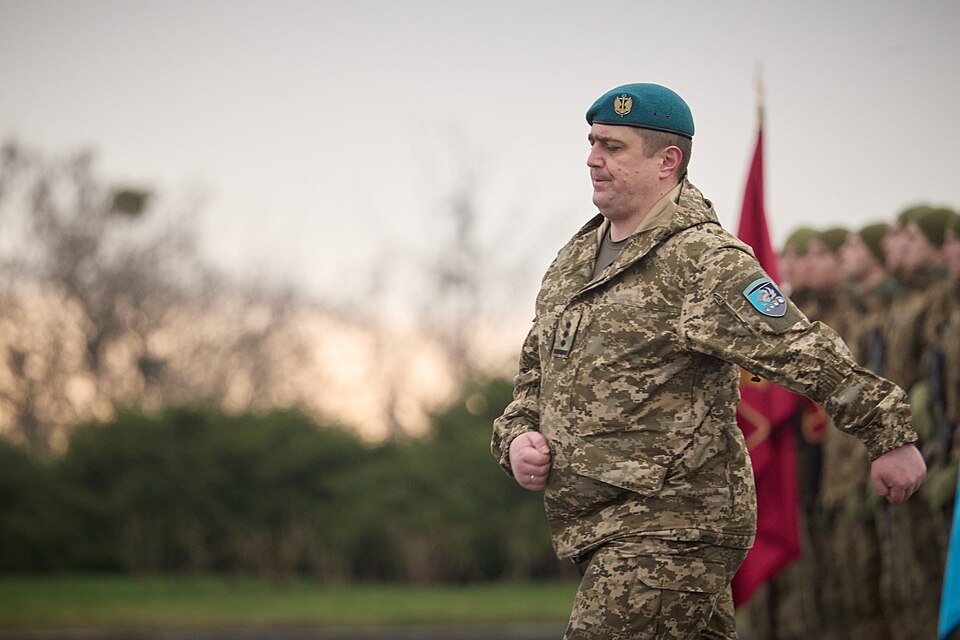
KYIV, July 14 — Against the backdrop of a war that has redefined modern combat, Ukraine has done something no other nation has attempted: it created the world’s first military branch dedicated entirely to unmanned systems. The Unmanned Systems Forces, known as the USF, were established as a separate branch of the Ukrainian Armed Forces in February 2024, by order of President Volodymyr Zelenskyy. Colonel Vadym Sukharevskyi was appointed as its first commander.
This formalized what had already been a battlefield revolution.
From Decentralized Beginnings to a Unified Command
Before the USF, drone operations across Ukraine’s military were fragmented. Various units ran their own aerial reconnaissance and strike missions with little coordination. The full-scale invasion that began on February 24, 2022, accelerated the need for a centralized approach.
By early 2024, the decision was taken to bring all unmanned capabilities under one command structure. The USF now operates across three domains: aerial drones, ground robots, and naval drones.
Ukrainian military sources report that the branch has conducted over 100,000 drone sorties since its creation. Its mission set includes reconnaissance, strike operations, and electronic warfare.
A Surge in Domestic Production
In the corridors of Ukraine’s defense industry, the numbers tell a story of rapid industrial mobilization. Over 2 million drones were manufactured in Ukraine in 2024 alone. This output includes FPV drones, long-range attack drones, and naval drones — a mix of off-the-shelf commercial models and purpose-built domestic designs.
The USF operates familiar platforms such as the “Mavic” quadcopter and the Turkish-made “Bayraktar TB2,” but it has also fielded Ukrainian-produced systems. Among these are the “Liutyi” and “Bober” drones, both designed and built within Ukraine’s expanding defense sector.
What Is at Stake
The wider picture is one of constant adaptation. Drones have shifted the balance on the battlefield, allowing Ukraine to strike deep behind Russian lines while preserving its own personnel. The creation of a dedicated branch signals that Kyiv sees unmanned systems not as a temporary tactical tool but as a permanent pillar of its military doctrine.
For European observers, the implications are clear. The USF is being watched closely by NATO militaries, many of which are now rethinking their own force structures in light of Ukraine’s experience.
What began as an urgent wartime improvisation has become a model for the future of armed conflict. As the war continues, the question is not whether unmanned systems will remain central — it is how quickly other armies will follow Ukraine’s lead.




