
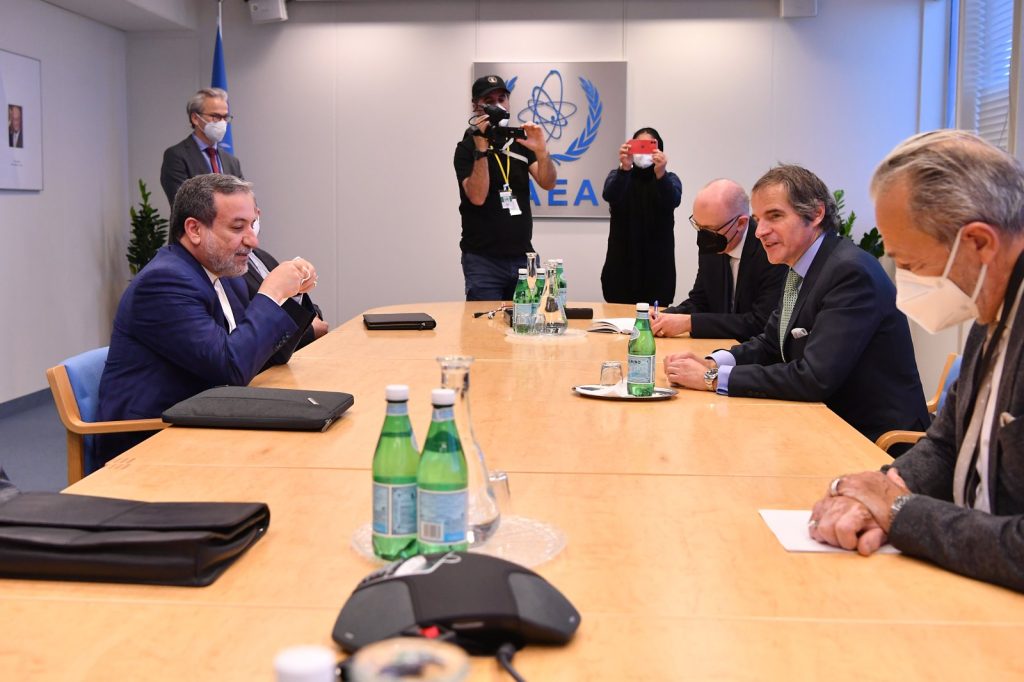
TEHRAN, July 13 — Iran’s Foreign Minister Abbas Araghchi has publicly threatened to close the Strait of Hormuz in response to U.S. economic pressure. The statement, made on March 18, 2025, marked one of the most direct warnings from Tehran since the Trump administration escalated its “maximum pressure” campaign. Araghchi, who took office as Iran’s top diplomat in August 2024, said that closing the strait was “an option on the table.” He also declared that Iran would “respond decisively” to what he described as the U.S. toll and blockade.
The remarks came amid heightened tensions over Washington’s renewed sanctions and naval deployments in the Persian Gulf. The record shows that Araghchi is no newcomer to high-stakes diplomacy.
Born on December 5, 1962, he served as Deputy Foreign Minister for Political Affairs from 2017 to 2021 and was a key negotiator of the Joint Comprehensive Plan of Action, or JCPOA, from 2013 to 2015. He holds a PhD in political science from the University of Tehran. Within the Iranian establishment, Araghchi is widely considered a pragmatist.
But on the Strait of Hormuz issue, he has taken a hard line. The strait, a narrow waterway between Iran and Oman, handles a significant share of the world’s petroleum consumption.
Any disruption there would send shockwaves through global energy markets.
Nuclear talks and diplomatic track
Araghchi represented Iran in multiple rounds of nuclear talks with the P5+1 — the five permanent U.N. Security Council members plus Germany. Those negotiations produced the 2015 nuclear deal, which limited Iran’s enrichment program in exchange for sanctions relief. The United States withdrew from the accord in 2018 under the first Trump administration, a move that Araghchi and other Iranian officials have repeatedly condemned.
Since returning to office in January 2025, President Donald Trump has reimposed a sweeping array of sanctions and ordered a naval blockade to enforce them. The administration’s stated goal is to cut off Iran’s oil revenue and force a renegotiation of its nuclear and missile programs.
Tehran has refused direct talks under the current pressure. Sources familiar with the diplomatic track say that Araghchi has been the point person for Iran’s response strategy. His March 2025 remarks were delivered in a televised address, according to Iranian state media.
He did not specify a timeline for any closure of the strait, but the threat alone has drawn sharp warnings from U.S. and allied naval commanders.
Strategic calculations
The Strait of Hormuz is narrow at its narrowest point, but it is deep enough for the world’s largest oil tankers. Iran has previously threatened to mine the waterway or use fast-attack boats to disrupt shipping during past standoffs. In 2019, the Islamic Revolutionary Guard Corps seized several tankers in the strait, though it stopped short of a full closure.
Araghchi’s background as a diplomat who helped negotiate the JCPOA gives him credibility within Iran’s foreign policy establishment. Yet his willingness to threaten the strait suggests that the pragmatist label has limits when national security and economic survival are at stake.
The Trump administration has not publicly responded to Araghchi’s specific March 2025 remarks. But U.S. Central Command has maintained a continuous naval presence in the region, and Secretary of State Marco Rubio has warned that any attempt to close the strait would be met with “overwhelming force.”
What to watch next
The timeline moving forward is uncertain. No new round of nuclear talks has been scheduled. Araghchi, for his part, has not repeated the strait threat in recent weeks, but he has not walked it back either.
The coming months will test whether Tehran’s hard-line posture on the waterway is a negotiating tactic or a prelude to action.




