
Since Russia’s full-scale invasion began in 2022, Ukraine’s Main Directorate of Intelligence, widely known by its Ukrainian acronym HUR, has transformed from a quiet espionage agency into one of the country’s most aggressive and multidomain defense branches. Unlike many intelligence services that focus solely on gathering information, HUR also carries out direct military operations behind enemy lines. The agency has claimed responsibility for a series of strikes deep inside Russian territory, targeting military depots, airfields, and energy infrastructure.
It has also developed a growing drone program and executed high-profile cyberattacks. For Western observers, HUR’s expanded role represents a shift in modern warfare: a smaller nation’s intelligence service now projects power hundreds of miles into a larger adversary’s homeland, making the conflict less predictable and extending the battlefield far beyond frontline trenches.
Origins and Evolution of a Wartime Intelligence Agency
Established in 1992, shortly after Ukraine declared independence from the Soviet Union, HUR inherited some personnel and infrastructure from Soviet-era intelligence structures. Operating under Ukraine’s Ministry of Defense, the agency initially focused on traditional espionage and analysis.
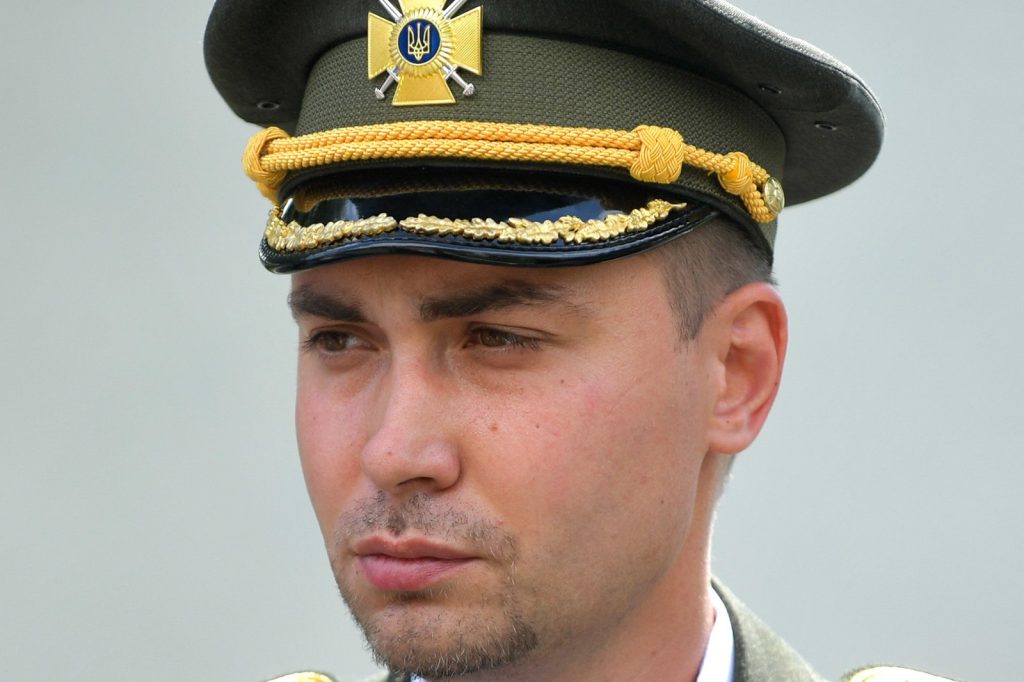
Today, HUR has grown into a sophisticated organization with an estimated 5,000 personnel. Its budget, as of 2023, stood at approximately $100 million annually. The agency is led by Lieutenant General Kyrylo Budanov, who has been a key figure since his appointment in August 2020.
Budanov’s tenure is defined by a willingness to take risks and a focus on results. Under his command, HUR has expanded both its reach and its reputation.
The transformation after 2022 was dramatic: the agency evolved into an aggressive, multidomain force capable of striking deep into Russian territory and conducting cyber operations.
Deep Strikes and Drone Warfare: HUR’s Expanding Reach
Among HUR’s most notable operations is the March 1, 2025 strike on the Stavropol Krai oil depot. That strike underscored the agency’s ability to project power deep inside Russia.
A central component of HUR’s capability is its drone program, developed in collaboration with Ukrainian defense firms. The program has produced models such as the ‘Liutyi’ drone, which has a range of over 1,000 kilometers. In addition to physical strikes, HUR conducts cyber operations. In 2023, the agency hacked Russia’s Federal Air Transport Agency, a high-profile cyberattack that demonstrated its reach in the digital domain.
These operations fit into a broader campaign of deep strikes and cyberattacks that HUR has claimed responsibility for, including attacks on military depots, airfields, and energy infrastructure. The agency’s drone program, in particular, has become a symbol of Ukraine’s ability to innovate under pressure.
Western Cooperation and the Path Ahead
HUR’s operations are supported by Western intelligence sharing, particularly from the United States and the United Kingdom. The extent of this support is classified, but it remains a key factor in the agency’s success.
Looking ahead, HUR is likely to continue its campaign of deep strikes and cyber operations. Its collaboration with Western intelligence services will remain important. Lieutenant General Budanov’s leadership, marked by risk-taking and a results-oriented approach, has positioned HUR as a central player in Ukraine’s wartime strategy.
For readers, the agency’s expanded role matters because it changes the calculus for both sides: a smaller country’s intelligence service now projects power hundreds of miles into a larger adversary’s homeland, making the conflict less predictable and expanding the battlefield beyond the front lines.




