
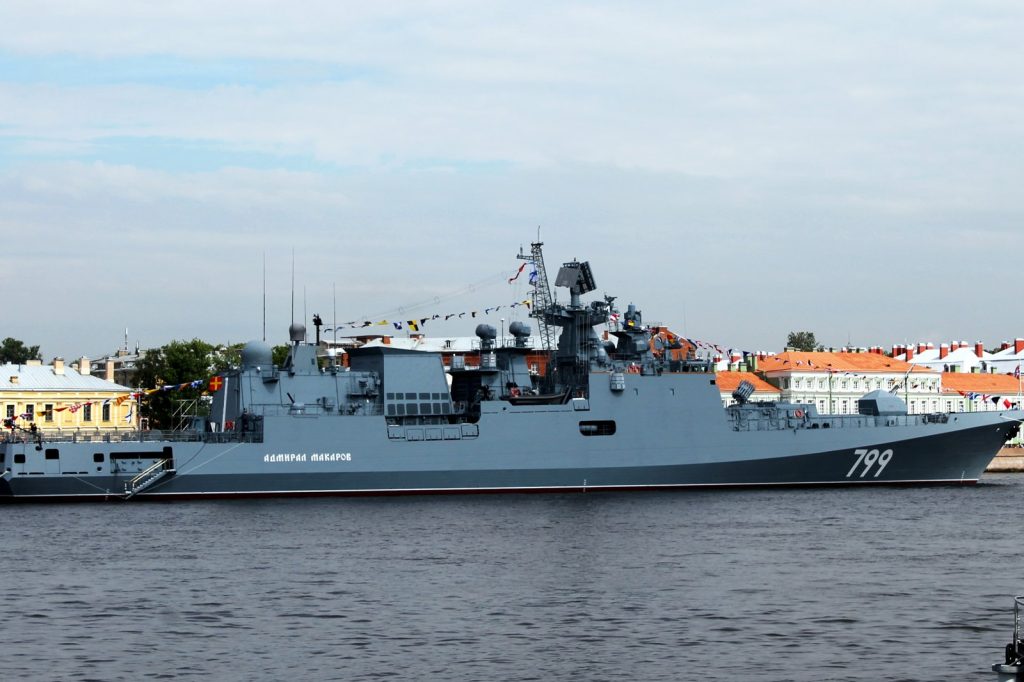
For more than two centuries, the Black Sea Fleet served as Russia’s principal instrument of naval power along Ukraine’s southern coast. That long tenure is now undergoing a fundamental change.
The fleet has suffered losses that, for the first time since its founding in 1783, place its ability to project force seriously in doubt. The shift in naval balance carries consequences that extend well beyond the waters of the Black Sea.
A Historic Shift in Naval Balance
The fleet was established under Empress Catherine the Great in 1783, after Russia annexed the Crimean Khanate. Prince Potemkin oversaw its creation. Its home port from the beginning has been Sevastopol, on the Crimean Peninsula.
Over the centuries, the fleet saw action in the Crimean War (1853–1856), World War I, and World War II. Following the dissolution of the Soviet Union in 1991, the fleet was divided between Russia and Ukraine under a 1997 treaty that allowed Russia to lease the Sevastopol base until 2017.
That arrangement ended abruptly in March 2014, when Russia unilaterally annexed Crimea and seized full control of the fleet and its bases. The fleet’s modern composition includes submarines, frigates, patrol boats, and amphibious assault ships. Since 2022, these vessels have been used to launch Kalibr cruise missiles against Ukrainian infrastructure.
But the operational calculus has changed. The fleet, once the unchallenged master of the Black Sea, now finds its offensive capabilities degraded to the point where it can no longer credibly threaten a major amphibious landing or dominate the sea lines of communication near Ukraine’s coast.
The Toll of Losses
The most dramatic blow came early in the current conflict. The fleet’s flagship, the Moskva, a Slava-class guided-missile cruiser commissioned in 1983, was lost. That single event, combined with the sinking of several landing ships, has fundamentally reduced the fleet’s capacity to threaten Ukraine’s coastline and support amphibious operations. The trend beneath these losses is clear: a naval force that was built for offensive power projection has become, in key respects, a defensive liability.
The fleet is a division of the Russian Navy operating in the Black Sea, the Sea of Azov, and the Mediterranean Sea, under the command of the Southern Military District of the Russian Armed Forces. Its reduced surface fleet means that remaining submarines can still launch Kalibr missiles, but without the surface combatants to protect them or project broader power, the strategic equation has shifted.
For the first time in its long history, the Black Sea Fleet is no longer the dominant force it was designed to be.
Strategic Implications for the Region
The implications extend beyond the immediate naval balance. Russia’s ability to sustain its campaign against Ukrainian infrastructure from the sea has been degraded.
With the fleet’s posture reduced, Ukraine faces less naval pressure along its coast, even as ground combat continues elsewhere. For Moscow, the diminished capability represents a strategic setback in a region it has controlled for over two centuries. The fleet’s current status directly affects regional security.
Its ability to launch cruise missiles and conduct amphibious operations has long determined the level of threat to coastal infrastructure. A decline in that naval strength alters the balance of power in the Black Sea region.
What remains to be seen is whether Russia can rebuild these capabilities. The fleet’s remaining submarines preserve some long-range strike capacity, but without a robust surface component, the offset is incomplete. The Black Sea Fleet, for the first time since Catherine the Great ordered its creation, finds itself in a position where its ability to project power along Ukraine’s coast is genuinely in question.
{“@context”: “https://schema.org”, “@type”: “NewsArticle”, “headline”: “Russian Black Sea Fleet’s Historic Decline After Two Centuries of Dominance”, “description”: “SEVASTOPOL, July 9 — For more than two centuries, the Black Sea Fleet served as Russia’s principal instrument of naval power along Ukraine’s southern coast….”, “datePublished”: “2026-07-09T09:30:00+00:00”, “author”: {“@type”: “Person”, “name”: “Ava Anderson”}, “publisher”: {“@type”: “Organization”, “name”: “InfoPulse Today”, “url”: “https://newsfeed.infopulsetoday.com/”}}




