
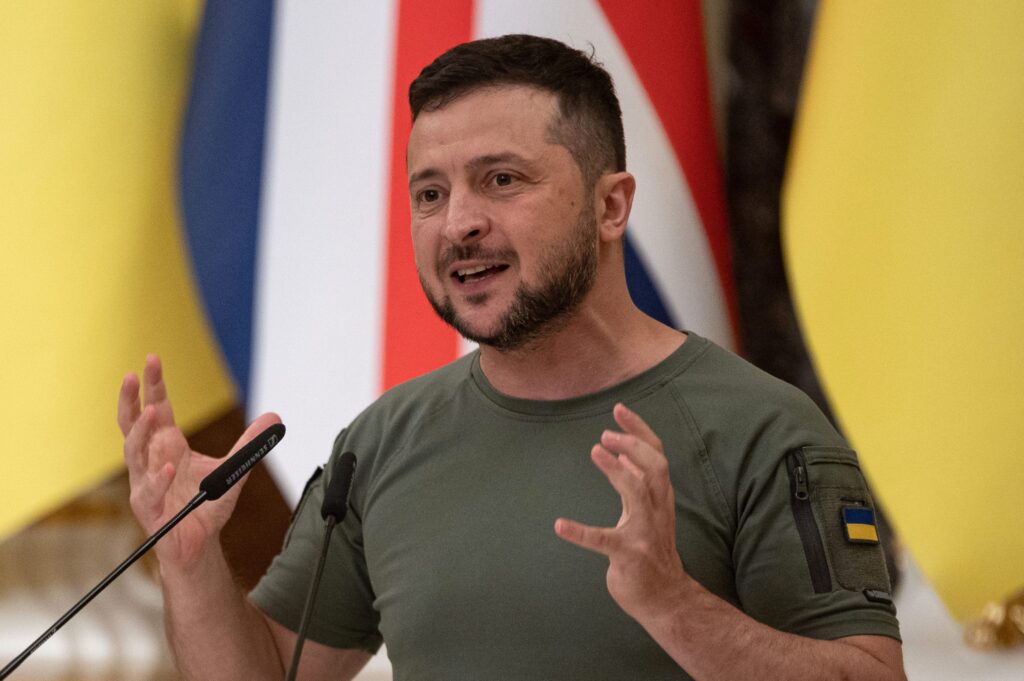
KYIV, July 6 — The reported decision to bar President Volodymyr Zelensky from speaking at the NATO summit marks a sharp shift in Western posture toward Ukraine, and the trend underneath is worrying for Kyiv.
Since Russia’s full-scale invasion began on February 24, 2022, Zelensky has turned international platforms into a lifeline. He has delivered virtual addresses to the U.S. Congress, the European Parliament, and the G7 — each time pressing for weapons, sanctions, and unity. A snub at NATO could signal waning Western resolve, potentially emboldening Moscow.
The timing compounds the problem. Ukraine’s military has faced real setbacks: the failure of its 2023 counteroffensive and recent Russian advances in the Kharkiv region. The U.S. Congress approved a $61 billion aid package in April 2024 after months of delay, but the gap in support showed how fragile the consensus can be.
Morale is the unspoken factor here. Ukrainian troops and civilians have endured nearly four years of war. Perceived Western fatigue could hit hard. Watch this space for how the decision affects troop morale and civilian trust in international backing.
The decision also undermines Ukraine’s push for NATO membership, which Zelensky sees as crucial for long-term security. Without a seat at the table — or even a speaking slot — Kyiv’s path into the alliance looks steeper.
What’s changing is the signal this sends to Moscow. Russia has bet on outlasting Western support. A closed door at NATO plays directly into that narrative. The trend underneath is a potential fracture in the transatlantic alliance that has sustained Ukraine through the war.
For now, the reported bar remains unconfirmed by official NATO statements. But if true, it reshapes the battlefield as much as any artillery shell. The question is whether Ukraine can hold the line without the megaphone.




