
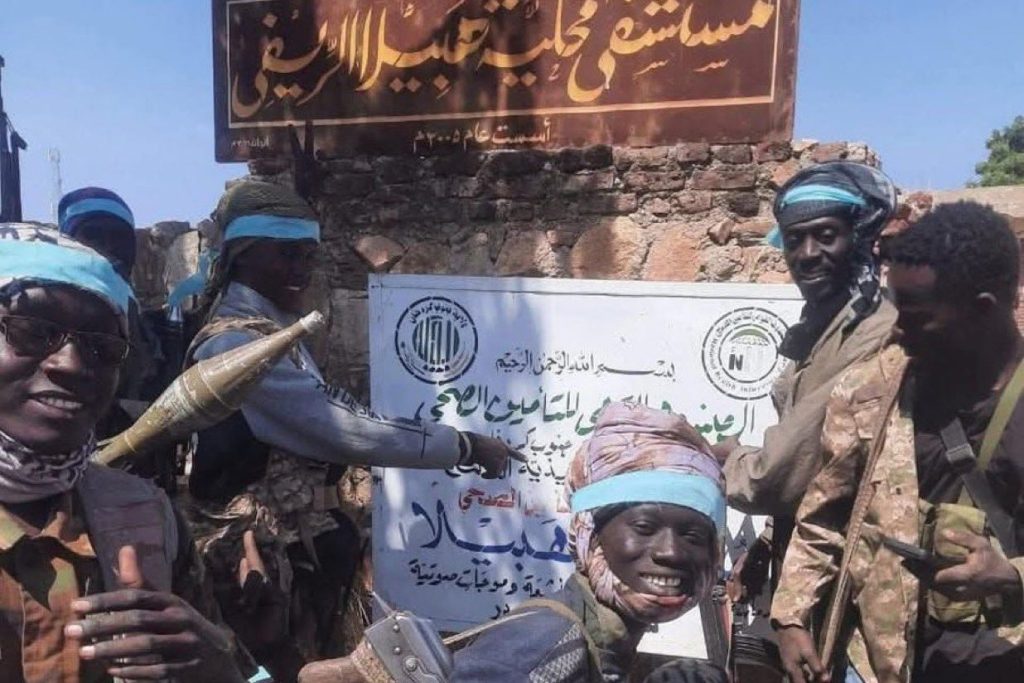
The Sudanese Armed Forces (SAF), led by General Abdel Fattah al‑Burhan, have begun offering military instruction to ordinary Sudanese citizens across the country. Those who complete the courses are being organized into the Popular Resistance, a loosely‑structured coalition that fights alongside the SAF against the Rapid Support Forces (RSF).
Since the RSF seized control of northern areas such as Gezira state, reports from those regions have documented extensive atrocities. The violence has prompted a surge of civilian volunteers who say they are taking up arms after witnessing RSF actions in their own towns. This marks a shift from the conflict’s original nature—a power struggle between two senior generals within Sudan’s military hierarchy that erupted on 15 April 2023—to a broader societal confrontation that now involves mass civilian mobilisation.
The Popular Resistance does not possess a formal weapons stockpile, but the SAF supplies both training and arms to the new recruits. Thousands of civilians—many with no prior combat experience—are currently undergoing instruction intended to enable them to defend against what the SAF describes as the RSF’s “aggressive expansion.” Public officials have publicly endorsed the training programmes, presenting a united front on paper, though the durability of that unity under combat conditions remains uncertain.
For the SAF, the civilian armament serves a dual purpose. First, it seeks to counter the RSF’s territorial gains, which have already resulted in documented abuses in Gezira. Second, it aims to create a broader base of “national dignity” supporters, uniting various political and social groups under the Popular Resistance banner. General al‑Burhan heads this coalition, which now includes thousands of trainees from towns and cities throughout Sudan.
While the strategy expands the SAF’s manpower, it also introduces new risks. History in Sudan shows that armed civilian groups can persist beyond the immediate conflict, potentially complicating post‑war stability. Moreover, the line between combatant and non‑combatant is increasingly blurred, especially in areas where RSF forces have operated openly.
The RSF continues to hold significant territory and is accused of committing widespread atrocities, particularly in the north. Each reported incident appears to fuel further civilian enrolment in the SAF‑run training camps, creating a feedback loop in which RSF violence drives recruitment for the Popular Resistance.
At present, the balance of forces reflects a growing number of civilians receiving weapons and instruction from the SAF, while the RSF maintains control over key regions. The conflict has therefore broadened from a duel between two regular armies to a three‑way confrontation: the SAF, its civilian allies, and the RSF paramilitary force.
Observers note that the Popular Resistance remains untested at this scale. Its ability to sustain cohesion under fire, and its impact on the overall trajectory of the war, will be decisive factors in the months ahead. As more Sudanese civilians become directly involved—either as fighters or as victims—the humanitarian stakes rise, and the distinction between soldier and civilian continues to erode, especially in places like Gezira where the RSF’s presence has been most pronounced.




