
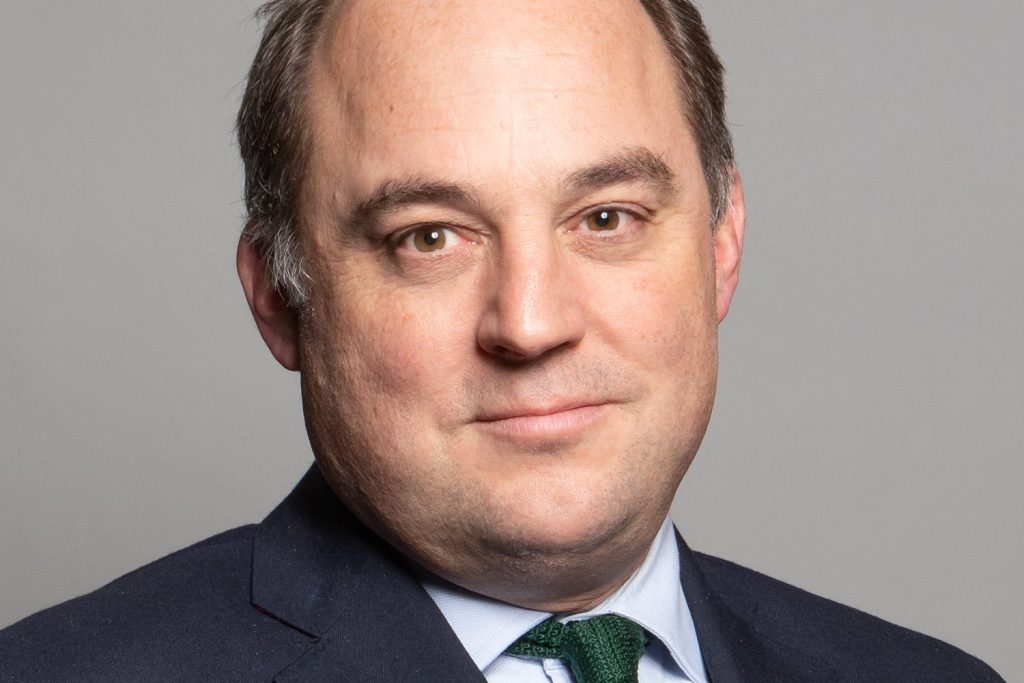
LONDON, July 20 — Two years after former UK Defence Secretary Ben Wallace told Parliament that Israel had turned down requests to provide air defence systems to Ukraine, the strategic calculus behind that refusal remains a festering fissure in the Western alliance. Wallace’s March 2023 testimony to the Foreign Affairs Committee pulled back the curtain on a piece of the military-aid puzzle that usually stays hidden: the precise mechanics of why a small state says no to its biggest patron. The catch, as Wallace laid it out, was Syria.
Israel’s position, he stated, was that it “did not want to upset Russia” because it needed to preserve deconfliction arrangements in Syrian airspace, where Moscow’s forces control the skies that Israeli airstrikes routinely use. On closer reading, that is a hard-nosed calculation about operational necessity trumping alliance solidarity.
Israel was not refusing to help Ukraine; it was refusing to jeopardise its own ability to strike Iranian targets in Syria—a priority that, in Jerusalem’s view, Russia could complicate with a flick of a radar switch.
Humanitarian Yes, Lethal No
Israel has not been absent from the Ukraine crisis. In March 2022, within weeks of Russia’s full-scale invasion, it delivered 100 tons of medical supplies and set up a field hospital. But it has consistently drawn a red line against sending lethal military equipment.
Prime Minister Benjamin Netanyahu, who returned to office in December 2022, has kept that policy intact, balancing ties with Washington and Moscow. The Wall Street Journal reported in January 2023 that Israel had also rebuffed direct US requests to transfer its ‘Iron Beam’ laser-based air defence system to Ukraine—a system that, on paper, could have helped counter Russia’s drone and missile barrages.
The mechanics here are instructive. Western allies were scrambling in early 2023 to supply advanced air defences after Russia unleashed waves of missile and drone strikes on Ukrainian cities. Israel possesses some of the most battle-tested systems in the world.
Yet it said no twice: once to Ukraine directly and once to the United States, its primary security guarantor. Follow the money—or rather, follow the airspace.
Israel’s military planners judged that losing the deconfliction channel with Russia in Syria would impose costs greater than the political blowback from refusing Ukraine.
A Persistent Gap in Allied Support
Wallace’s disclosure, made under oath to a parliamentary committee, drew public attention to what had been a whispered frustration in diplomatic circles: that even as Europe and the US poured billions in weaponry into Ukraine, a critical piece of kit from a key ally was off the table because of a third-country entanglement. The former defence secretary did not name the specific Israeli systems requested, but his testimony made clear that the refusal was not a matter of capacity—Israel could have supplied them—but of strategic choice.
That choice highlights a wider truth about small states caught between rival powers. Israel’s balancing act is not unique, but it is unusually exposed: it relies on US diplomatic cover and military aid, yet it needs Russian forbearance in Syria to conduct operations it deems existential.
The result, as the Wallace testimony underscored, is a persistent hole in the patchwork of allied support for Ukraine—one that, as of mid-2026, shows no sign of being filled. The question that lingers, for anyone watching the mechanics of coalition warfare, is whether that hole will widen or shrink as the war grinds on.




