
A Century of Protectionism
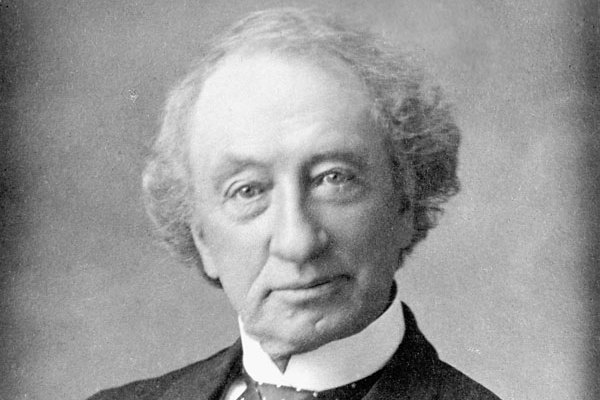
Canadian politicians have grappled with the question of trade liberalization since 1866, when the Canadian-American Reciprocity Treaty of 1855 came to an end. That earlier agreement had significantly boosted trade between the two nations. In its wake, Canada turned to tariffs. Prime Minister John A. Macdonald’s Conservative Party introduced the National Policy in 1879, erecting high tariffs designed to shield Canadian manufacturing from American competition. This protectionist posture became a defining feature of Canada’s economic strategy for generations.
By 1911, the debate erupted into a full-blown election showdown. The Liberal Party proposed a new reciprocity agreement with the United States, and President William Howard Taft negotiated the deal. But the Conservatives, led by Robert Borden, opposed it fiercely, warning of American economic domination. Canadian voters rejected reciprocity, handing the Conservatives a decisive victory and reaffirming the protectionist path.
The issue lay largely dormant for decades before resurfacing in the federal elections of 1984 and 1988. In those campaigns, the Progressive Conservative Party championed a free trade agreement with the United States, while the Liberal Party stood in opposition. The 1988 election effectively became a referendum on free trade. The Progressive Conservatives prevailed, setting the stage for the 1987 Free Trade Agreement.
The Strategic Shift
Strategically, that victory marked a profound shift in Canada’s economic orientation, ending a century of tariff-based protectionism. The 1987 agreement did not eliminate protectionist instincts entirely; rather, it institutionalized a rules-based framework that has survived subsequent political turbulence. The Ambassador Bridge statistic—that its two-way trade volume matches all U.S.-Japan trade—underscores the sheer density of cross-border commerce. It serves as a reminder that for all the political drama, the economic gravity of the U.S.-Canada relationship has consistently pulled toward integration.
Canada itself is a vast nation of ten provinces and three territories, stretching from the Atlantic to the Pacific and north into the Arctic Ocean. It possesses the longest coastline of any country and shares the world’s longest international land border with the United States. Formed as a federal dominion in 1867 through the union of British North American colonies, Canada gradually gained autonomy from the United Kingdom, a process that ended when legal dependence on the British Parliament was severed in 1982. The country operates as a constitutional monarchy and a parliamentary democracy, is officially bilingual in English and French, and through large-scale immigration has become one of the most ethnically diverse nations on earth. Its economy is highly developed and ranks among the largest globally. The relationship with the United States is significant because of the shared border and deep economic ties, making the two nations primary trading partners—any shift in their diplomatic or commercial agreements affects a large share of both economies.
Lessons for Today
Looking ahead, the calculus for both Washington and Ottawa remains delicate. The history of tariff disputes and protectionist policies has not faded into irrelevance; it is embedded in the institutional memory of both governments. The broader stakes of any new trade friction would be measured not just in billions of dollars, but in the stability of a relationship that has been painstakingly built and periodically rebuilt. For now, the 1987 agreement continues to serve as the foundation—a reminder that free trade between these two neighbors has never been a foregone conclusion, but rather a political achievement that required navigating the full weight of history.




