
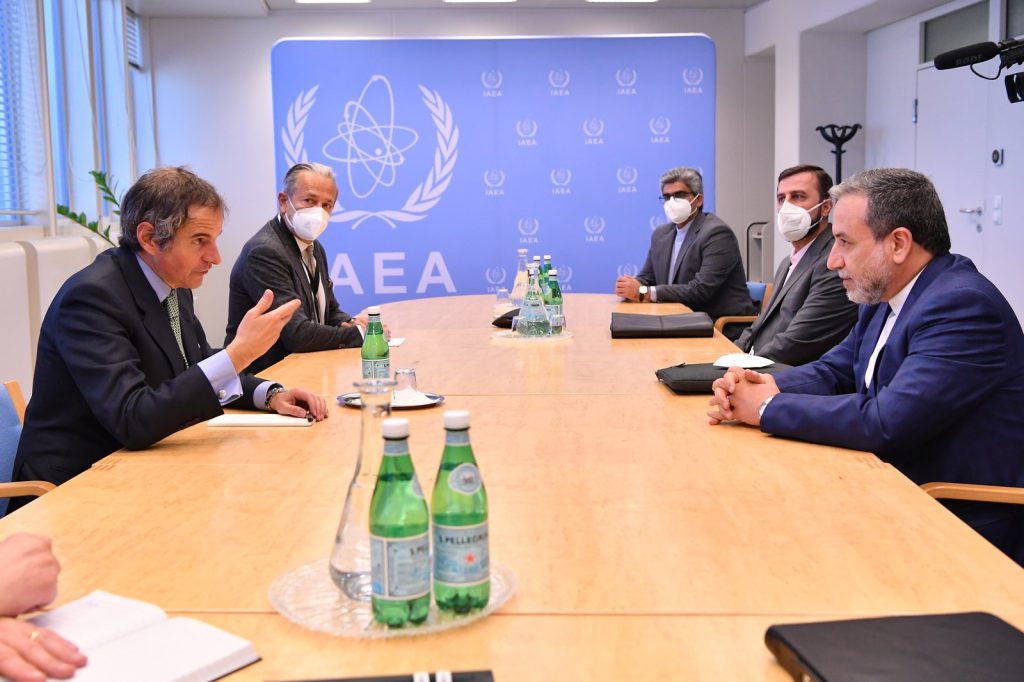
When President Donald Trump declared the U.S.-Iran ceasefire “over” on March 30, 2025, the decision collapsed a fragile arrangement that had been brokered just weeks earlier in Geneva. The Iranian delegation in those talks was led by Abbas Araghchi, the country’s foreign minister since August 2024 and a figure whose diplomatic career has long intersected with the highest-stakes negotiations between Tehran and Washington. The collapse of that ceasefire has left the region once again in a state of uncertainty, with Araghchi at the center of what comes next.
A Career Forged in War and Diplomacy
Araghchi, born in Tehran in 1962, holds a PhD in political science from the University of Tehran. His path into diplomacy began after he served in the Islamic Revolutionary Guard Corps during the Iran-Iraq War.
He joined the foreign ministry in the late 1980s and later held ambassadorships to Finland, Estonia, and Japan, and briefly served as the ministry’s spokesperson. That early grounding in both military service and foreign affairs shaped a diplomat known for navigating between Tehran’s hardline factions and the practical need for international engagement. Internationally, Araghchi is best known as a lead negotiator for Iran in the 2015 Joint Comprehensive Plan of Action (JCPOA), the landmark nuclear deal that capped Iran’s uranium enrichment in exchange for sanctions relief.
He served as Deputy Foreign Minister for Legal and International Affairs from 2013 to 2021, placing him at the center of one of the most consequential international accords of the century. He has also written several books on international law and diplomacy, adding a scholarly dimension to a career defined by high-pressure talks.
Navigating Sanctions and a Fragile Ceasefire
Araghchi’s current role as foreign minister places him at a flashpoint in the Middle East. The U.S. Treasury has sanctioned him since 2019 for his role in Iran’s missile program, and those sanctions remain in place. Despite the breakdown of the Geneva ceasefire, Araghchi has called for new negotiations, but he has stated that Iran will not accept preconditions.
This position reflects his hardline stance on nuclear rights: he has argued that Iran has the right to enrich uranium under the Non-Proliferation Treaty. Within Iran’s political establishment, Araghchi has a reputation as a pragmatic negotiator who must constantly balance the competing demands of Supreme Leader Ali Khamenei and the Revolutionary Guard, two powerful forces that often push for more confrontational approaches toward the West.
In the aftermath of the ceasefire collapse, he has also denied Iranian involvement in the March 28, 2025, drone strike on a Saudi oil facility, an attack that targeted critical energy infrastructure and heightened tensions across the Gulf region, raising fears of broader conflict. For communities across Asia — from the Philippines to Japan — the trajectory of Iran’s diplomacy under Araghchi carries real weight. Energy prices, regional stability, and the risk of conflict in the Persian Gulf all hinge on whether new negotiations can be launched.
Araghchi continues to serve as foreign minister, navigating a complex landscape where sanctions, security concerns, and domestic political pressures all intersect. Whether his pragmatic approach can open a path forward — or whether the cycle of breakdowns will continue — remains the central question for the region.




