
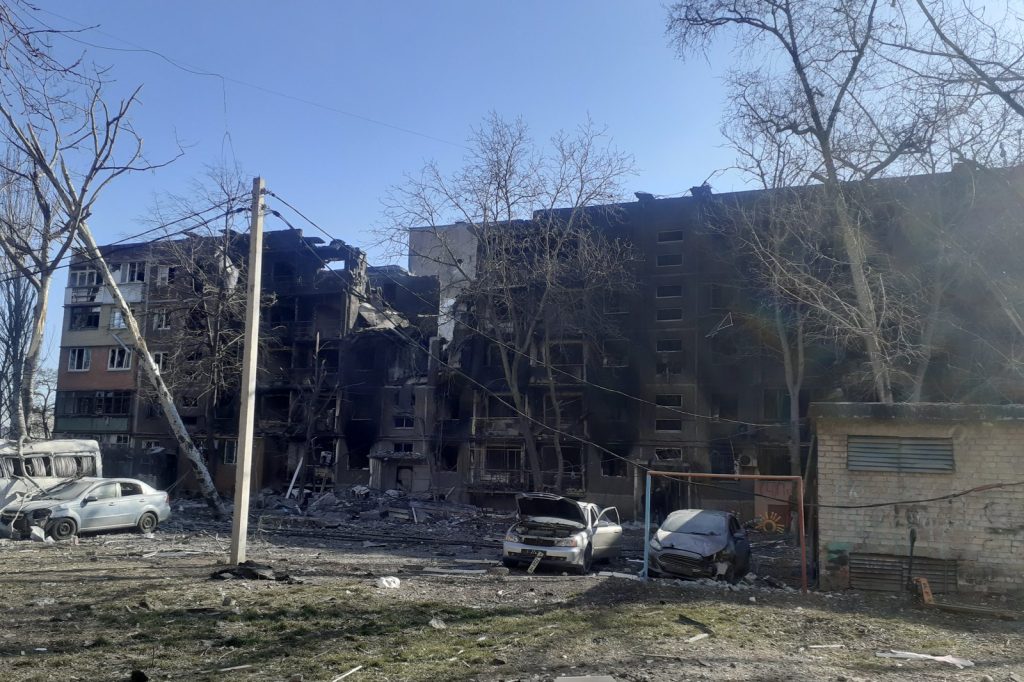
As the Russo-Ukrainian war enters its third year, the measurable costs of the conflict continue to rise, and every category of verified data points to an undercount of the true devastation. The United Nations has confirmed more than 10,000 civilian deaths since Russia launched its full-scale invasion in early 2022, but that number is drawn only from verified incidents and is widely considered a floor.
Military casualties on both sides, estimated by Western intelligence, are far higher: Ukrainian forces have suffered over 100,000 killed and wounded, while Russian losses are assessed at more than 200,000 killed and wounded. These figures are not static; they are all trending upward as fighting grinds on with no clear resolution in sight.
Mass Displacement Reshapes Europe
The war has triggered the largest displacement crisis in Europe since the end of the Second World War. More than 8 million Ukrainians are internally displaced within the country, and over 6 million have fled abroad, redrawing the continent’s migration map. The primary destinations for refugees are Poland, Germany, and the Czech Republic, placing sustained demographic and economic pressure on those nations.
The scale of the crisis reflects the widespread destruction of entire towns and critical infrastructure across a large share of Ukrainian territory. Hundreds of thousands of homes, schools, hospitals, and energy grids have been damaged or destroyed, forcing millions to abandon their communities with little prospect of return in the near term.
The displacement numbers are expected to grow as the conflict persists, and the social and psychological toll on an entire generation of Ukrainians will be felt for decades.
Economic Devastation and Global Shockwaves
The economic damage inflicted on Ukraine is estimated at over $500 billion, according to assessments covering destroyed housing, education and medical facilities, and energy infrastructure. In February 2024, a joint assessment by the World Bank, the European Union, and the United Nations placed immediate reconstruction needs at $486 billion. That figure represents only the cost of rebuilding physical assets and does not account for long-term economic losses, lost productivity, or the burden of supporting millions of displaced citizens.
The war’s economic consequences have not been confined to Ukraine. In 2022, the conflict sent food and energy prices spiking worldwide, contributing to inflation on multiple continents.
Price shocks for grain, fertilizer, and oil destabilized global markets and strained household budgets far beyond the war zone. These ripple effects continue to influence energy bills and food costs in the United States and elsewhere, and the broader stability of international alliances remains under strain as countries grapple with the economic fallout of the prolonged conflict.
Accountability and Historical Roots
International legal efforts have sought accountability for the war’s atrocities. The International Criminal Court has documented over 20,000 cases of alleged war crimes.
In a significant step, the ICC issued an arrest warrant for Russian President Vladimir Putin in March 2023. But the legal process is slow, and the conflict shows no signs of de-escalation. Understanding the war requires looking back at deep historical tensions over Ukraine’s sovereignty and territorial integrity.
The territory once formed the heart of Kievan Rus’, an early East Slavic state, and later was divided among the Polish-Lithuanian Commonwealth, the Ottoman Empire, and the Russian and Austrian empires. A short-lived independence followed the collapse of the Russian Empire in 1917, but Ukraine was soon absorbed into the Soviet Union, becoming independent again only in 1991 after the Soviet breakup.
That long history of foreign domination shapes current tensions. The present phase of the war began in early 2014 with Russia’s annexation of Crimea and expanded into a war in the Donbas region, marked by eight years of cease-fires and peace efforts known as the Minsk agreements. The full-scale invasion that started in February 2022 escalated the conflict dramatically.
For readers, this war is not a distant event; its consequences touch international alliances, global markets, and household budgets. The human toll will affect generations, and every trend line continues upward.




