
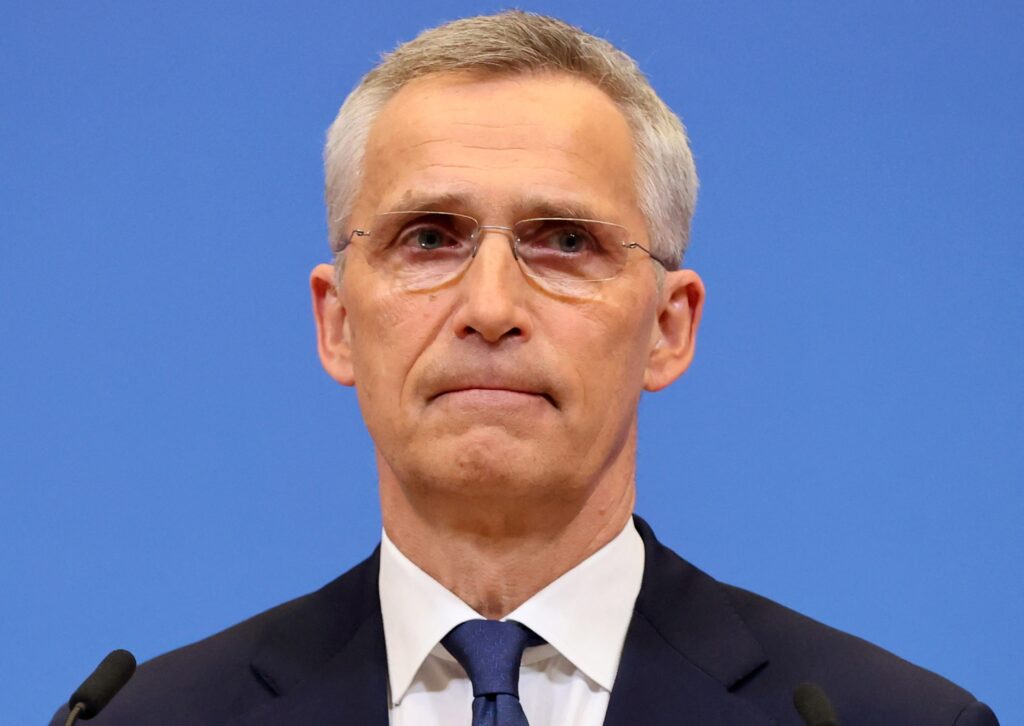
After a decade marked by escalating tensions with Russia and two major expansions of the alliance, NATO Secretary General Jens Stoltenberg is expected to leave office in October 2024, with former Dutch Prime Minister Mark Rutte poised to succeed him. Stoltenberg, the 13th person to hold the post since the alliance’s founding, took office on October 1, 2014, and saw his term extended three times, each extension directly tied to the war in Ukraine.
His departure will conclude a leadership tenure that has spanned the annexation of Crimea, the full-scale invasion of Ukraine, and the historic accession of Finland and Sweden.
A Career Shaped by Crisis and Consensus
Born in Oslo on March 16, 1959, Stoltenberg previously served as Prime Minister of Norway from 2000 to 2001 and again from 2005 to 2013. His father, Thorvald Stoltenberg, was a diplomat and politician, giving the younger Stoltenberg an early exposure to international affairs. As Secretary General, he oversaw NATO’s response to Russia’s annexation of Crimea in 2014 and the full-scale invasion of Ukraine in 2022.
Under his watch, Finland and Sweden both acceded to the alliance, expanding its membership to 32 nations. Stoltenberg consistently supported Ukraine’s right to self-defense and the alliance’s open-door policy, making those principles a cornerstone of his tenure.
He also emphasized burden-sharing among allies; as of 2024, 23 of 32 members are expected to meet the 2% of GDP defense spending guideline, a benchmark Stoltenberg championed. His most recent term extension came in 2023, a move directly linked to the ongoing war in Ukraine.
NATO’s Shifting Landscape and the Road Ahead
The transition to Rutte, himself a veteran of European politics, is expected to proceed smoothly. But the alliance faces continued challenges, chief among them sustaining military aid to Ukraine amid internal debates about the pace and scale of support. What remains to be seen is whether the next Secretary General will maintain Stoltenberg’s emphasis on the open-door policy, particularly regarding Ukraine’s eventual membership.
The current Secretary General has made that principle a hallmark of his leadership, arguing that NATO’s doors should remain open to any European country that meets the standards for membership. NATO itself was founded in 1949 as a counterbalance to Soviet influence during the Cold War, when Europe was divided between Western democracies and Eastern communist states.
After the Soviet Union collapsed in 1991, the alliance shifted its focus, undertaking peacekeeping and crisis response operations in the Balkans during the 1990s. It later invoked its collective defense clause following the September 11 attacks, leading to its first major operation outside Europe in Afghanistan. In subsequent years, NATO expanded its membership across Central and Eastern Europe, drawing strong objections from Russia, which viewed the enlargement as a security threat. Tensions escalated significantly after Russia annexed Crimea in 2014, prompting NATO to suspend cooperation and reinforce its eastern borders.
The alliance’s role as a bulwark against Russian aggression was further cemented after the full-scale invasion of Ukraine in 2022, which also spurred traditionally neutral Finland and Sweden to seek and gain membership. NATO’s principle of mutual defense remains central to European and transatlantic security, shaping responses to ongoing conflicts and the evolving relationship with Russia.
Its open-door policy continues to influence geopolitical dynamics, particularly for aspiring members like Ukraine. As Stoltenberg prepares to hand over the reins, the alliance he helped steer through its most serious crisis in decades will face a new leader and a continuing test of unity in the face of Russian aggression.




