
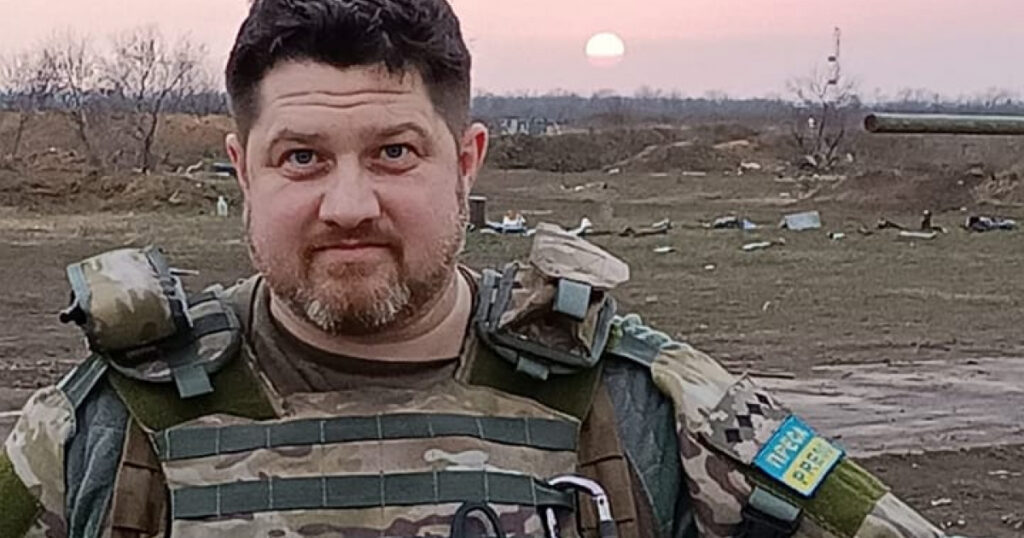
Since Russia launched its full-scale invasion of Ukraine in February 2022, the Black Sea has been transformed into a proving ground for asymmetric naval warfare. One officer has become the steady public voice documenting Ukraine’s operations against the Russian Black Sea Fleet: Dmytro Pletenchuk, the spokesman for the Ukrainian Navy. His regular, specific briefings have made him a pivotal figure in reporting the number and types of Russian vessels destroyed or damaged, often attaching precise dates and the names of ships to his updates.
On August 7, 2024, for example, he announced that 21 Russian ships had been struck over the preceding 72 hours. International media outlets and open-source intelligence (OSINT) analysts rely on these concrete details to verify claims and cross-reference satellite imagery and social media footage.
The Spokesman’s Background and the Arsenal He Reports On
Before he became the public face of Ukraine’s naval communications, Pletenchuk served as a naval officer and graduated from the Odesa Naval Academy. His background in military communications, honed over years of service, lends his statements a precision that helps cut through the fog of war. Operating from the capital, Kyiv, he coordinates the flow of information from the front lines to the world. His briefings go beyond simple vessel counts.
Pletenchuk has detailed the capabilities of Ukraine’s arsenal of uncrewed surface vessels and missiles, including the Neptune anti-ship missile and the Magura V5 drone. This technical granularity offers a window into how a smaller naval power is systematically degrading a larger, more traditional fleet.
The wider picture is one of asymmetric warfare: Ukraine, lacking a large surface fleet, has instead invested in precision-strike missiles and drones to challenge Russian naval dominance. Pletenchuk’s role is to translate these tactical victories into a coherent narrative of strategic attrition.
Historical Context and Implications for the Black Sea Fleet
The Black Sea Fleet itself is a major Russian naval formation operating in the Black Sea, the Sea of Azov, and parts of the Mediterranean. Its origins date to the late 18th century, when it was founded under the Imperial Russian Navy by Prince Potemkin to secure Russia’s southern borders. After the Russian Revolution and the formation of the Soviet Union, the fleet became a key component of Soviet naval power.
Following the Soviet collapse, ownership of the fleet was divided between Russia and Ukraine, with Russia retaining the larger portion. Headquartered in Sevastopol, Crimea, the fleet’s presence expanded after Russia annexed the peninsula in 2014, solidifying its control over strategic Black Sea bases.
The fleet has historically served as a projection of Russian influence in the region, supporting military and political objectives. Its role grew more prominent as tensions and conflicts in the region intensified. Recent events, however, have demonstrated the fleet’s vulnerability to modern Ukrainian naval tactics, including missile and drone strikes.
These developments have reshaped the balance of power in the Black Sea, affecting regional security and the fleet’s operational freedom. The shifting dynamics highlight broader implications for naval warfare and geopolitical stability.
Looking ahead, the question remains how long Ukraine can sustain this tempo of strikes and what the Kremlin’s next move will be in response. Pletenchuk’s updates will continue to serve as a crucial barometer of the naval campaign’s trajectory, offering a real-time ledger of a conflict that is being fought as much in the information space as on the high seas.




