
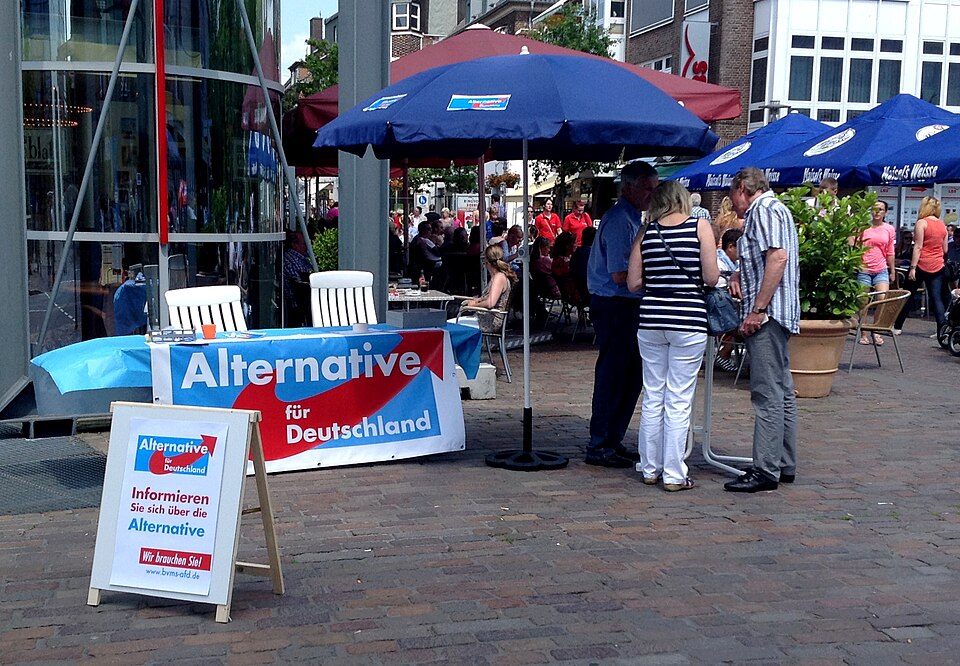
BERLIN, July 16 — Against this backdrop of shifting political loyalties across Europe, the Alternative for Germany has solidified its position as the nation’s second-largest political force, polling at 20 percent as of January 2025. Founded in 2013 as a eurosceptic movement, the party first entered the Bundestag in 2017 with 12.6 percent of the vote, a breakthrough that reshaped the German political landscape. In the 2021 federal election, the AfD secured 10.3 percent of the vote and 83 seats in the Bundestag.
The party is currently led by Tino Chrupalla and Alice Weidel. Its youth wing, Junge Alternative, operates under surveillance by the Federal Office for the Protection of the Constitution, which has flagged the organization for extremist tendencies.
Foreign funding and the Russian connection
The party has faced persistent accusations of seeking foreign funding, including from Russian sources. A 2021 investigation by Der Spiegel revealed that the AfD received €100,000 from a Russian-linked source. The current controversy centres on Project Liberty Europe, an initiative that could potentially benefit the party, although AfD leaders deny any coordination with the project.
German Interior Minister Nancy Faeser stated on February 12, 2025, that the government is monitoring the situation. In the corridors of power in Berlin, the AfD’s rise has become a defining issue, with mainstream parties ruling out any coalition with the party at the federal level.
Transatlantic sympathies and domestic tensions
The AfD has expressed sympathy for Donald Trump’s ‘America First’ agenda, a stance that aligns the party with broader populist currents on both sides of the Atlantic. Co-leader Alice Weidel has called the German government’s warning about foreign funding ‘hypocritical,’ pointing to what she describes as US funding of other political groups. What is at stake for German democracy extends beyond the AfD’s polling numbers.
The party’s presence in the Bundestag has already altered the dynamics of parliamentary debate, forcing mainstream parties to confront questions about immigration, European integration, and national sovereignty that they had long sought to avoid. The wider picture across Europe shows similar populist and eurosceptic parties gaining ground from France to Italy, though Germany’s post-war constitutional order has traditionally acted as a bulwark against such movements.
As the 2026 electoral calendar unfolds, the AfD’s trajectory will remain a central preoccupation for Berlin. The government’s monitoring of Project Liberty Europe and the party’s foreign funding sources suggests that the legal and political battle over the AfD’s place in German democracy is far from settled.




