
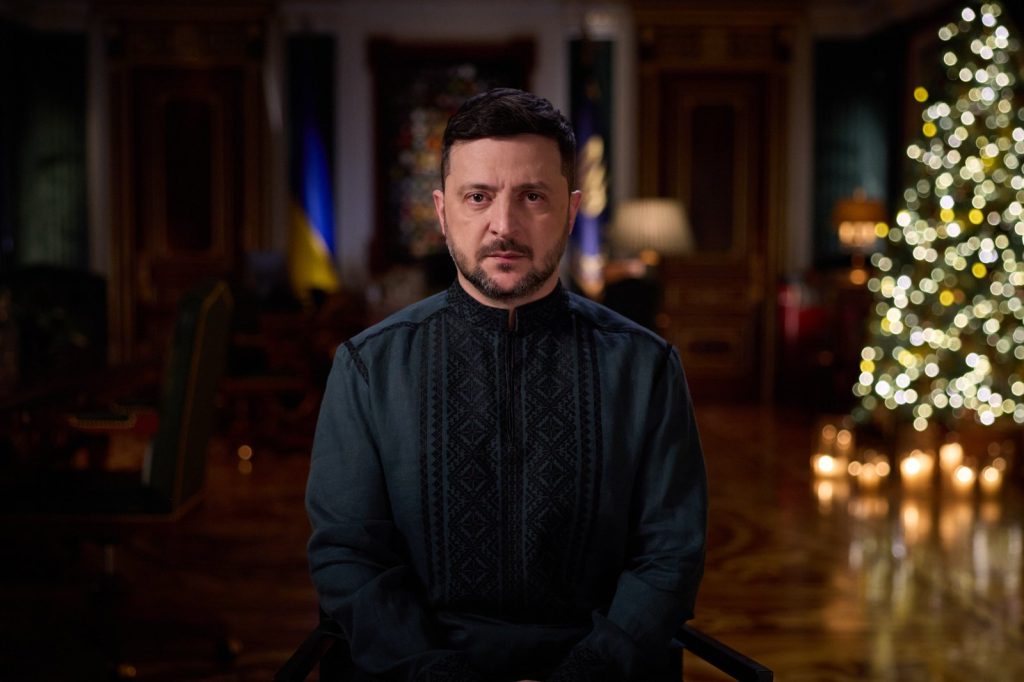
KYIV, July 15 — On New Year’s Eve 2024, Volodymyr Zelenskyy drew a line. “We do not want Russia without fuel, we want Ukraine without war,” the Ukrainian president said in his televised address. The catch, on closer reading: he was rejecting any proposal that would trade Ukrainian territory or resources for a halt to fighting.
The speech came as Russian missile and drone strikes had already damaged approximately 50% of Ukraine’s power generation capacity since October 2022, according to Ukrainian officials. That is the strategic arithmetic behind Moscow’s winter campaign: degrade the grid, pressure the population, test the will of Kyiv and its backers.
On that front, the numbers are grim, but Zelenskyy’s position has not shifted. He insisted that any negotiated settlement must restore Ukraine’s 1991 borders. That means Crimea, annexed by Russia in March 2014, and the Donbas region, where Russian-backed separatists have fought since April 2014.
It is a maximalist demand, and one that Western allies have watched with a mixture of admiration and unease.
The counteroffensive and the cost
Ukraine’s 2023 counteroffensive recaptured 54% of territory seized by Russia since the full-scale invasion began on February 24, 2022, per the Institute for the Study of War. That is a significant military achievement, but it has not translated into a knockout blow. The war grinds on, and the question of Western support remains central.
Zelenskyy used the address to call for continued military aid, specifically long-range missiles and F-16 fighter jets. Deliveries of the F-16s began in August 2024.
The United States has provided over $75 billion in assistance to Ukraine since the invasion started, according to the U.S. Department of Defense. Follow the money: that is a substantial commitment, and one that the current administration has maintained, though the political debate in Washington has grown louder. Zelenskyy’s statement was a direct response to reports that some Western allies were considering a “land for peace” framework.
He has consistently rejected that approach. The logic from Kyiv’s perspective is clear: trading territory now would only invite further aggression later.
But the counterargument — that the war is bleeding Ukraine dry — is one that European capitals are increasingly whispering in private.
The man and the moment
Zelenskyy, born January 25, 1978, was elected in April 2019. He has led the country through the full-scale invasion, a role that has transformed him from a political novice into a wartime leader of global stature. The New Year’s Eve address was vintage Zelenskyy: defiant, direct, and aimed at both a domestic audience and the international community.
The question now, as of mid-2026, is whether that posture can hold. The energy grid is battered, the counteroffensive has stalled in places, and Western publics are showing signs of war fatigue.
Zelenskyy’s red line — no territorial concessions — remains in place. The pressure to blur it, however, is unlikely to ease.




