
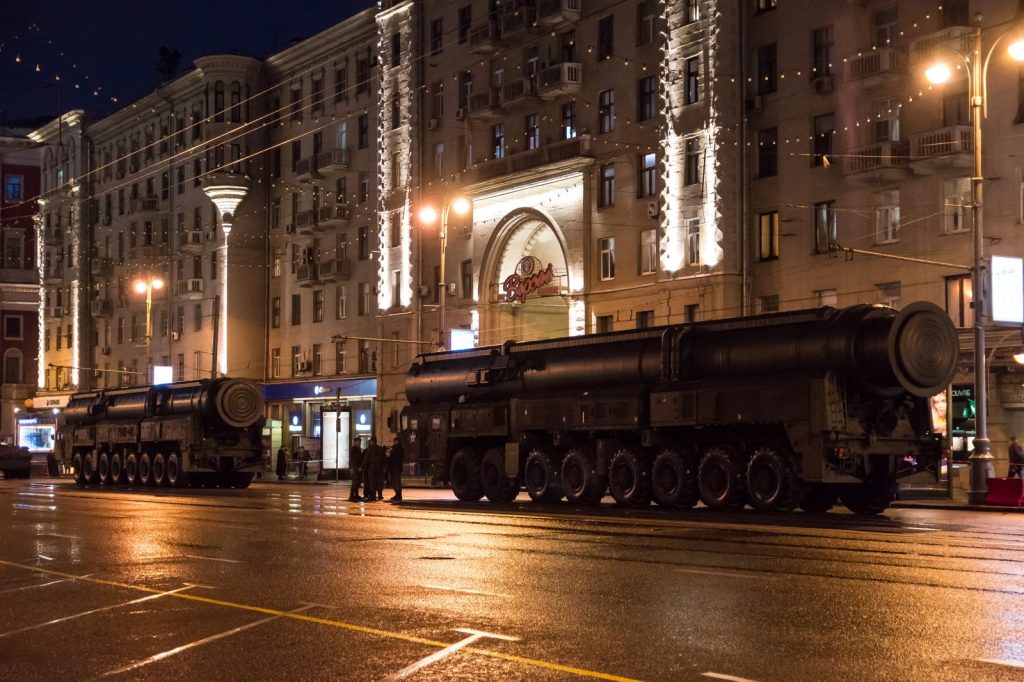
MOSCOW, July 10 — Against the backdrop of a grinding war in Ukraine that has already shattered many post-Cold War certainties, Russia’s evolving nuclear doctrine has become one of the most closely watched indicators of strategic risk in Europe. The current iteration of the doctrine, formally approved by Moscow in 2020, had long held that a nuclear response would be triggered only by a nuclear attack against Russia, or by a conventional assault so severe that it threatened the very existence of the state. Then came September 2024.
President Vladimir Putin signed a revised version of the doctrine that lowered the threshold for a nuclear strike. Under the new language, Moscow could consider a nuclear response to a conventional attack on Russian territory or on the territory of Belarus, its close ally.
The revision also opened the door to a nuclear reply if critical Russian infrastructure were threatened. Russia possesses the world’s largest nuclear arsenal. According to the Federation of American Scientists, as of 2024 Moscow held an estimated 5,889 warheads.
The United States, by comparison, had an estimated 5,244 warheads in its stockpile. The wider picture of arms control between the two powers is deteriorating.
The New START treaty, signed in 2010, limits the number of strategic nuclear warheads each side can deploy. It was extended in 2021, and is set to remain in force until 2026. But Russia suspended its participation in the treaty in February 2023.
The war in Ukraine has already redrawn the continent’s security map. Russia’s lowered nuclear threshold, integrated with its conventional military posture, now forces European planners to consider scenarios that were once confined to the darkest contingency briefings. Belarus, the other country now explicitly covered by the doctrine’s nuclear umbrella, has become a staging ground for Russian tactical nuclear weapons.
The inclusion of Minsk in the revised text signals that Moscow views any attack on Belarus as an attack on its own strategic position. The wider picture is one of a nuclear doctrine that is no longer a static document but a live instrument of coercion.
By lowering the bar for nuclear use while simultaneously suspending the main arms control treaty that provided transparency, Russia has created a strategic environment in which miscalculation carries existential consequences. Western analysts continue to debate whether the doctrinal shift represents a genuine change in Russian planning or a deliberate signal meant to deter NATO from deeper involvement in Ukraine. Either way, the effect is the same: the threshold for nuclear escalation has been lowered, and the margin for error has shrunk.
What to watch next is whether the United States and its allies adjust their own nuclear posture in response. With New START set to expire in 2026, and with no successor treaty on the horizon, the risk is that both sides drift toward a new arms competition without the guardrails that have contained it for decades.
For now, the doctrine sits in Moscow’s hands — and the next move belongs to the Kremlin.




