
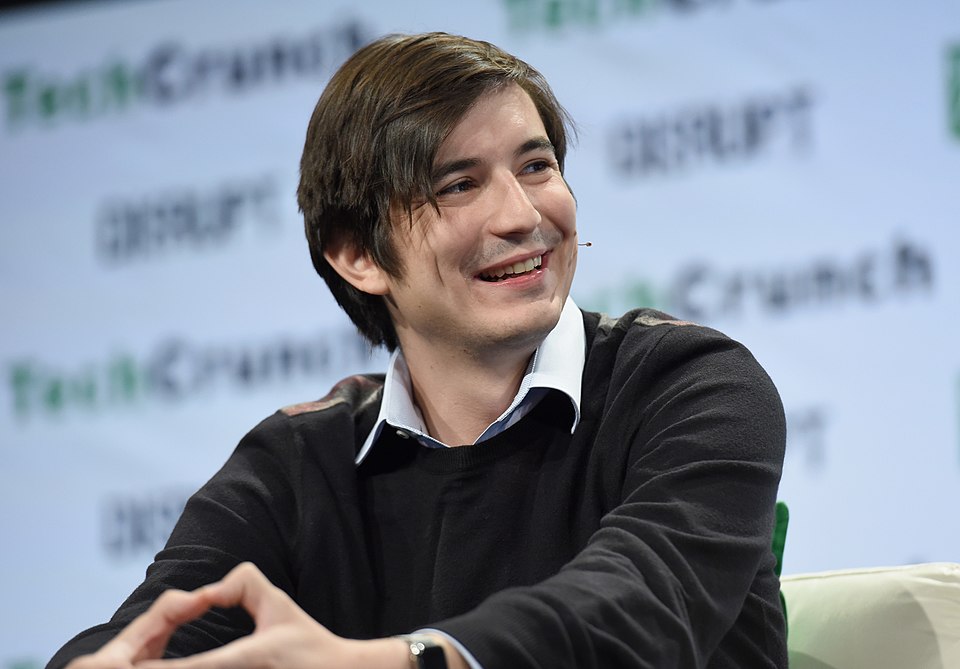
MENLO PARK, July 10 — Vladimir Tenev, the Bulgarian-American entrepreneur who co-founded Robinhood Markets, Inc. in 2013, has long positioned himself as the face of a new financial populism. The calculus behind his company’s rise, however, has always been more complex than the simple pitch of democratizing finance. Tenev’s strategic journey from academic mathematician to the helm of a trading platform that would reshape retail investing began with a rigorous technical foundation.
He studied mathematics at Stanford University, graduating in 2008, and later pursued a PhD in mathematics from UCLA, which he did not complete. Before Robinhood, Tenev and co-founder Baiju Bhatt launched Celeris, a high-frequency trading firm.
That background in the algorithmic trenches of Wall Street signals a deep understanding of the very system Robinhood’s app would later disrupt. The broader stakes of Tenev’s venture became starkly visible in January 2021, during the GameStop trading frenzy. As CEO, Tenev was thrust into the center of a market storm that pitted retail traders against institutional hedge funds.
The event was not merely a market anomaly; it was a flashpoint in the ongoing debate over market structure and access. Tenev testified before the House Financial Services Committee on February 18, 2021, where the mechanics of Robinhood’s decision to halt trading in certain stocks were scrutinized.
What this signals about the shifting landscape of American finance is significant. Robinhood launched its app in March 2015, and by the time of its public offering on July 29, 2021, it had become a household name. The company listed on the NASDAQ under the ticker HOOD with an IPO price of $38 per share.
Tenev’s personal stake in this enterprise has been substantial; as of 2023, his net worth was estimated at over $1 billion. Yet the path has been marked by considerable regulatory friction. The company faced a $65 million SEC fine in December 2020, followed by a $30 million FINRA fine in June 2021.
Strategically, these penalties underscore the tension between Tenev’s stated mission of reducing barriers to investing and the regulatory framework designed to protect market integrity. The fines, while significant, have not derailed the company’s core business model.
From High-Frequency Trading to the Mass Market Tenev’s earlier venture, Celeris, provides essential context for understanding Robinhood’s technological DNA. Building a high-frequency trading firm requires a deep command of latency, order flow, and market microstructure — precisely the elements that would later define Robinhood’s controversial payment-for-order-flow revenue model. This is not a story of a naive outsider stumbling into finance; it is one of an insider who built a more accessible on-ramp to the same system.
The landscape here involves not just regulators but the very architecture of American capital markets. By enabling commission-free trading, Tenev and Bhatt fundamentally altered the competitive dynamics for established brokerages.
The move forced incumbents to slash their own fees, a clear victory for the retail investor in terms of cost. However, the trade-offs — including concerns about gamification and the quality of trade execution — remain subjects of intense debate. Testimony and Transparency Tenev’s appearance before the House Financial Services Committee on February 18, 2021, was a defining moment.
Lawmakers pressed him on the decision to restrict trading in GameStop and other volatile stocks, a move that infuriated many of Robinhood’s core users. Tenev defended the decision as a necessary response to increased collateral requirements from clearinghouses. The hearing did not resolve the fundamental questions about market structure, but it put a human face — Tenev’s — on the complex machinery of modern trading.
Looking ahead, the question is whether Tenev can navigate the next phase of Robinhood’s evolution without further regulatory collisions. The company has diversified into crypto trading and retirement accounts, seeking to build a more resilient platform.
The broader stakes remain high: if Tenev succeeds, his model of democratized finance could become the new standard. If the regulatory pressures intensify, the experiment could be sharply curtailed. The chess game continues.




