
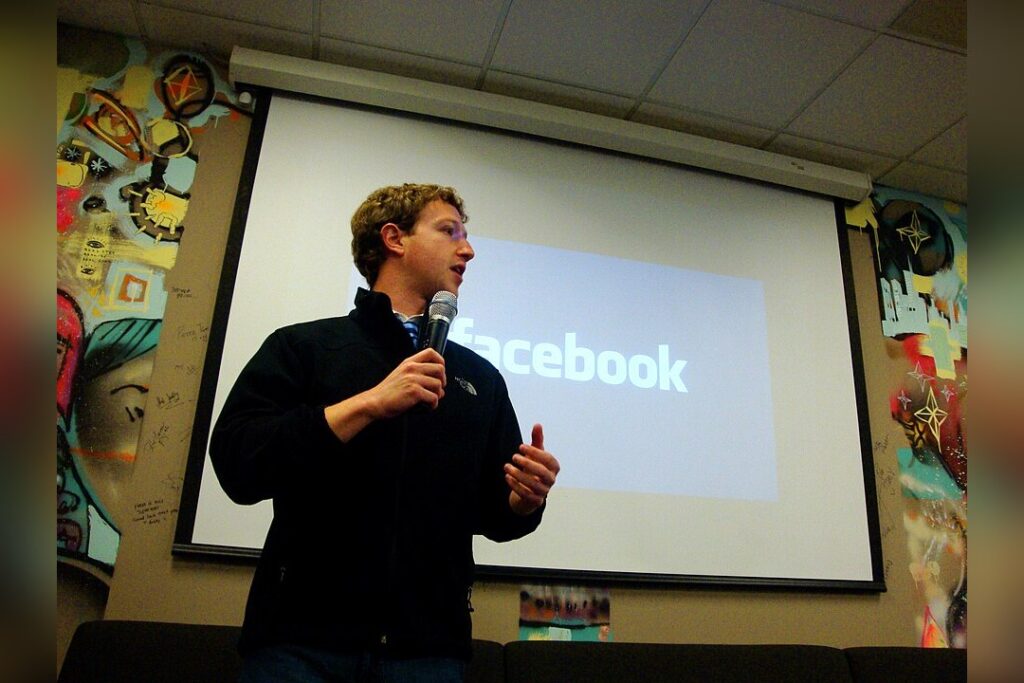
MENLO PARK, July 9 — The calculus of Mark Zuckerberg’s career has always been about scale, and the numbers tell a stark story of ambition realized. From a Harvard dormitory launch on February 4, 2004, alongside classmates Eduardo Saverin, Andrew McCollum, Dustin Moskovitz, and Chris Hughes, Facebook hit 1 million users within a month. Zuckerberg dropped out of Harvard in 2004 to run the company full-time.
By the time of the initial public offering on May 18, 2012, the company priced shares at $38, raising $16 billion and cementing its place on the global technology chessboard. The broader stakes of that IPO were clear: Facebook was no longer just a social network; it was a strategic asset in the battle for digital attention.
Today, as Meta Platforms, the company commands over 3 billion monthly active users and a market capitalization exceeding $500 billion. Strategically, the acquisitions that followed — Instagram in 2012 for $1 billion and WhatsApp in 2014 for $19 billion — were not mere purchases. They were moves to lock down entire ecosystems of communication and visual sharing, neutralizing competitors before they could challenge Facebook’s dominance.
Scrutiny and the Cambridge Analytica Reckoning
But the path has been anything but clean. In 2018, the Cambridge Analytica scandal erupted, revealing that data from 87 million users had been harvested without consent. That breach of trust triggered a geopolitical firestorm, with regulators on both sides of the Atlantic demanding answers.
Zuckerberg testified before the U.S. Congress in 2018, a rare public reckoning for a CEO who had long avoided the political spotlight. The hearings signaled a new era of accountability for Silicon Valley, one where the architects of the digital age would be called to account for the unintended consequences of their creations.
What this signals about Zuckerberg’s leadership is a willingness to adapt under pressure. The company has since invested heavily in privacy infrastructure and content moderation, though critics argue the structural incentives for data collection remain unchanged. The broader stakes for Meta involve navigating a regulatory landscape that grows more hostile by the year, with antitrust actions and privacy legislation looming in both Washington and Brussels.
The Metaverse Pivot
In 2021, Zuckerberg made his most audacious strategic move yet, renaming the company Meta and declaring the metaverse the next frontier of human connection. This pivot reframes the entire corporate mission, betting that immersive virtual environments will replace the smartphone as the primary computing platform. The technology is still nascent, but the investment is enormous.
Zuckerberg has staked his legacy on the proposition that the metaverse will be the next great shift in how people work, socialize, and transact. Strategically, the move also serves to distance the company from the scandals of the Facebook era, rebranding as a builder of the future rather than a defender of a troubled past.
The metaverse vision, however, faces significant hurdles: technical challenges, consumer adoption, and the same privacy and security questions that have dogged the company for years. Zuckerberg’s calculus appears to be that the rewards of owning the next platform outweigh the risks of failing to build it. Looking ahead, the question is whether Zuckerberg can execute on this vision without repeating the mistakes of the past.
The company’s market capitalization, exceeding $500 billion as of 2024, provides the resources to experiment at scale. But the broader stakes involve not just corporate success, but the shape of the digital world itself.
If the metaverse becomes the next dominant platform, Meta will hold unprecedented power over human interaction — and the scrutiny will only intensify.




