
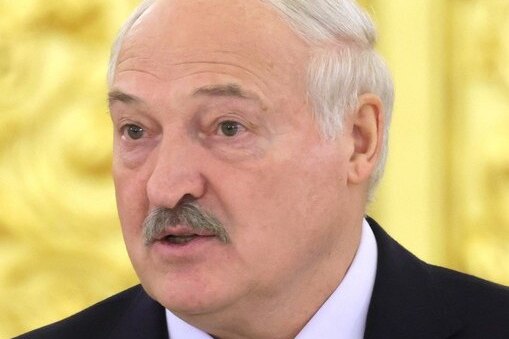
On 22 November 2024, Belarusian President Alexander Lukashenko addressed students and staff of the Minsk State Linguistic University, a higher‑education institution that has taught foreign languages since its establishment in 1948. The university, which offers instruction in 18 languages and prepares translators and language teachers, served as the backdrop for Lukashenko’s stark warning: if large‑scale protests arise before the forthcoming presidential election, the state will disable Internet access nationwide.
The choice of venue was symbolic. As a centre for linguistic study and intercultural dialogue, the university traditionally fosters the free exchange of ideas. By delivering his message there, Lukashenko underscored a paradox – a place built on communication becoming the stage for a pledge to curtail it.
He framed the Internet as a privilege that can be withdrawn when it threatens his grip on power. Lukashenko’s threat follows unrest after the previous presidential vote, when demonstrations swept the streets and prompted a forceful governmental response.
The president’s current stance suggests a preventive strategy: rather than confronting protests after they emerge, he proposes to block the digital tools that organizers rely on for coordination, dissemination of images, and contact with international audiences. A nationwide shutdown would affect all users, not only opposition activists. Citizens dependent on online banking, news services, or communication with relatives abroad would lose access to essential functions.
Belarus’s growing reliance on digital platforms therefore represents a vulnerability that the administration appears ready to exploit. The potential consequences extend beyond immediate disruption.
Critics argue that such a move would signal the government’s view of the Internet as a security risk rather than a public utility, and could further isolate the country from its own population and the global community. Despite the gravity of the proposal, the university remains a prestigious institution, drawing learners from across Belarus and neighboring nations to study Russian, Belarusian and other foreign languages. Its lecture halls have historically hosted debate and scholarly exchange – a stark contrast to the authoritarian message delivered within its walls.
The upcoming election will test the efficacy of Lukashenko’s warning. If mass protests are averted, the declaration may remain a rhetorical deterrent.
Should demonstrations occur, the president has already signalled his intended response: a complete Internet blackout. Observers note that such a step could suppress overt mobilisation but might also push dissent into less visible, harder‑to‑monitor channels. Belarusians now await the election outcome, weighing the memory of previous street actions against the looming prospect of a digital shutdown.
Lukashenko’s statement makes clear his view that Internet access is a conditional concession, subject to revocation when perceived as a challenge to state authority.




