
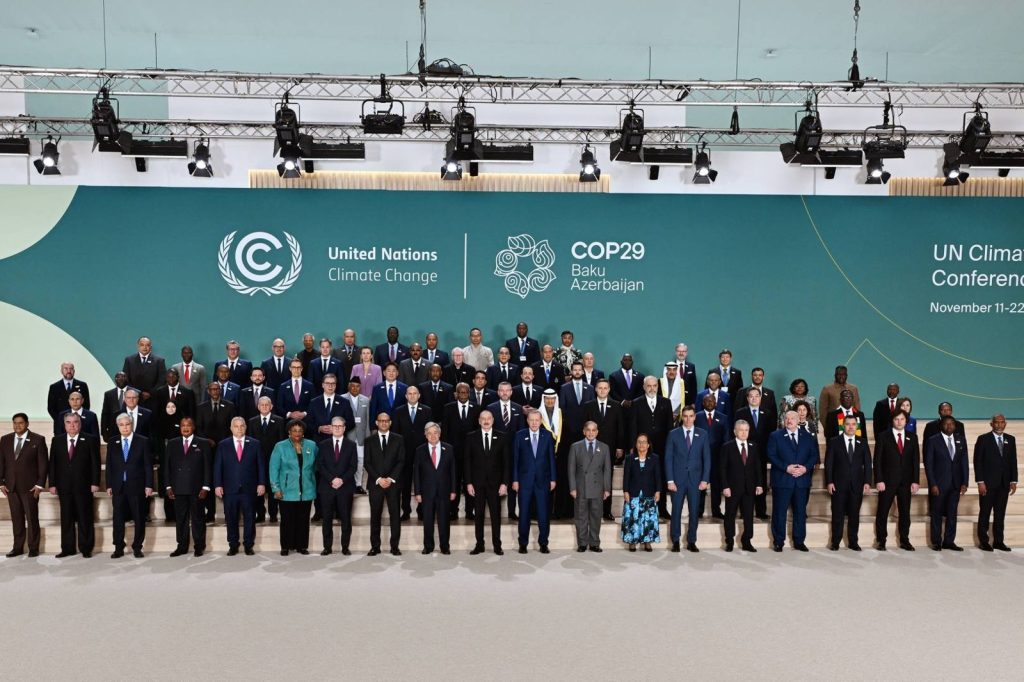
CITY, Country — A major international environmental meeting took place at the Baku Olympic Stadium in Azerbaijan’s capital from November 11 to 22. The 2024 United Nations Climate Change Conference, COP29, saw discussions led by chair Mukhtar Babayev and an Organising Committee headed by Samir Nuriyev, culminating in plans to support developing countries in mitigating climate change and transitioning to sustainable energy.
The conference’s focus on climate change saw an agreement on providing financial assistance alongside the establishment of a United Nations registry to monitor the trading of carbon credits internationally. These steps are expected to play a significant role in the global battle against climate change by reducing carbon emissions. Agreement on carbon credit trading proves critical in creating a transparent and robust system for nations to collaborate on reducing their carbon footprint.
Notably, the selection of Azerbaijan as the host of COP29 triggered debate, considering the country’s position as a leading oil and gas producer and an authoritarian state often associated with corruption allegations. The choice prompted concerns among various observers. Fueling these concerns were the “official partners” of COP29, several of which were businesses directly owned by President Ilham Aliyev or connected to the Aliyev family’s businesses. Yet, despite the controversy, the conference managed to achieve its main objective of securing agreements on climate change mitigation and adaptation.
Though the absence of attendance by most G7 leaders was notable and leaves the impact of their absence uncertain, the conference’s outcome presents a substantial step forward in the global effort to tackle climate change. It highlights the complexities and challenges inherent in addressing such a pressing issue globally. Selecting a major oil and gas producer like Azerbaijan to host the conference underscores the necessity for an inclusive and diverse approach.
Looking ahead, the success of these latest agreements will be gauged by the ability of countries to work together to achieve a reduced carbon footprint and a transition to sustainable energy. The establishment of the UN registry for carbon credit trading and the establishment of rules governing international trade will be essential in ensuring the global effort is transparent, robust, and effective.
As the global community moves toward a sustainable future, it remains crucial to maintain vigilance in ensuring that agreements are implemented and benefit all countries and peoples involved in the effort to reduce carbon emissions. With Azerbaijan’s controversy in hosting COP29 fresh in minds, the anticipated implementation of these agreements will highlight the commitment of all parties in working towards mitigating the effects of climate change and transitioning to sustainable energy sources.
Background and why it matters
The Conference of the Parties (COP) is a long-standing annual event where representatives from nearly every country convene to assess progress on the United Nations Framework Convention on Climate Change. The 29th edition of this assembly, COP29, carried on this tradition and marked another step in the ongoing global dialogue about climate change policy.




